The government is preparing the national budget for fiscal year 2026–27 amid persistently high inflation, widening revenue shortfalls, sluggish investment, and growing global uncertainty. At a time when ordinary citizens are struggling with soaring prices of essential commodities, the state faces an increasingly difficult balancing act: mobilising revenue, containing inflation, generating employment, reviving investment flows, and fulfilling electoral commitments simultaneously.
The challenge has become even more acute because of the ongoing conflict in Iran and the Middle East, which has added fresh volatility to global energy markets. Rising fuel import costs are already affecting electricity, transportation, and food prices domestically. Consequently, every major budgetary decision now carries direct implications for the livelihoods of millions of people.
Finance Minister Amir Khasru Mahmud Chowdhury has repeatedly acknowledged that meeting public expectations through the implementation of the government’s electoral promises will be one of the administration’s most significant challenges. Yet the economic realities confronting the government suggest that the room for fiscal manoeuvre is narrowing rapidly. Although the government is reportedly moving toward a budget of around Tk9.2 trillion, questions remain over its implementation capacity. Revenue collection continues to underperform, foreign loan disbursements remain slow, and liquidity pressures within the banking sector have intensified. In such circumstances, the effectiveness of an expansionary budget remains uncertain.
Economists argue that this is not the time for ambitious projections or headline-grabbing measures. Rather, the budget should prioritise economic stability and focus on easing the burden on low- and middle-income households. A realistic and restrained fiscal framework, supported by structural reforms in taxation and public finance, is now more important than ever.

Inflation remains the country’s most pressing economic concern. Over the past several years, the prices of essential goods have steadily moved beyond the purchasing capacity of ordinary citizens. The latest geopolitical tensions have only aggravated the situation by pushing up global fuel prices, thereby increasing domestic costs across multiple sectors. Against this backdrop, concerns are growing that financing the budget deficit through excessive bank borrowing or monetary expansion could further accelerate inflation. The finance minister has stated that the government will avoid printing money or relying excessively on bank borrowing. However, without a substantial improvement in revenue mobilisation, sustaining such a commitment may prove difficult.
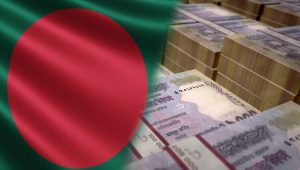
The revenue outlook itself remains troubling. During the first nine months of the current fiscal year, the National Board of Revenue reportedly faced a shortfall of nearly Tk98,000 crore. Despite this, the government is expected to set a revenue target approaching Tk6.5 trillion for the next fiscal year. Given the current pace of economic activity, many analysts consider this target highly ambitious. This reality once again brings the issue of structural reform into sharp focus. For years, concerns over inefficiency, lack of transparency, and weak accountability within the tax administration have remained unresolved. Without modernising the NBR and broadening the tax base, the country’s fiscal structure cannot become sustainable. Likewise, weaknesses in the banking sector – including rising non-performing loans, governance failures, and declining public confidence – continue to discourage private investment.



Still, some of the government’s proposed initiatives offer cautious optimism. Plans to expand the ‘Family Card’ programme, strengthen social safety nets, and increase allocations for healthcare and education could provide much-needed support to lower-income groups, who are bearing the brunt of the economic crisis. Yet implementation remains the central challenge. Past experience has shown that many social protection programmes suffer from weak monitoring, political interference, and flawed beneficiary selection processes. As a result, the intended benefits often fail to reach those most in need.
The government also argues that a larger budget is necessary to maintain economic growth. That argument is not entirely without merit. Prolonged fiscal contraction can weaken economic momentum and delay recovery. However, growth depends not merely on the size of public expenditure, but also on the quality of spending, policy consistency, institutional credibility, and the overall investment climate.


Private sector investment remains stagnant and reversing that trend will require far more than an expanded budget. Political stability, policy predictability, energy security, and financial sector discipline will all be essential to restoring investor confidence. Businesses are unlikely to increase investment if uncertainty about the future continues to dominate the economic environment.
The government’s challenge, therefore, is twofold: to keep the economy functioning while ensuring that the hardships faced by ordinary citizens do not intensify further. In that context, the guiding principles of the upcoming budget should be realism, fiscal discipline, and reform. Reducing wasteful expenditure, limiting low-priority projects, curbing unnecessary foreign travel by public officials, and reviewing subsidised privileges such as easy vehicle loans and fuel facilities for bureaucrats could help redirect resources toward more urgent priorities, including food and energy security, healthcare, education, and employment generation. At the same time, the government must demonstrate visible progress in administrative and financial reforms in order to restore the confidence of development partners and investors alike.
In the end, this is not a moment for populist gestures or cosmetic announcements. What the country needs most is responsible governance, credible reform, and effective implementation. Under the current economic circumstances, the government’s greatest success may simply lie in preventing the suffering of ordinary people from worsening further.
The views expressed in this article are solely those of the author
The writer is an Editor, Climate Journal24.com, General Secretary, Bangladesh Climate Change Journalist Forum