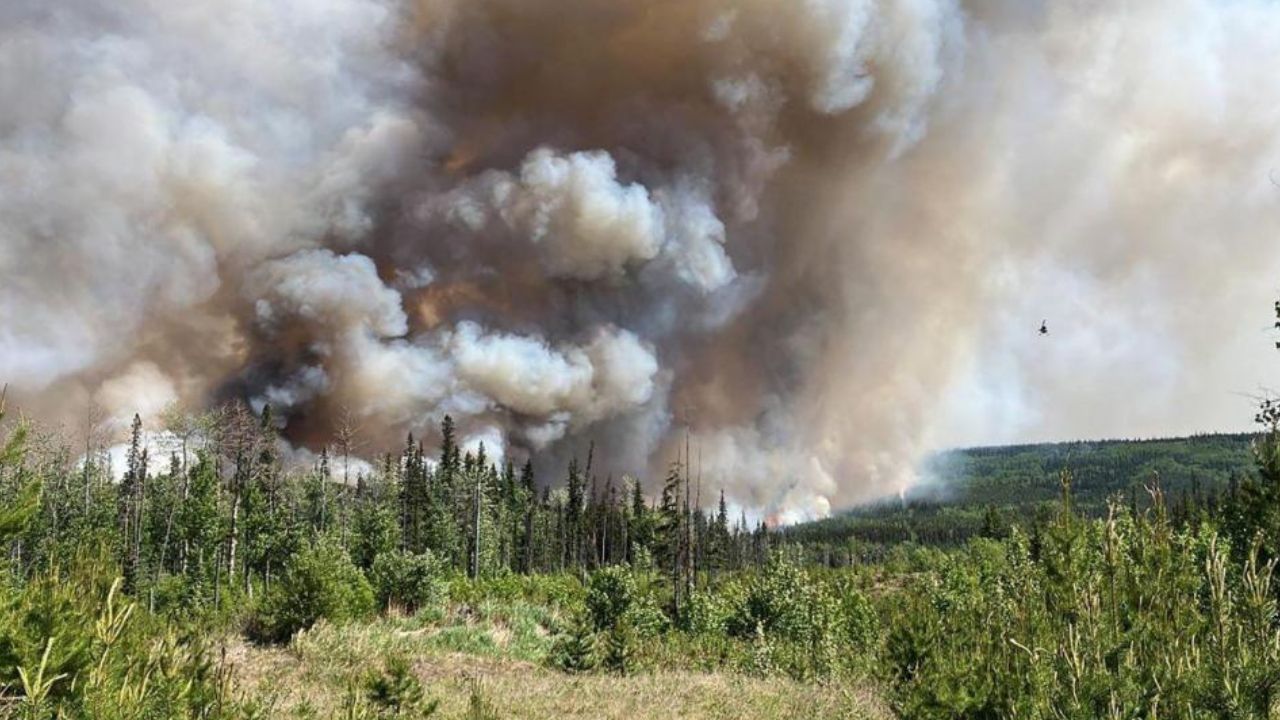



A fast‑moving wildfire in British Columbia has forced more than 20,000 people to evacuate as flames destroyed homes and spread rapidly across the western Canadian province.
The Bald Range wildfire, reported Friday evening, has already burned about 9,500 hectares (23,500 acres). Evacuation orders were issued for Summerland, Peachland and other districts west of Okanagan Lake.
Premier David Eby declared a provincial state of emergency early Saturday, with more than 100 wildfires burning across British Columbia. Nearly half were out of control amid hot, windy conditions and prolonged drought.
The entire community of Summerland, population about 12,000, was ordered to leave overnight, along with roughly 8,000 residents in and around Peachland. Officials have not yet confirmed how many homes were destroyed.

Eby said some residents were trapped and had to be rescued, while search‑and‑rescue crews continued checking behind fire lines. “People have lost their homes. And many people have been displaced. Others are waiting for news about loved ones,” he said.
The Bald Range fire overwhelmed the smaller community of Faulder and covered the 15km (9 miles) to Summerland at extraordinary speed. Cliff Chapman, director of wildfire operations for the BC Wildfire Service, described conditions as “explosive” and warned other communities could face similar threats.
Helicopters were diverted to rescue residents unable to escape by road. Amelia Boultbee, MLA for Penticton‑Summerland, wrote in a social media post: “Summerland and Faulder and Peachland. Tonight our hearts are heavy as we watch the Bald Range wildfire.




The firefighters and first responders are doing an incredible job, and my heart is with them, as well as all the evacuees and volunteers.”
Emergency Management Minister Kelly Greene said the state of emergency grants the government powers to restrict travel and secure accommodation for evacuees.
Evacuation orders also covered the Peachland watershed, Brenda Mines area, Lower Princeton and its downtown core, according to Emergency Info BC.
Canada has faced a summer of large wildfires across provinces including Ontario and Quebec. Scientists say climate change has worsened wildfire conditions, with extreme drought and heat becoming more frequent. A record‑setting heat dome in recent months dried vegetation and intensified fire risks.
To the south, Washington state has also battled large wildfires this month, contributing to poor regional air quality.
Canada’s wildfire seasons have grown increasingly destructive, forcing mass evacuations and sending smoke across Canada and the US.
International firefighting teams from Mexico, Australia, France and New Zealand are assisting. About 1,500 firefighters are currently deployed across British Columbia, which has issued 39 evacuation orders and 49 alerts.
Eby said earlier this week that the province had sufficient resources, including additional aircraft and personnel. “For those in the area, please keep following updates,” he urged late Friday. “If asked to evacuate, go immediately. The conditions are changing extremely quickly.”