




At the end of the second day of the Sylhet Test, Bangladesh walked off with a 156-run lead. Later that evening, captain Najmul Hossain Shanto posted a photo on his Facebook page. It showed Mushfiqur Rahim, the senior-most figure, sitting on a chair under an umbrella in front of the dugout, with two other seniors, Mominul Haque and Taijul Islam, beside him.
Taskin Ahmed stood nearby, while Test vice-captain Mehidy Hasan Miraz sat relaxed next to Shanto. The image carried a meaning of its own, a bridge between two generations coming together. The caption elevated it further, “Gangster Paradise”.
No Bangladesh captain before Shanto had flexed his Test team like this, especially in the middle of a match. And why not? Bangladesh had just beaten Pakistan in Mirpur, declaring with a 267-run lead and throwing down a challenge with more than a session in hand. There was no precedent of a Bangladesh captain declaring so boldly and dictating terms like that. Shanto set a new standard. Bangladesh went on to win that match by 104 runs, their first-ever Test victory against Pakistan at home.
Then on Wednesday in Sylhet, they sealed the second Test on the morning of the fifth day. Pakistan needed 437 to survive the series, but instead, they were dismantled by Taijul Islam’s spin as Bangladesh rewrote history once again. A 2-0 whitewash, twice over, once at home and once away. With it, Bangladesh became part of a rare list, the teams to whitewash Pakistan in a Test series both home and away.
At the end of the series, Shanto described the declaration in the first Test as a defining moment. In his words, it would remain a foundation for the future. He said, “I think the declaration in the first Test was a very big decision for us. At that time we took it, and I believe it will help us a lot going forward.”

There is also something deeper in the way this team operates mentally. When you have bowlers capable of taking 20 wickets and batters who can contribute down the order, the entire body language of a side changes. That transformation was visible in Bangladesh.
On the third day in Sylhet, Mushfiqur Rahim was closing in on his 14th Test century. The camera panned to the Bangladesh dressing room. Litton Das sat with his legs crossed, while Miraz and Shanto were deep in conversation. Mahmudul Hasan Joy soon joined them. This was a relaxed, content dressing room, something Bangladesh fans were not used to seeing in Tests. In the past, it was the opposition who looked at ease. Bangladesh often carried tension, exhaustion and the weight of expectation. That has now changed. The players have begun to absorb the culture of red-ball cricket, and it starts with a confident dressing room.
After the third day, Taijul also spoke about the atmosphere. In a squad that features a 21-year veteran like Mushfiqur and a newcomer like Amit Hasan, he insisted the environment has always been healthy. “The dressing room has always been good,” Taijul said. “In my experience, I have never found it otherwise.”

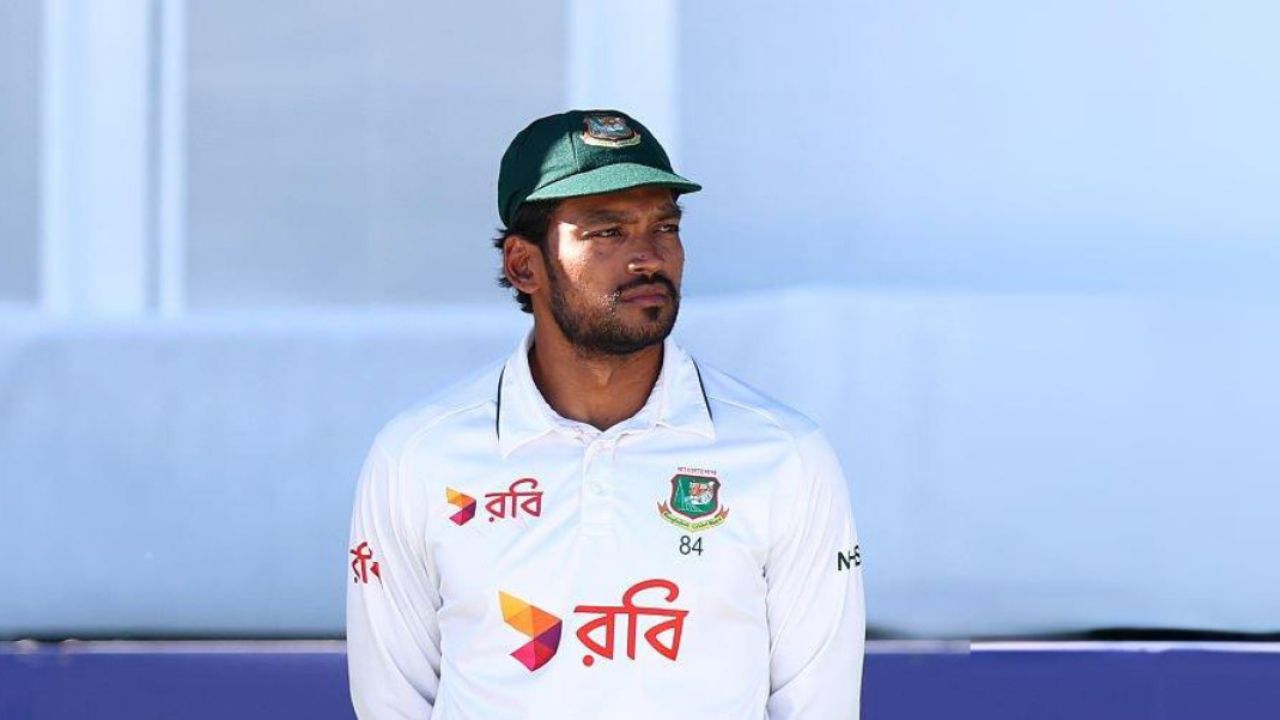


Time, in fact, has shifted dramatically. There was a time when simply stretching a Test into five days was considered an achievement for Bangladesh. Now they are winning back-to-back Tests that go the distance, session by session, without panic or chaos, but with control and planning.
Across these matches, Bangladesh players have been returning to the dressing room with their heads high and minds clear. There is no visible burden, no exhaustion written on their faces. Instead, there is intent, the intent to come back stronger in the next session, to contribute just a little more for the team. On different days, that intent has produced centuries, and on others, match-winning spells.
This series, in particular, highlighted collective performance. Across four innings in two Tests, Bangladesh had three centuries from Shanto, Litton and Mushfiqur. They also had three separate five-wicket hauls from Mehidy Hasan Miraz, Nahid Rana and Taijul Islam. The team is no longer built around one or two individuals. Performers have multiplied, and selection is no longer shaped around a single focal point.
The pacers deserve special mention. Throughout the series they were tested, but they kept returning with breakthroughs. Taskin Ahmed may not always dominate the wicket column, but he often delivers crucial early strikes. Miraz corrected himself after setbacks and responded with another five-wicket haul in Mirpur. Nahid Rana, with his raw pace, produced a spell of reverse swing that ripped through Pakistan’s resistance, including the unforgettable dismissal of Mohammad Rizwan.
Shoriful Islam also played his part in Sylhet, taking a key wicket in a low return but high impact moment, once again showing his value in breaking partnerships. And then there is Taijul, who claimed his 19th Test five-for and finished the match with six wickets, dismantling Pakistan’s middle order after breaking the 134-run stand between Rizwan and Salman Ali Agha with the new ball. Shanto’s trust in him was fully justified.
Mushfiqur Rahim was named Player of the Series, though Litton and Taijul also made strong cases. That in itself reflects Bangladesh’s evolution into a proper unit, where responsibility is shared and impact comes from multiple sources.
The mental shift was also visible in moments of confrontation. On the fourth evening, a brief incident near the sightscreen caused confusion as Rizwan stepped away mid-delivery, prompting exchanges from Litton Das and Shanto.
Even the pitches reflected Bangladesh’s change in approach. Gone are the days of preparing only slow, turning tracks. In Mirpur, Bangladesh posted 413 in the first innings, Pakistan replied with 386, and the match featured reverse swing and pace movement. In Sylhet, the surface had grass and offered true bounce. Pacers had assistance early, spinners came into play later, and Bangladesh were superior in every department. Pakistan were bowled out in all four innings across the series.
This is a team on an upward curve. A squad that now has a pace attack capable of taking 20 wickets, something unthinkable in earlier years when Bangladesh often played Tests without genuine fast bowling depth. The openers may not have fired in this series, but the middle order looks solid, and Taijul has emerged as a genuine match-winner, even contributing as a capable lower-order batter.
At the centre of it all is Shanto, Bangladesh’s most successful Test captain in terms of wins. Eight of them now. He briefly stepped down after the Sri Lanka tour last year, only to be brought back into leadership. That decision now looks significant. Without him, this “gangster” version of Bangladesh might not have emerged at all.
Bangladesh have now won their last four Tests against Pakistan. Shanto remains satisfied but insists there is more work to do, especially in overseas conditions. “I would say these four matches were very special,” he said. “We played really good cricket. But when we start performing consistently both at home and away, then I will say this team has truly improved.”
To perform everywhere, you need a kind of Gangster Paradise. The question is, has Bangladesh just started building one?