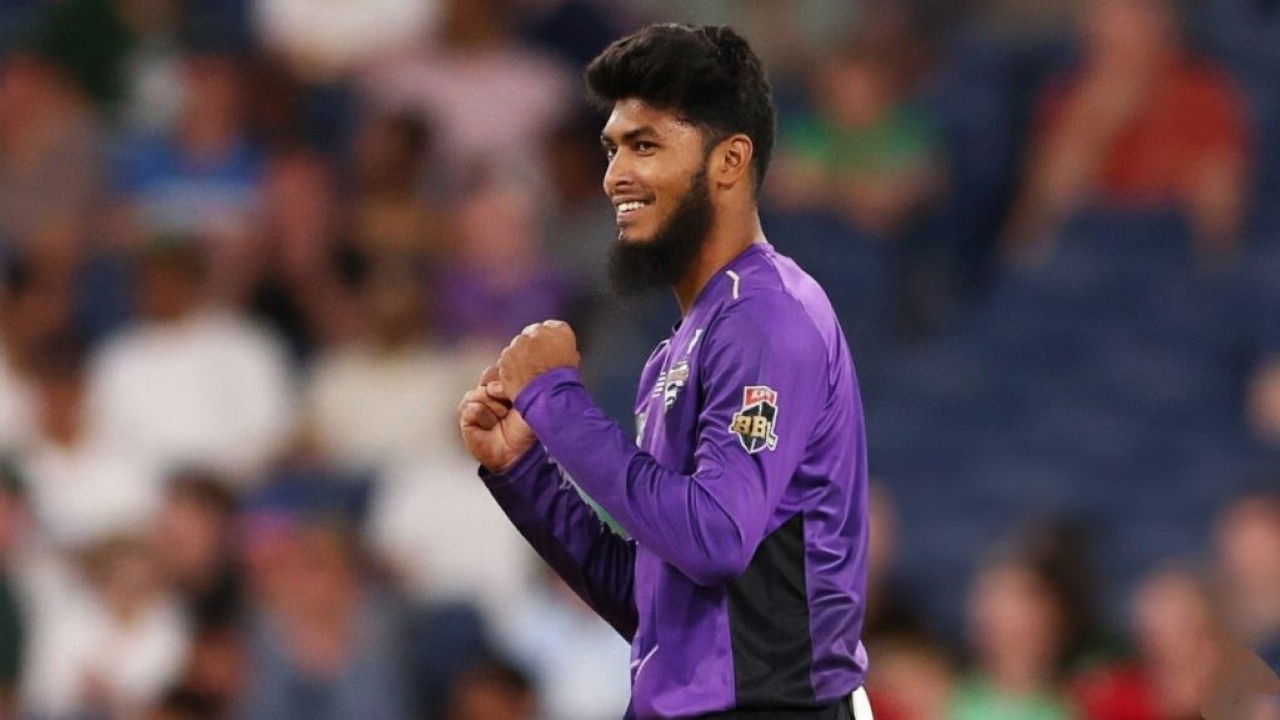




All members of the Bangladesh coaching staff and the reserve bench stood in front of the dugout at the Sylhet International Cricket Stadium on Monday, applauding as Mushfiqur Rahim walked back to the dressing room after a magnificent 137 off 233 balls on the third day of the Sylhet Test against Pakistan. The innings took him past Mominul Haque’s tally of 13 centuries, making him Bangladesh’s leading Test centurion.
Yet there was little celebration in his immediate reaction. As he stepped over the boundary cushions, frustration was visible. His innings had ended off a fuller delivery from Sajid Khan, as he attempted a slog sweep over deep midwicket but was caught by Mohammad Abbas. In frustration, Mushfiqur kicked away his helmet and gloves, a raw, unfiltered moment that revealed the hunger still burning within him despite being the oldest member of the side.
Even captain Najmul Hossain Shanto looked on in surprise as he clapped and patted him on the back while he walked off for the final session. Bangladesh’s second innings had ended at 390 all out, setting Pakistan a target of 437 runs with two days remaining.
Mushfiqur was the standout performer in the fading Sylhet light, his endless grit and intensity reflecting a cricketer still completely devoted to the game. He arrives at training before everyone else and leaves after everyone else. He is difficult to define in simple words, but he remains an embodiment of hard work, focus, and commitment, a flagbearer of Bangladesh’s Test cricket culture.
When he came out to bat in the second innings, Shanto was at the other end initially, though he could not convert his start into a big score. After his departure, Litton Das joined Mushfiqur, and together they stitched a 123-run partnership for the fifth wicket — their seventh century stand in Tests, the second-most for partnerships of 100 or more for the fifth wicket or lower.

Litton eventually fell after a mistimed shot off Hasan Ali to deep third man. But Mushfiqur remained, building his 14th Test century brick by brick, resetting after every delivery. His method was familiar: watching the field, taking guard, and playing each ball on merit. In the process, he also became the first Bangladeshi batter to score 16,000 international runs, and the oldest player to score a century in the World Test Championship.
He recently turned 39, yet there is no sign of slowing down. Every ball still feels like a beginning for him. He has been playing Test cricket for 21 years, and despite being Bangladesh’s most prolific Test centurion with 14 hundreds, he continues to walk off the field with the sense that there is still more to achieve.
Age, for him, is just a number.




After tea, Mushfiqur returned with 10 runs needed for his century. Off a rising delivery from Abbas, he guided the ball to cover point for a boundary. What followed was a rare, intense celebration, a roar directed at Abbas before he threw his bat down, raised both hands in gratitude, hugged Taijul Islam, and then performed a sajdah. It was a celebration that captured both his competitive fire and his deep sense of gratitude. The innings featured 12 fours and the only six of Bangladesh’s innings.
On his record-breaking century, Taijul Islam said in the press conference: “A century or a five-wicket haul is always a big achievement. When a senior player delivers, it inspires the juniors and helps them understand the value of partnerships and contributing to the team’s overall growth.”
During his marathon innings, Mushfiqur was involved in seven partnerships across the order. One of the most important was a 78-run stand with Taijul Islam, during which they faced 128 balls together. Mushfiqur often shielded Taijul, especially against Sajid Khan’s off-spin. There was a clear pattern: whenever Sajid came on, Mushfiqur tried to keep strike and absorb the pressure himself. Taijul eventually fell attempting to attack Sajid, mistiming a shot to long-off.
Having retired from white-ball cricket, Mushfiqur is now Bangladesh’s first player to reach 100 Test matches, focusing solely on the longest format alongside players like Taijul Islam and Mominul Haque. He has often said that Test cricket is the format he enjoys the most.
Earlier this year, during BCL One Day tournament, Mominul Haque expressed concern that players like him and Shadman Islam are increasingly being recognised only as “Test cricketers,” warning that such perceptions could discourage future generations from valuing the format.
As long as Mushfiqur Rahim remains in red-ball cricket, however, there will be inspiration for the next generation. The burden of being a Test cricketer feels lighter when a figure like him continues to lead by example. Having once been an all-format player, he now shows that Test cricket can still be played with the same intensity, hunger, and pride.
As the final light of the day faded, Mushfiqur was the first to walk off the field and the first to climb the stairs to the Sylhet dressing room, with the rest following behind, almost like a guide leading the way.
He is a senior figure who takes responsibility for everything around the younger players — from shaping training routines to reintroducing red Kookaburra balls in domestic cricket for better preparation, to advocating single-room stays for players to improve focus and comfort. Even newcomers like Amite Hasan can share light moments with him in practice, reflecting the culture he helps nurture.
Much like Heimdall, the watchman of the gods in Norse mythology, whose duty was to guard Bifrost, the rainbow bridge connecting Asgard to other worlds. Mushfiqur Rahim has become a symbol of Bangladesh’s 26-year Test journey through 21 years of relentless dedication, standing as a guardian of the country’s red-ball culture.
He continues to guide the younger generation onto that metaphorical rainbow bridge, one that may carry many of them to new heights in Test cricket in the years to come. The only difference is this: Heimdall stood watch over Bifrost with the Gjallarhorn in his hand, while Mushfiq does it with a cricket bat, shaping his legacy through the cricketer he has become.