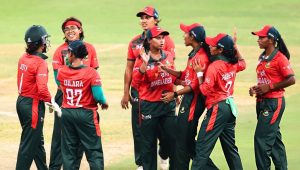
Bangladesh arrive at the Perth Rectangular Stadium on Monday facing a mathematical mountain that would make a Sherpa shudder. This Group B finale doubles as a de facto playoff for Peter Butler’s side, who must somehow engineer a five-goal swing to leapfrog the Philippines for a best third-place slot. The equation is brutally simple: win big or fly home. Yet Butler refused to frame the challenge in cautious terms when addressing the media.
The manager demanded bravery from a squad that has spent the last fortnight weathering East Asia’s powerhouses of China and North Korea. He brushed aside the yawning gap in FIFA rankings Uzbekistan sit at 49, Bangladesh at 112 reducing football to its purest form. Eleven versus eleven, on the turf. Statistics, he insisted, cannot dictate courage.
Tactically, the Perth clash is expected to resemble a high-stakes game of cat-and-mouse rather than an all-out blitz. Bangladesh employed a survivalist 5-4-1 low block against North Korea, but they will likely see more possession against a structured Uzbek side that prioritises order over flair. This shift demands a change in identity, moving away from the desperate defending that forced goalkeeper Mile Akter into 13 world-class saves across her first two outings.
Mile has functioned as the team’s pulse, keeping scorelines respectable even under relentless pressure. Her 44-minute stand against China showcased both the team’s resilience and a recurring flaw: Bangladesh often concedes cheap goals in the final moments of the first halfa “Championship Minute” syndrome. Uzbekistan will aim to exploit these lapses, relying on their superior physical stature.
The Uzbeks are expected to operate in a rigid 4-2-3-1 system, shielding the area in front of their box with aerially dominant Maftuna Shoyimova at its core. Unlike China’s agile wingers, Uzbekistan’s defenders are traditional powerhouses who rarely get bullied in the air, forming a formidable wall for Bangladesh’s smaller frontline.

The key to breaking this wall lies in the feet of Maria Manda, the “Midfield Maestro” tasked with controlling the transition. If she establishes a passing rhythm, she can supply Ritu Porna Chakma on the wings to test Uzbek full-backs’ agility. Uzbekistan’s defenders struggle with lateral movement and quick directional changes, so Bangladesh must avoid crowding the box and instead attack directly at tired defenders’ legs.
Butler’s blueprint for the upset leans on technical precision over brute force. He highlighted Nepal’s draw against Uzbekistan in the qualifiers as evidence that the Uzbek defence has cracks. By keeping the ball on the ground and drawing markers out of disciplined zones, Bangladesh can prevent a battle of second balls, where they usually falter.




Captain Afeida framed the night with a blunt philosophy: “Work matters more than words.” She reminded the squad that they carry nothing to lose, having already overachieved by qualifying. Her calm brevity underlines a focus on the grind of the 90 minutes rather than the glitz of the occasion.
To reach the miracle 5-0 target, Bangladesh must exploit Uzbekistan’s backup goalkeeper, Zarina Saidova, who replaced the injured Maftuna Jonimqulova. Long-range shots and an early high press could unsettle a keeper untested in high-stakes tournament football. An early goal might force Uzbekistan into “frustration fouls,” repeating patterns that previously earned them multiple bookings.
The looming threat remains Uzbekistan’s set-piece superiority, led by captain Lyudmila Karachik. If corners and free-kicks dominate, their height advantage could crush Bangladesh’s aspirations. Discipline near the box and patient ball retention are essential to wearing down Uzbek resolve.
The tournament format offers a lifeline to the two best third-placed teams, but the math for Bangladesh is unforgiving. Following the Philippines’ 2-0 win over Iran, the Filipinas ended Group A with three points and a -2 goal difference. Bangladesh, on 0 points with -6, must first win and then engineer a massive swing to claim the slot. A 5-0 win would move them to -1, leapfrogging the Philippines.
A secondary path exists through Group C, where India faces Chinese Taipei on March 10. A favourable India result could lower the points or goal difference threshold, easing Bangladesh’s task. But relying on Group C is a dangerous gamble; Butler’s side must play for maximum impact in Perth. A single goal conceded could end their Asian Cup journey.
Victory is feasible, but the five-goal margin feels like a fantasy against a physically imposing opponent. Uzbekistan will likely sit deep, absorb pressure, and exploit “Late Half” fatigue for counter-attacks. A narrow historic win is possible, yet it may still fall short of extending Bangladesh’s stay in Australia. Every minute must be treated like a cup final, where courage, discipline, and precision define the margin between dream and exit.
Starting XI:
Bangladesh: Mile Akter (GK), Sheuli Azim, Shamsunnahar, Afeida Khandaker (C), Kohati Kisku, Monika Chakma, Maria Manda, Anika Rania Siddiqui, Tohura Khatun, Ritu Porna Chakma, and Umehla Marma.
Uzbekistan: Maftuna Jonimqulova (GK), Madina Khikmatova, Nilufar Kudratova, Ilvina Ablyakimova, Feruza Turdiboeva, Diyorakhon Khabibullaeva, Maftuna Shoyimova, Amirova Gulzoda, Umida Zoirova, Lyudmila Karachik (C), and Leyla Oraniyazova.