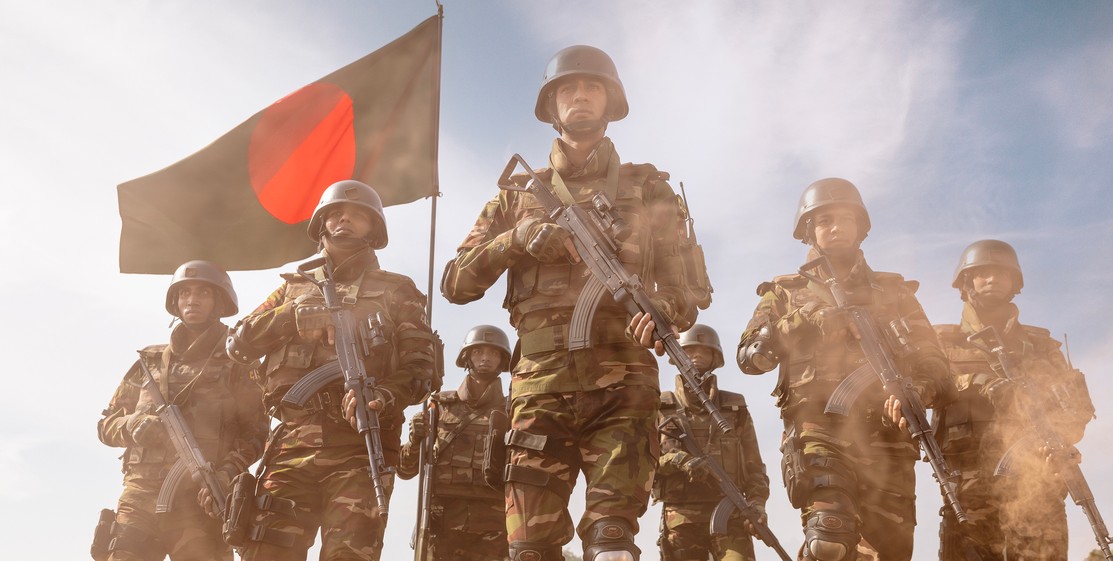



Bangladesh must stop asking its army to rescue politics and start building institutions that don’t need rescuing. The army helped liberate Bangladesh in 1971. It has served with distinction at home and in UN missions. Yet it keeps getting pulled into politics. Not because it seeks power, but because civilian institutions keep failing.
The pattern is a guardianship trap. Civilian institutions fail. Crisis follows. The army stabilises things better than the institutions it replaces. Its prestige grows. But the pressure to fix civilian capacity shrinks. Then the next crisis arrives, and the army is called again. Military competence quietly preserves civilian incompetence.
This is not new. Coups followed independence. Ziaur Rahman and Hussain Muhammad Ershad ran military-dominated governments. Democracy returned in 1991, but old institutional habits didn’t disappear. The 2007-08 caretaker government, backed by the army, promised reform. It interrupted dysfunction, it didn’t cure it.
Then came July-August 2024. The UN’s fact-finding report was not one-sided. It found soldiers who unlawfully fired on protesters, and army support for other security forces’ operations. It also found junior officers refusing orders to fire on civilians. By 5 August, the army largely let protesters advance rather than block them by force.

That contradiction matters. It shows institutions can hold moral boundaries even under extreme pressure. But it also raises a harder question: why did the line get approached at all? Professionalism isn’t blind obedience. A soldier obeys lawful civilian authority – not any order that carries a superior’s signature. The highest military virtue is disciplined service to lawful authority, not obedience for its own sake.
Bangladesh’s real problem has moved past coups. Influence now flows through intelligence networks, prolonged domestic deployment, emergency powers, and economic interests. After 2024, with police capacity collapsed, army officers took on magistracy powers. Understandable in the moment, dangerous if permanent. The real question is: what are we building so we won’t need it tomorrow?



Post-2024 investigations into enforced disappearances raised serious allegations against individuals in intelligence and paramilitary units. Institutional responsibility and individual conduct are different things. Accountability doesn’t attack the army – it protects the reputation of the thousands who served honourably.
February 2026’s elections, and troops moving back to barracks, prove something important: military role expansion isn’t permanent. But the fix isn’t the army’s job alone. Civilian politicians created these conditions too – demanding neutrality while hoping for favour, demanding obedience while issuing questionable orders. Police must earn back the public trust needed to keep soldiers out of the streets.
Bangladesh doesn’t need to weaken its military. It needs a pro-professional settlement: exceptional, time-limited domestic deployments; real oversight of intelligence agencies; a parliament equipped to scrutinise defence policy; transparency around military commercial interests; and credible legal accountability for abuses.
None of this diminishes the army. An institution earns more respect, not less, when its power has clear limits. The true test of military professionalism isn’t how much power it can wield – it’s whether it knows exactly where that power must stop.
The views expressed in this article are solely those of the author
The writer is an Associate professor of business management and leadership, a former corporate executive, a retired major and an ex-cadet