
Bangladesh must adopt a bipartisan foreign policy framework to navigate an increasingly complex global geopolitical landscape, speakers said at a policy dialogue titled “Foreign Policy, Diplomacy, and Global Engagement.”
They stressed that all political forces should come together to formulate a long-term foreign policy that remains consistent regardless of changes in government. The dialogue was organised by the Centre for Governance Studies (CGS) and moderated by its President Zillur Rahman.
Adviser to the BNP Chairperson Ataur Rahman Dhaly said Bangladesh’s strategic importance stems from its three-sided border with India, shared river systems, environmental interdependence, and its role in the security dynamics of India’s northeastern region – making Dhaka – Delhi relations strategically vital.
He underscored the need for effective border management to address disputes, illegal trade, and cross-border infiltration.
Dhaly further noted that China has emerged as Bangladesh’s second most important strategic partner after India, while economic relations with the United States and European countries remain critical, as the bulk of Bangladesh’s exports are destined for these markets.

Former ambassador Kamrul Ahsan said a strong foreign policy must be rooted in broad public support. Countries with weak public legitimacy, he warned, often find themselves vulnerable to external pressure and decisions imposed by more powerful states.
Former state minister for foreign affairs Abul Hasan Chowdhury observed that global order is steadily shifting toward a multipolar structure. In this context, he said, Bangladesh must pursue a balanced approach in its relations with all major powers.


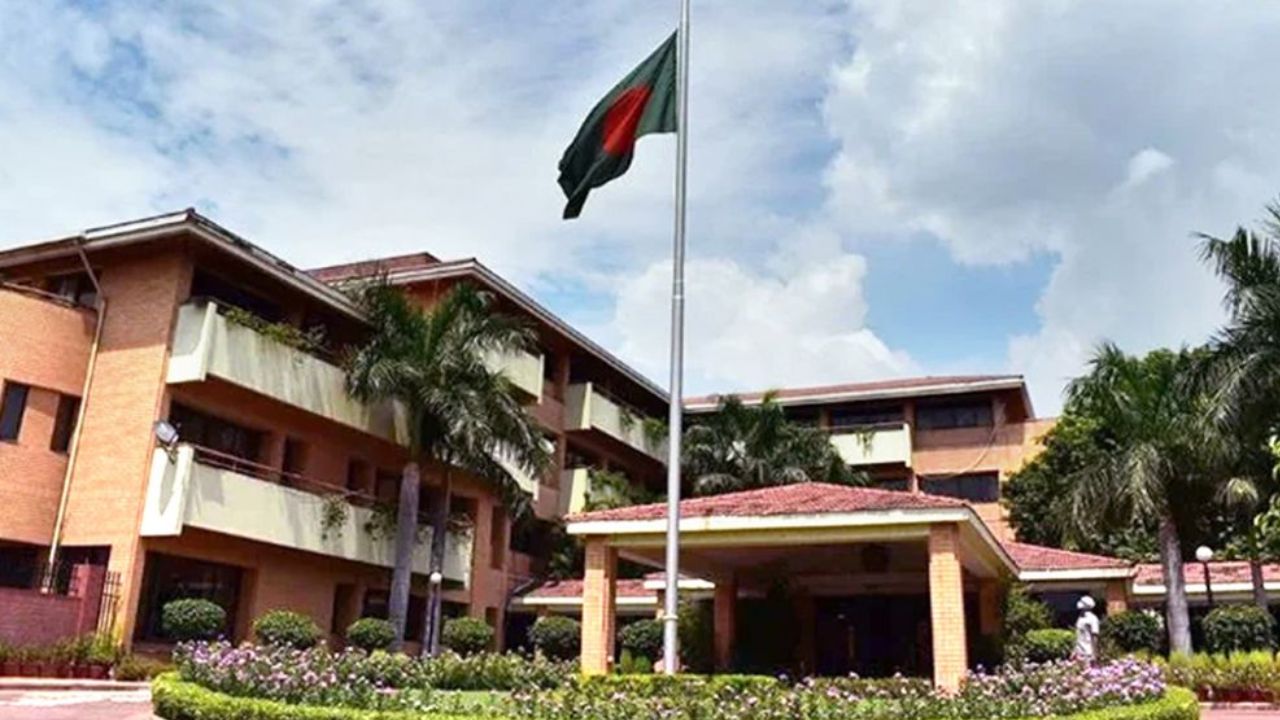

He also highlighted the importance of strengthening diplomatic negotiation capacity, citing Pakistan’s ability to avoid US trade sanctions despite purchasing arms from China as an example of effective diplomacy.
Chowdhury added that governments backed by public confidence are better positioned to take firm and effective foreign policy stances.
Professor Amena Mohsin emphasised the need for institutionalisation in foreign policy, describing capacity building as one of the most pressing challenges. She expressed hope that regardless of political changes, the Ministry of Foreign Affairs would remain free from politicisation.
Executive President of Gono Forum Advocate Subrata Chowdhury criticised Chief Adviser Muhammad Yunus, saying that despite promises of major improvements in foreign policy after assuming office, no significant achievements have been visible.
Instead, he alleged that the chief adviser’s frequent foreign travels have surpassed even those undertaken by former foreign minister Dipu Moni.
Senior Joint Convener of the National Citizen Party (NCP) Samanta Sharmin identified three key pillars of Bangladesh’s foreign policy: the Belt and Road Initiative (BRI), graduation from Least Developed Country (LDC) status, and engagement in the Indo-Pacific region.
She stressed that without strong domestic governance, sustainable foreign relations are not possible. She added that Bangladesh’s strength in global diplomacy lies in its “power of moral legitimacy.”
In his concluding remarks, CGS President Zillur Rahman said that following the July uprising, Bangladesh’s relations with neighbouring countries have entered one of the most complex phases in its history.
He also noted that despite the prolonged Rohingya crisis, Bangladesh has failed to secure a permanent solution or effectively internationalise the issue.
CGS Executive Director Parvez Karim Abbasi said Bangladesh’s foreign policy continues to suffer from a lack of continuity, with frequent shifts in direction over time. He added that the absence of clearly defined national priorities remains a major challenge.