The Bangla Academy observed Language Martyrs’ Day and International Mother Language Day on Saturday, February 21, with a comprehensive set of programmes commemorating the historic Language Movement.
The day’s observances began at 12:30 am with the laying of wreaths at the Central Shaheed Minar. Led by Director General Prof Mohammad Azam, officials and members of the Academy paid tribute to the martyrs on behalf of the institution.
At 8 am, a self-composed poetry recital was held at the Nazrul Stage on the Academy premises. More than a hundred poets recited their original works in tribute to the spirit of Ekushey. The session was presided over by poet Abdul Hai Shikdar.

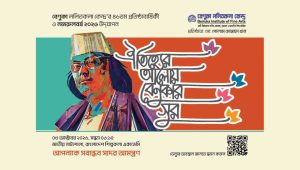
Later at 11 am, the Amar Ekushey Lecture 2026 took place at the same venue. Delivering the welcome address, Prof Mohammad Azam highlighted the foundational role of the State Language Movement in shaping the ideological basis of Bangladesh.
“The Language Movement lies at the core of the conception of the Bangladeshi state. One of its major outcomes was the establishment of Bangla Academy,” he said. He stressed that while ensuring the proper use and development of Bangla as the state language, equal awareness must be maintained regarding the linguistic rights of nearly fifty language-speaking communities existing in the country.




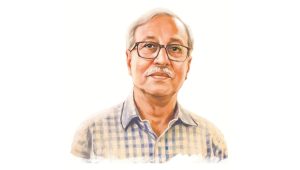
The keynote Amar Ekushey Lecture, titled ‘Chhatra-Suhrid er Itibritta,’ of a school monthly was delivered by noted economist Dr Mahbub Ullah. He traced the history of Chhatra-Suhrid, a monthly magazine published by students of Kaliganj Raja Rajendra Narayan High English School in greater Dhaka.
According to him, the publication began in September 1911 (Ashwin 1318 Bangabda) and continued until Ashwin 1320 Bangabda, bringing out a total of 25 issues. Of these, 24 issues have been preserved in their original form in a special compilation titled Chhatra-Suhrid: Hiranmoy Smriti, edited by Dr Mohammad Wahiduzzaman Manik.
Dr Ullah noted that distinguished personalities of the time, including Rabindranath Tagore, praised the magazine, demonstrating its early acclaim. He said the literary engagement of young students from that era reminds contemporary audiences that the spirit of Ekushey and devotion to Bangla literature flow from a deep historical continuum.
The programme was chaired by Bangla Academy President Prof Abul Kasem Fazlul Haq, who remarked that the history of the Language Movement is not merely a matter of the past. “It embodies a living present and guides us toward an enlightened future, sharpening our commitment to a humane nation-state grounded in language,” he said.
The event was moderated by Bangla Academy Deputy Director Sayra Habib.