Sixteen months after the dramatic ouster of Sheikh Hasina’s long-ruling government, Bangladesh finds itself once again in uncharted territory.
The sense of safety that briefly followed the change of power has evaporated. Across the country, people are growing anxious — parents hesitate to send their children to school, commuters on buses and trains glance nervously over their shoulders, and even corporate offices are warning employees, especially women, to stay alert.
The streets of Dhaka no longer buzz with their usual energy. A creeping unease has set in — the unmistakable feeling that the country is sliding back into turmoil.
From hope to fear
When the interim government led by Nobel laureate Muhammad Yunus took charge following the fall of what many labelled a fascist regime, expectations were sky-high. The promise was simple: restore democracy, ensure rule of law, and return power to the people through free and fair elections.
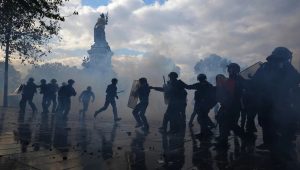
Sixteen months on, that optimism has dimmed. With crude bomb attacks and arson spreading across the country, questions are being asked: has Bangladesh come full circle — or worse, regressed further than before 5 August 2024?

Shadows of the old order
Many believe they know who is behind the violence. Intelligence reports and public suspicion point towards followers of the ousted Awami League, whose top leadership now operates from across the border in India. Their apparent goal is to destabilise the interim government and instil fear among citizens ahead of the upcoming elections — elections that many hope will usher in a new democratic Bangladesh.
If true, such actions undercut the Awami League’s repeated assertions of patriotism. A political party that claims to care for the nation cannot turn its weapons on its own people. For many, the escalating violence only strengthens the justification for the Awami League’s removal from power, and the party should no longer be allowed to operate as a political entity.
Interim government under fire
Yet, for all the blame directed outward, the interim government cannot avoid scrutiny. Despite deploying both the police and military with magistracy powers, it has failed to restore order. Undoubtedly, sixteen months is more than enough time to show results.




The argument that the interim government is hamstrung by officials loyal to the old regime no longer holds water. After sixteen months in power, it has had sufficient time to reshape the bureaucracy. Any continued failure now points to its own shortcomings.
Diplomatically, too, the government has little to show. Efforts to convince India to restrict Awami League activities on its soil have been, at best, lukewarm. India may not have listened, but the Yunus administration has not been seen trying hard enough.
A risky ban and political fallout
One controversial decision has drawn particular criticism: the executive order banning the Awami League’s political activities. While intended to curb subversion, it may have backfired. Stripped of legal channels, party loyalists with access to enormous funds — accumulated over sixteen years of alleged corruption — have reportedly turned to underground networks. The government should have anticipated this. Cornering such a large political base almost guarantees illicit pushback.
BNP and Jamaat add to the strain
Meanwhile, Bangladesh’s other major political forces are far from blameless.
The BNP, long seen as a potential stabilising force, is mired in internal feuds that have already cost lives. Credible allegations persist that the party harbours criminal elements for political gain — a reality forcing law enforcement to divert critical resources.
As for the Bangladesh Jamaat-e-Islami, though not accused of the same level of criminal infiltration, it continues to stage frequent street programmes pressing for a referendum on the July Charter ahead of elections. These activities, though mostly peaceful, have further stretched security forces and heightened public unease.
A test of credibility
For Yunus and his cabinet, the stakes could not be higher. The national elections scheduled for February are widely seen as a test of the interim government’s credibility. If worsening security forces a postponement, the administration may lose the public’s confidence entirely.
Heavens forbid the elections are delayed. If that happens, the government will have only itself to blame.
The road ahead
Amid the uncertainty, one message echoes across political divides: Bangladesh cannot afford another breakdown.
The government and political parties must form a united front to reassure citizens and isolate those bent on sabotage. The state still retains formidable power through its police and military apparatus — but will must match means.
For now, Bangladesh stands at a crossroads — between the promise of reform and the peril of relapse. Unless the interim leadership acts decisively to crush the violence and restore public trust, the dream of a peaceful democratic transition may once again slip beyond reach.