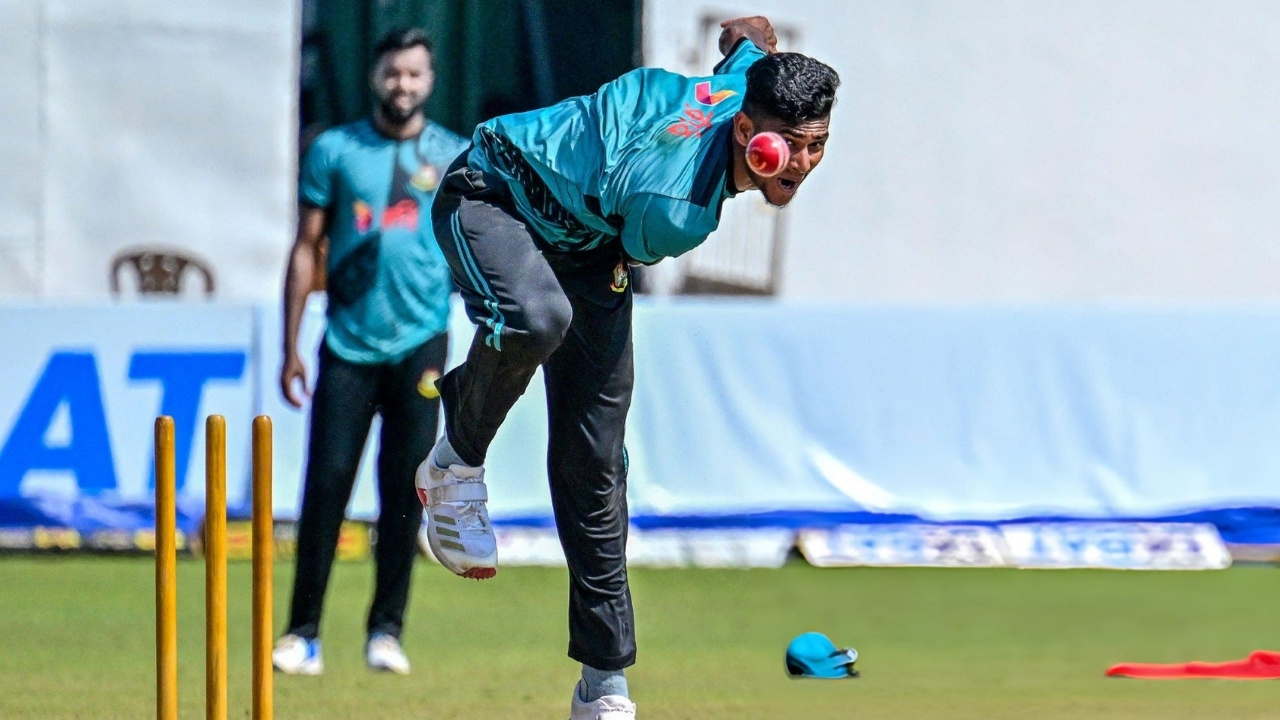



Nahid Rana’s absence from Bangladesh’s Australia Test tour has triggered questions about his workload, but experts and team sources suggest a wider picture. Zimbabwe’s altitude, high intensity bowling and physical demands combined to put extra stress on the country’s fastest bowler.
Nahid Rana walked off the field with a side strain during the second T20I of Bangladesh’s tour of Zimbabwe. A scan after his return home confirmed a Grade 2 side strain tear, ruling him out of Bangladesh’s upcoming Test tour of Australia, their first Test series Down Under in 23 years. It was a major blow, with the express pacer expected to spearhead the attack in the two match series.
Since he was ruled out, there has been widespread debate over what caused the injury, with some pointing to poor workload management and others arguing he had simply been overused. But sources suggest the circumstances surrounding the Zimbabwe tour present a much broader picture.
Following defeats in the one off Test and ODI series, team management were under pressure to salvage the T20I leg, with expectations from the top of the Bangladesh Cricket Board (BCB) to turn the series around. Mustafizur Rahman and Shoriful Islam had already returned home injured, leaving Nahid as Bangladesh’s frontline pace option.

Workload, however, was not the only challenge. Zimbabwe’s two venues presented physical demands unfamiliar to Bangladesh’s players. Harare sits roughly 4,865 feet above sea level, while Bulawayo is around 4,455 feet. Although oxygen concentration in the air stays constant regardless of altitude, lower air pressure at those elevations reduces how much oxygen is available with each breath, leaving the body with roughly 15 to 17 percent less usable oxygen than at sea level. That typically causes quicker fatigue, faster breathing and greater exertion before players fully acclimatise, with heart rates rising as the cardiovascular system works harder to supply oxygen to the muscles.
A member of Bangladesh’s team management, speaking anonymously, said GPS data reflected exactly that pattern. “Because the players were getting less oxygen, it affected their energy production. Our data showed heart rates were extremely high in Zimbabwe, especially among the fast bowlers. Nahid’s went above 200 beats per minute. He simply could not take in oxygen at the level his body required.”




Sports science suggests an express bowler operating at 145 to 150 km/h can typically reach heart rates of 160 to 190 beats per minute during an intense spell, a figure that can climb further at moderate altitude before full acclimatisation. The same official added that the psychological side of playing at altitude should not be overlooked. “Once you’re around 1,500 metres above sea level, there’s a psychological factor too. You know there’s less oxygen available. Zimbabwe feels different, like you’re playing even higher than the actual altitude.”
The elevated heart rate was only part of the picture. Nahid has built his reputation on extreme pace and rarely compromises on speed, even as fatigue sets in. A member of the BCB medical department believes that mindset itself may raise injury risk. “He bowls at 150 km/h and his mentality is that he has to maintain that pace. He isn’t going to suddenly drop to 140. Continuously pushing to hold that speed can become a contributing factor.”
Even with sound workload management, the body’s tolerance for physical stress shifts under unfamiliar conditions, and adapting to altitude while maintaining maximum pace places extra strain on muscles and connective tissue. Another official pointed to the body’s overall load capacity. “Whenever you compete in challenging conditions, your heart has to work harder. Perhaps we weren’t fully prepared for the level of load taking capacity those conditions demanded.”
Playing surfaces added a further complication. Higher altitude usually means thinner air and less resistance, letting shots and throws travel further, but in Harare and Bulawayo the opposite occurred: a sandy layer beneath the grass slowed the ball across the outfield. Running, fielding and bowling on such surfaces demands greater force from the lower body, increasing stress on the legs and back. “On a sandy base you have to push much harder with every movement,” one BCB official explained. “That extra push creates fatigue in the leg muscles and the back.”
Those close to the national team are reluctant to pin Nahid’s injury on a single cause. Altitude, elevated heart rate, accumulated fatigue, travel, weather, recovery, sleep and mental stress can all interact, particularly for bowlers who consistently operate at maximum intensity.
A physiotherapist who has worked with Bangladesh’s cricketers said injuries are almost always multifactorial. “Physical fatigue, conditioning, mental stress, altitude, travel fatigue and whether a player has adapted to the weather all play a role, alongside personal circumstances that affect recovery.” Sleep and psychological wellbeing matter too, the physiotherapist added: a player dealing with personal issues and disrupted sleep ahead of a match faces yet another compounding factor. “Injuries are usually the result of several factors coming together, rather than one isolated reason.”