


Artificial intelligence tools are being developed in Mexico to help search for more than 134,000 missing people, offering new hope to tens of thousands of grieving families.
Veronica Rosas is among the many Mexican mothers searching for children who have disappeared amid violence fuelled by brutal turf wars between criminal cartels.
Her 16-year-old son, Diego, went missing in September 2015 in the central town of Ecatepec after leaving home to meet friends, reports AFP.
The state prosecutor’s office determined that Diego had been kidnapped by a criminal gang. However, authorities have failed to establish which group was responsible, the motive behind the abduction or whether he is still alive.
“It’s been 11 years and I still don’t know where Diego is. There’s no line of investigation leading us to find out what happened to my son,” Rosas, 52, said during a demonstration demanding justice in Mexico City.

AI-driven age progression
In response to long-unresolved cases, two Mexican universities are developing AI tools to help families find answers.
Mexico’s main public university, the National Autonomous University of Mexico (UNAM), has developed a software tool called “Regresa” (Return). It uses anthropometry, the study of human body measurements, to project how the faces of missing children change as they grow older.
With official investigations dragging on for years, families have repeatedly called for updated images of their missing loved ones.




Countries such as the United States, India and China already use facial recognition and age-progression software. However, most tools used by Mexican prosecutors rely on open-source photo databases that do not adequately reflect typical Mexican physical traits.
To address this gap, the developers of Regresa compiled an independent image bank using hundreds of photographs and data supplied by 75 Mexican volunteers.
Anthropologist Ana Juarez, a co-founder of the project, said Regresa uses a scientific method based on craniofacial and skull development rather than simply applying wrinkle filters or modifying facial contours.
Mapping disappearances
Beyond age progression, artificial intelligence is also being used by Emiliano Zolla, an anthropologist at the private Ibero-American University, to map disappearances by gender, age and the circumstances surrounding people’s disappearance.
Using data from the State of Mexico, the country’s most populous region, Zolla found that a significant proportion of missing people are young women who disappear while travelling to or from school or work.
Rosas said the use of AI could be a game-changer, noting that missing children no longer look like the young faces shown on their original posters.
“This initiative is very important because they’re not the little people who were taken back then,” she said.
Grassroots search initiatives
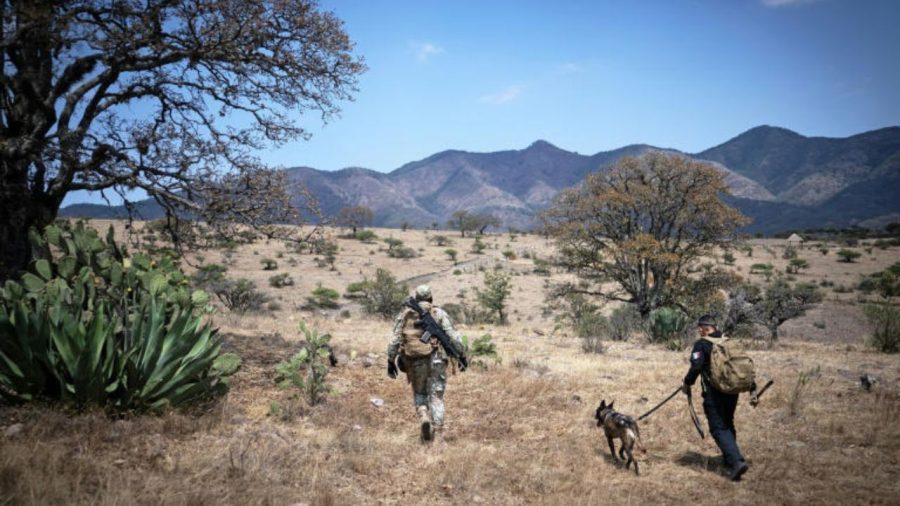
Years of inaction by state authorities have forced many families to conduct their own investigations.
Rosas has installed a makeshift mailbox bearing Diego’s photograph on a main avenue in Mexico City to collect clues about his whereabouts and receive birthday greetings for him.
Similarly, Karla Lechuga formed a search collective after her 19-year-old son, Jeshua Cisneros, disappeared in 2025.
Search collectives have installed dozens of “peace boxes” in churches across Mexico to gather vital information. They also display photographs of missing people in public spaces and appeal to criminal organisations for anonymous tips.
“We have found some people alive, unfortunately others not,” Lechuga said.