


Apple on Tuesday announced the HomeView, marking the company’s most substantial move into the smart home market in nearly a decade.
Serving as a dedicated household hardware hub, the device gives Apple’s revamped version of Siri a permanent presence in consumer living spaces, establishing itself as a central component of Apple’s broader artificial intelligence strategy.
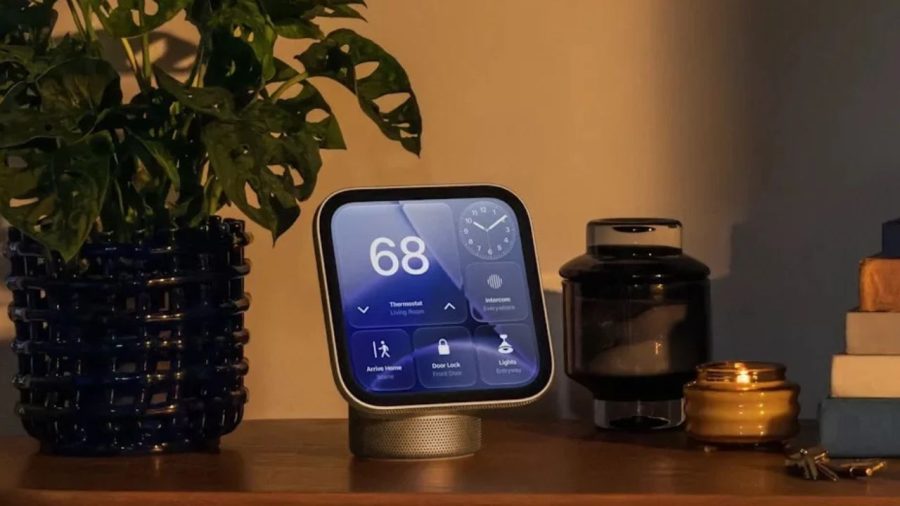
The HomeView features a 7-inch screen mounted atop a base speaker, alongside plans for a wall-mountable edition. Priced at $299, the device is available for preorder immediately ahead of its official retail debut on 13 November.
The HomeView utilizes Siri AI to surface contextual information pulled directly from a user’s calendar and text messages and can distinguish up to six individual household members by face.

To protect personal boundaries in shared spaces, the home screen dynamically shifts its apps, widgets, and personalised content depending on which family member is interacting with the device, keeping private calendars and messages hidden until the corresponding person is recognised.
Drawing inspiration from the Apple Watch, the interface includes customizable display faces for weather, photo galleries, or schedules, while conversations with Siri sync across other Apple devices. Underpinning the hardware is an isolated subsystem that processes all camera and microphone feeds locally, ensuring raw sensor data cannot be accessed by third-party apps, software, Apple, or the users themselves.
Beyond acting as an AI assistant, Apple is positioning the HomeView as a household centerpiece for controlling smart home appliances, making FaceTime calls, streaming music, and displaying photos. Critically, the device expands advanced AI access across households where family members may still use older smartphones.




Upgraded Siri AI capabilities have historically required an iPhone 15 Pro or later, but the HomeView provides a shared domestic portal where anyone in the home can interact with the newer software. While equipped with a touch display, the hub is primarily marketed as a hands-free alternative that allows users to communicate with Siri without reaching for their handsets.
The HomeView is among several major hardware introductions under new Apple CEO John Ternus, arriving shortly after the debut of Apple’s first foldable iPhone last month.
Alongside the smart display, Apple unveiled an updated HomePod Mini, a refreshed Apple TV 4K with Siri AI integration, and a new suite of connected home accessories built in collaboration with LG and Schneider Electric.
The synchronised launch follows sustained pressure from Wall Street analysts, who have frequently pressed Apple leadership on earnings calls regarding its strategy for dedicated hardware built specifically for the generative AI era.
Apple’s aggressive expansion into domestic hardware reflects an effort to reverse years of lagging market share in the smart speaker sector. Following the original HomePod’s launch in 2017, Apple struggled to challenge early market leaders Amazon and Google.
According to International Data Corporation (IDC) data, Apple held just 5.2 per cent of the global smart speaker market in 2025, trailing far behind Google at 29 per cent and Amazon at 40.9 per cent. The HomeView arrives amid a broader industry shift toward ambient, voice-first computing interfaces, with competitors like Meta rolling out smart glasses powered by its Muse AI and OpenAI developing dedicated consumer devices.
While Apple is betting that strong privacy protections and tight ecosystem integration will give the HomeView traction, company leadership has also acknowledged the enduring supremacy of its core mobile lineup; speaking at an event last month, Ternus maintained that no product in the world is better designed to act as an individual’s personal hub than the iPhone itself.