It has been nearly ten years since Cesare Tavella, a 50-year-old Italian aid worker, was gunned down while jogging on a quiet street in Dhaka’s high-security diplomatic zone. For many, the memory of that shocking evening on September 28, 2015, never faded. And for those who loved him—or bore witness to the unraveling investigation—the pain has been compounded by years of unanswered questions.
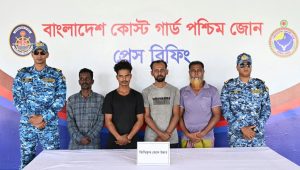
On Thursday, July 3, 2025, a Dhaka court finally brought some closure. In a courtroom that saw both grief and relief, Judge Sheikh Samidul Islam of the Third Additional Metropolitan Sessions Judge Court sentenced three men to life imprisonment for their roles in Tavella’s murder: Tamjid Ahmed alias Rubel, Rasel Chowdhury, and Minhajul Arefin alias Bhagne Rasel.
But the verdict also left many questions lingering. Four others—BNP leader MA Quayum, his brother Abdul Matin, Shakhawat Hossain, and Sohel—were acquitted, despite early confessional statements and years of suspicion. Two of them, Quayum and Sohel, remain fugitives, their whereabouts still unknown.
Cesare Tavella wasn’t a diplomat or a politician. He worked for ICCO Cooperation, a Netherlands-based NGO, helping Bangladesh improve its food security and agriculture systems through a project called Proofs (Profitable Opportunities for Food Security). He arrived in May 2015 with quiet dedication and a vision to make a difference.
“He never talked about politics,” said Alo Rani Dhali, ICCO’s administrative manager, the day after the murder. “He just wanted to help rural farmers. That was his mission.”

On that fateful day in 2015, he was doing something as ordinary as going for a jog—just around sunset, down the peaceful roads of Gulshan-2. Suddenly, three men on a motorbike approached. Two jumped off and opened fire, shooting him from behind before fleeing.
Locals rushed Tavella to United Hospital, but it was too late. He had suffered multiple bullet wounds. Nothing had been stolen; it was an execution.


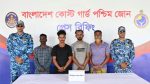
In the days following the murder, a claim of responsibility surfaced—allegedly from the Islamic State (IS)—marking what many believed was the group’s first direct action in Bangladesh. The international community reacted with alarm. Western embassies locked down, the Australian cricket team postponed their tour, and the spotlight turned to Bangladesh’s struggle with rising extremism.
But investigators later pointed to a different narrative. The attack, they said, was part of a larger political conspiracy aimed at destabilizing the country and creating fear among foreign nationals.
Among those accused was MA Quayum, a senior BNP leader, whom investigators alleged was the mastermind behind the killing. His younger brother, Abdul Matin, was also implicated. Both were accused of funding and organizing the attack—allegedly to provoke international backlash against the then government.
During the trial, five of the accused—including Matin—confessed to their involvement. Despite this, Matin was later acquitted, as the court ruled the confessional statements insufficient without corroborating evidence.
The trial stretched over years. Some of the accused remained in custody, others out on bail, and two—including the alleged mastermind—vanished. For the victims’ family and those close to the case, the delays were agonizing.
When the verdict was finally read out on Thursday, only four accused were physically present in court. The judge, noting the gravity of the crime, sentenced Rubel, Rasel Chowdhury, and Bhagne Rasel to life in prison. The courtroom was somber—no victory, just the final echo of a painful chapter.
While the convictions bring some justice, the story remains incomplete. MA Quayum and Sohel, the two absconders, are still at large. For many, their absence leaves a cloud over the verdict.
“Cesare deserved better,” said one ICCO colleague, who did not want to be named. “He came here to do good. He died for reasons that had nothing to do with him. And even now, the people who sent those killers may never face justice.”
For Bangladesh, the case of Cesare Tavella is a stark reminder of how fragile peace can be—even in a city’s most protected corners. For the international aid community, it’s a story of risk and loss, and for Tavella’s family, who watched from afar, it’s a wound that may never fully heal.
Ten years on, the road where Tavella was killed is still busy, still quiet in parts, and still haunted by the memory of a man who wanted only to help, but whose death became a symbol of something much darker.