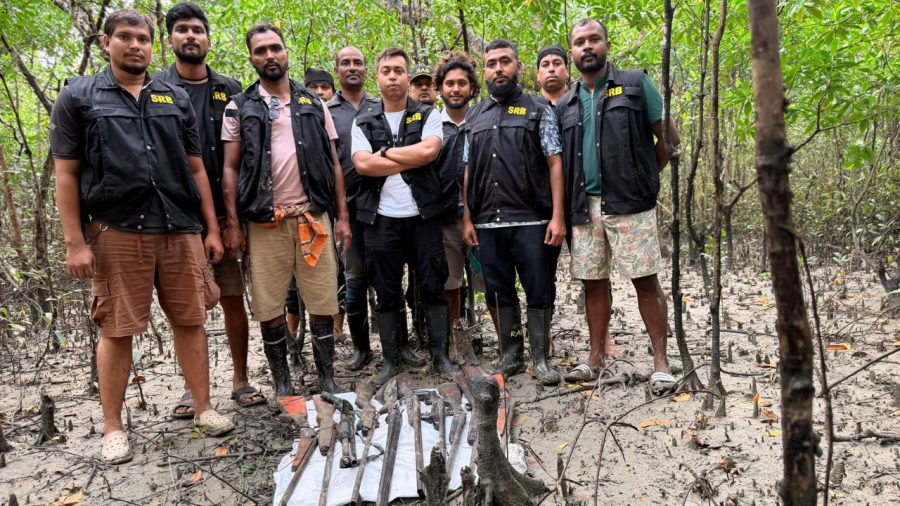



Members of Special Response Battalion have recovered 14 firearms and a cache of ammunition from different locations in the Sundarbans following the surrender of 15 members of two groups of the Alif Bahini robbers gang.
The recovered items include 274 rounds of live ammunition, 23 empty cartridges, seven walkie-talkie sets and six bulletproof jackets. The weapons and equipment had been buried in different parts of the forest three to four months ago.
Major Md Nazmul Islam, deputy commander of SRB-6 Khulna, disclosed the details at a press conference at the battalion’s headquarters in Khulna on Monday.

He said continuous joint force operations deep inside the Sundarbans had made it difficult for the gang members to survive, prompting them to surrender. Following their surrender on 9 October near the Ar Pangasia River, search teams spent two days recovering the buried weapons and equipment, timing their operations around local tidal conditions.




The surrender followed a targeted joint force operation on 7 October under Operation Restore Peace in Sundarbans, launched on 2 March by the Coast Guard, SRB, local administration, Naval Police and Forest Department to ensure the safety of fishermen, bawalis (woodcutters) and mouyals (honey collectors).
Nazmul said the robbers had no weapons with them when they surrendered. Authorities have collected information about criminal cases against them and are providing necessary legal assistance as court proceedings continue.
Investigators are also pursuing arms suppliers, extortionists and others who collected money from local fishermen. Authorities have gathered details about arms suppliers in Satkhira, Koyra, Dacope and Patuakhali, including their names, contact numbers, supply channels and financial transaction methods. More details will be disclosed later.
Major Nazmul urged other robbers groups in the Sundarbans to surrender or face strict legal consequences. SRB officials said the surrender and weapon recovery would help improve security for forest-dependent workers and protect the Sundarbans’ biodiversity, natural resources and coastal economy.