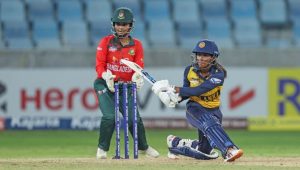

Bangladesh’s long struggle to chase 150-plus totals in T20 internationals has now become a defining flaw of their white-ball cricket. The latest defeat to Ireland in Chattogram has pushed the numbers into even more alarming territory. Bangladesh have now attempted to chase such targets 57 times and have lost 48 matches, winning only 9. Their win percentage stands at just 15.79 per cent, one of the lowest among established cricketing nations.
This is not a recent problem nor a product of isolated collapses. It is a pattern that has persisted across several years, multiple captains, different coaches and changing batting line-ups. The failures follow the same script. A shaky start, early wickets, a brief attempt at recovery, and eventually a slide that leaves the chase out of reach with overs to spare.
Towhid Hridoy was asked directly about this record after the match and whether such repeated failures point to a mental block or a technical deficiency. He rejected the idea that Bangladesh are incapable of chasing big totals, placing the blame on mindset and execution rather than ability.

“Totally it is a matter of thinking. It is not that we cannot do it. We have scored 200 before and lost even after making 200. If our thinking is correct and if we execute properly, then it will not be difficult. It is not that we have never chased 180 or 200. Many of us are used to these situations. I hope we will do better from here,” Hridoy said.
His response was calm, confident and optimistic, yet it stood in sharp contrast to the numbers. Bangladesh may feel they have the ability, but their record shows that they fail in these scenarios far more often than they succeed. The reluctance to acknowledge the scale of the problem remains almost as striking as the statistic itself.




The match in Chattogram followed the familiar pattern. Ireland’s 181 for 4 was a strong but chaseable total on a good batting pitch. Bangladesh, however, unravelled within minutes. Four wickets fell inside the powerplay.
Only Towhid Hridoy resisted. His unbeaten 83 off 50 balls was an innings of authority and intent, filled with well-judged hitting and calm strokeplay. But it was a lone effort. No other batter crossed twenty. The middle order could not rebuild, and the lower order arrived with the task already lost. Even the modest ninth-wicket stand with Shoriful Islam only served to narrow the margin of defeat rather than revive the contest.
Bangladesh eventually crawled to 142 for 9, losing by 39 runs. It was not the margin that stung, but the inevitability of it. The chase broke down in exactly the same way so many others have: early wickets, rising pressure, and a solitary innings attempting to hold things together without support.
In recent times, we have seen Bangladesh become better at six-hitting in T20I cricket, but overall, the totals have not improved, and the issue remains the same when it comes to chasing even mid totals.
If Bangladesh are to move forward as a T20 side, they must confront this record with honesty. Chasing 150 plus cannot continue to be an insurmountable hurdle for a team with growing ambitions. A batting order that depends on one player to salvage entire innings is fragile by design. Until the side acknowledges the scale of the chasing problem, corrects its approach in the powerplay and rebuilds its middle-order identity, the same script will continue to replay.