In the thousand-year history of Bangla literature, many writers have remained relevant across ages. But very few cemented their legacy with their very first novel. Among those rare voices was Abu Ishaque, one who did not merely tell stories, but etched the soul of a nation onto paper.
Born on November 1, 1926, in Shirongol village of Shariatpur, Abu Ishaque’s words, sharp, unyielding, and deeply human, continue to shape the conscience of Bangladeshi literature nearly a century later. His debut novel ‘Surja Dighal Bari’, written at only the age of twenty-one, remains one of the most powerful depictions of rural Bengal in the shadow of war, famine, communal riots, and Partition.
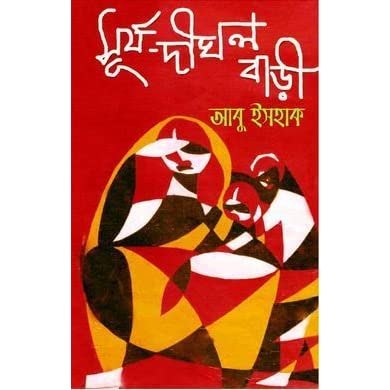

First serialized in Saogat and later published in 1955, the novel follows Jaigun, a woman fighting poverty, prejudice, and superstition, a reflection of a nation struggling for survival and dignity. It showed how independence changed little for the rural poor; if anything, their suffering deepened; and this is still very much the case in this wonderland.
Ishaque began his literary journey with the short story Abhishap, published in Kazi Nazrul Islam’s Nabajug. His works soon appeared in Saogat and Azad, earning wide attention for their realism and empathy. From Padmar Palidwip to Jaal, his writings questioned corruption, exploitation, and the manipulation of religion and politics. Jaal (1982) remains a piercing exploration of power and moral decay, still strikingly relevant today.




He completed his early education in Naria and Faridpur, and graduated from Karachi University in 1960. He first worked as a supervisor in a semi-government organisation, later joining the Police Department in Karachi, Rawalpindi, and Islamabad. After 1971, he joined Bangladesh’s National Security Intelligence as Deputy Director, and later served abroad as Vice-Consul in Myanmar and First Secretary in Calcutta, before retiring as Divisional Chief of NSI in Khulna in 1984.
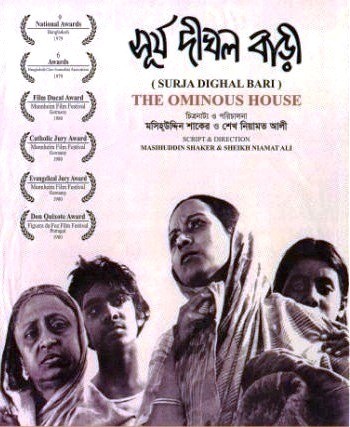
The 1979 film adaptation of Surja Dighal Bari, directed by Sheikh Niamat Ali and Masihuddin Shaker, and featuring Dolly Anwar, ATM Shamsuzzaman, Rawshan Jamil, and others, became a landmark in Bangladeshi cinema. It was the first film made with a Government of Bangladesh grant, and won seven National Film Awards, including Best Film, Director, and Actress.
For his contributions to literature, Abu Ishaque received the Bangla Academy Literary Award (1963), the Sundarban Literary Medal (1981), the Bangladesh Lekhika Sangha Literary Medal (1990), the Ekushey Padak (1997), the Independence Award (posthumously, 2004), and the Shishu Academy Award (posthumously, 2006). He passed away on February 16, 2003 in Dhaka.
Critics often call Abu Ishaque a realist, yet his realism was never dry, it was moral, courageous, and compassionate. On his 99th birth anniversary, readers remember him not just as a novelist, but as a lighthouse of truth, one whose light still cuts through the fog of time.