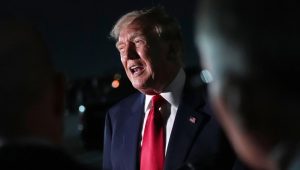
US President Donald Trump and Australian Prime Minister Anthony Albanese on Monday signed a landmark critical minerals agreement designed to counter China’s dominance in the global supply chain, during their first White House summit marked by a moment of sharp humor directed at Australia’s ambassador to Washington.
The summit underscored growing US-Australia cooperation in securing rare earths and other strategic resources, as Trump also reaffirmed support for a joint nuclear-powered submarine program aimed at strengthening security in the Indo-Pacific region.
Although the two leaders exchanged warm greetings, Trump took a swipe at Australia’s envoy to the United States, Kevin Rudd – himself a former prime minister – over comments Rudd made in 2020 describing Trump as “the most destructive president in history.” Rudd later deleted the remark from social media.
Trump said, “I wasn’t aware of that,” after asking where the ambassador was seated. Spotting him across the table, he added, “I don’t like you either, and I probably never will.”

Despite the tense moment, the meeting otherwise ran smoothly. Trump and Albanese finalised the minerals pact, which the US president said had been under negotiation for several months. Albanese hailed it as an $8.5 billion pipeline “that we have ready to go.”
A statement confirmed that both nations will invest $1 billion each within the next six months to expand mining and processing capacity, while also establishing a price floor for key minerals- a measure long demanded by Western producers.



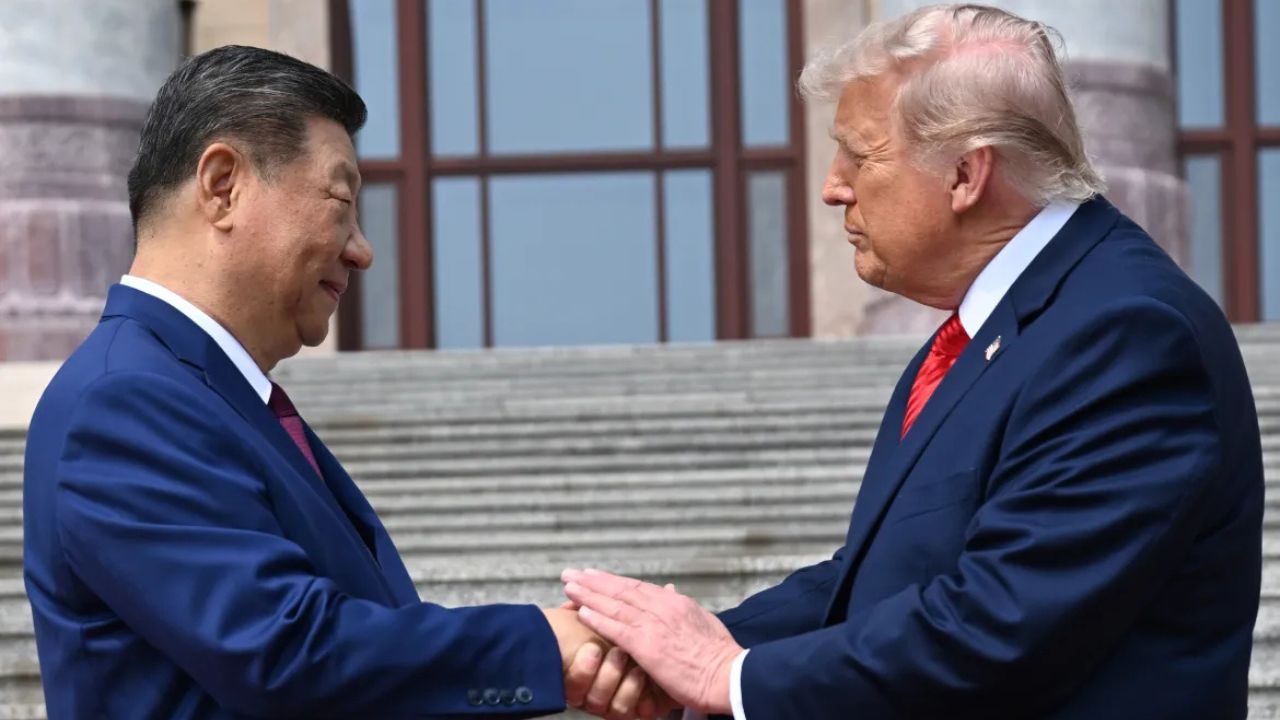
According to the White House, the investment will target deposits valued at around $53 billion, though no specific resources or project sites were disclosed. “In about a year from now, we’ll have so much critical mineral and rare earths that you won’t know what to do with them,” Trump told reporters.
EXIM pledges $2.2 billion in project support
In a related move, the US Export-Import Bank (EXIM) announced 7 letters of interest totaling over $2.2 billion to back Australian critical minerals projects. Recipients include Arafura Rare Earths, Northern Minerals, Graphinex, Latrobe Magnesium, VHM, RZ Resources, and Sunrise Energy Metals.
EXIM said the projects involve materials vital for advanced defense systems, aerospace, communications, and next-generation industrial technologies. The initiative, it added, would help “counter China’s export dominance and ensure Western supply-chain resilience” while aiding the reindustrialization of America’s high-tech sector.
Meanwhile, the Pentagon plans to establish a gallium refinery in Western Australia, following China’s export restrictions on the metal imposed last December.
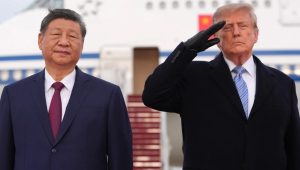
The United States has accelerated efforts to secure access to critical minerals worldwide amid Beijing’s tightening grip on supply chains. The move also comes ahead of Trump’s expected meeting with Chinese President Xi Jinping in South Korea next week.
Critical minerals such as lithium, nickel, and rare earth elements are essential to electric vehicles, aircraft engines, and military radar systems. While China holds the world’s largest rare earth reserves, Australia also possesses significant deposits- making cooperation between the two allies crucial to reducing reliance on Chinese exports.