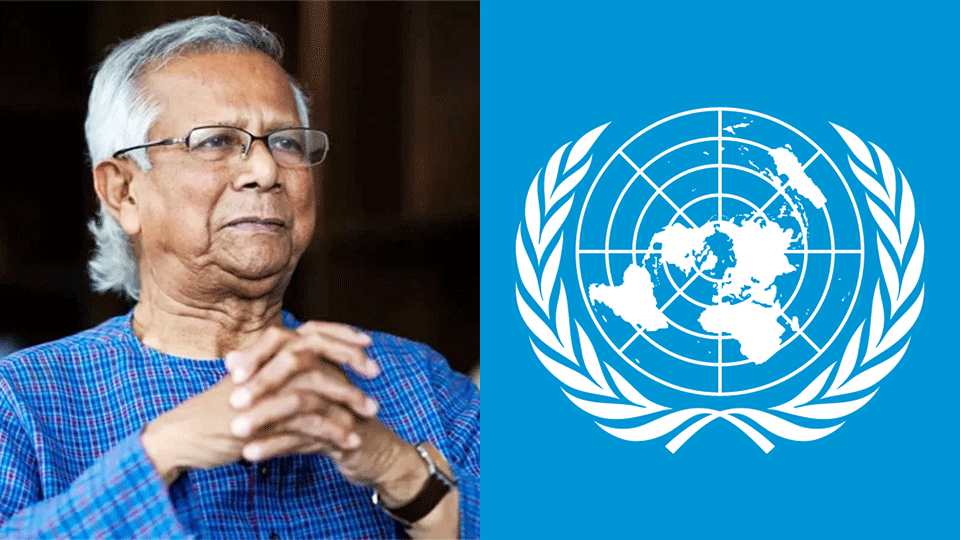

World leaders have strongly called for sustainable solutions, justice, and safe repatriation of the Rohingya Muslims and other minority communities from Myanmar during a special high-level conference at the United Nations General Assembly (UNGA).
The conference emphasised that the ongoing crisis, which has persisted for over eight years, must not be allowed to continue.
Participants at the conference stressed that the Rohingya crisis should not drag on for decades. The only viable solution is to ensure their safe, voluntary, and dignified return while holding those responsible accountable.
Speakers at the UNGA highlighted the dire situation of those who fled Myanmar due to brutal attacks and persecution, calling for safe zones, international assistance, and justice. They also urged sending the case to the International Criminal Court.
The high-level conference, held at the UN headquarters in New York City on Tuesday local time, focused on the humanitarian disaster affecting the Rohingya Muslims and other minority groups from Myanmar.
Despite the crisis being on the international agenda for over eight years, effective steps to resolve it have been woefully lacking. The meeting saw participation from heads of state, UN officials, regional organisations, and human rights representatives.
The purpose of the high-level meeting, convened in late 2024 following a proposal by the UNGA, was to keep international attention on the Rohingya and other minority communities’ plight, assess the ground realities, and formulate a time-bound, practical solution that includes arrangements for their voluntary, safe, and dignified return.
Yunus seeks quick repatriation
In his opening remarks, Muhammad Yunus, chief adviser of Bangladesh’s interim government, strongly urged the international community to facilitate the quick repatriation of the Rohingya to Rakhine State.
He pointed out, “The Rohingya crisis originates in Myanmar, and its solution must also lie there. Repatriating the Rohingya to their homeland is the only effective solution. This issue should not be held hostage to Myanmar’s larger reforms.”

Yunus also pointed out that despite eight years of genocide, the suffering of the Rohingya continues unabated. There is a lack of effective international initiatives, and the financial support for the crisis remains critically insufficient.
He further called on the international community to exert pressure on Myanmar’s government and the Arakan Army to immediately stop the persecution of the Rohingya and begin their swift repatriation.
The chief adviser warned that international assistance is rapidly declining, making the long-term cost of providing protection to refugees unsustainable.
He stressed that the only peaceful alternative is the voluntary and dignified repatriation of the Rohingya. Dr Yunus also noted that the Rohingya have repeatedly expressed their desire to return home.
He emphasised the immediate need to repatriate those who have recently entered Bangladesh to escape conflict.
In his address, Yunus made it clear that Bangladesh is also a victim of this crisis. Housing over one million Rohingya has put immense financial, social, and environmental strain on the country.
He also highlighted that the drug flow from Rakhine and other criminal activities threaten Bangladesh’s social structure.




Yunus further explained that due to development challenges such as poverty and unemployment, it is impossible for Bangladesh to provide employment for the Rohingya.
7 proposals for sustainable resolution
Chief Adviser Yunus presented seven proposals to the international community for a sustainable solution to the Rohingya crisis.
He called for the creation of a roadmap to ensure the safe and dignified return of the Rohingya to Rakhine with restored stability and urged effective pressure on the Myanmar government and the Arakan Army to halt violence and begin rehabilitation.
Yunus emphasised the need for international assistance to maintain stability in Rakhine and the establishment of an international civilian presence.
He also highlighted measures to build trust for the sustainable inclusion of the Rohingya in society and administration, increasing donor contributions to fully fund the Joint Response Plan, establishing accountability and restorative justice mechanisms, and breaking the drug economy while curbing cross-border crimes.
Concluding his address, Yunus urged the global community to unite, stating, “The world cannot continue to wait for the Rohingya. Today, we pledge to work together for a permanent resolution to this crisis. Bangladesh stands ready to fully cooperate toward this goal.”
Statements from the UNGA president, others
UNGA President Annalena Baerbock highlighted that millions of Rohingya have been living in refugee camps for over eight years, having fled their homes with little more than a few dollars in their pockets.
Many of them are growing up in camps, with their childhood spent under torn tents. She noted that over 3.5 million Rohingya inside Myanmar are in urgent need of humanitarian assistance, and Bangladesh has already taken in over 1.1 million refugees.
She warned that this burden cannot be carried indefinitely.
Baerbock mentioned the dire situation in the Cox’s Bazar camps, saying, “If water is life, life here has come to a standstill.”
Rohingya youth leaders speak out
Young Rohingya leaders directly shared their experiences at the conference. Rafiq Husn, founder of the Arakan Youth Peace Network, emphasised that Rohingya people want peaceful coexistence.
He called for the establishment of safe zones in Rakhine under the UN’s supervision and a humanitarian corridor from Bangladesh.
Maung Saweddollah, founder of the Rohingya Students Network, shared that he is the first Rohingya student from a Bangladeshi refugee camp studying at New York University. However, he added that without financial support, he would have to abandon his studies.
He appealed to global universities and states to offer scholarships to Rohingya students.
Lucky Karim, Executive Director of Refugee Women for Peace and Justice, stated that she fled to Bangladesh at the age of 14. She highlighted the ongoing genocide and stressed the need for honest discussions on the real conditions for repatriation, particularly in light of the ongoing famine and trauma.
Wai Wai Nu, founder of the Women’s Peace Network, called for permanent change, not temporary solutions. She urged for humanitarian corridors, sanctions on perpetrators, engagement with democratic movements, and opportunities for education and employment for Rohingya.
UN officials, special representatives voice concerns
UN Special Envoy Julie Bishop warned that Myanmar’s elections in December could exacerbate violence.
UN High Commissioner for Human Rights Volker Turk emphasized that the Rohingya have no voting rights, making the election neither free nor fair. He also called bringing the matter to the International Criminal Court’s attention.
UNHCR Chief Filippo Grandi stated that 5.1 million people remain displaced, and the crisis continues. He pointed out that humanitarian funding is critically lacking.
ASEAN Special Envoy Osman Hashim called for including Rohingya in peaceful solutions.
International Reactions
- Indonesia: Eight years is enough; this must not continue for decades.
- Myanmar’s legal representative: The military junta is holding a “fraudulent election,” which must be rejected.
- Poland: Countries like Russia are providing lethal technology to Myanmar’s military.
- Gambia: Continues pursuing genocide charges against Myanmar at the International Court.
- EU: Rohingya must be granted dignity, citizenship, and equal rights.
- OIC (Turkey): Calls for strong action against the genocide of Rohingya, urging international pressure and sanctions.
Int’l assistance, support announcements
At the high-level conference on the plight of Rohingya Muslims and Myanmar’s other minority groups, several countries pledged humanitarian aid.
- United States: $60 million in aid.
- United Kingdom: $36 million in new assistance.
- Japan: Over $200 million in aid and educational projects.
- Thailand: Support for shelter, anti-human trafficking efforts, and $4 million in aid.
- Malaysia: Calls for more support to countries carrying the burden of refugees.
- China: Urges direct dialogue between Myanmar and Bangladesh for Rohingya resettlement, while avoiding political exploitation of human rights issues.
- Russia: Rejects Western pressure and sees bilateral agreements as the solution.