
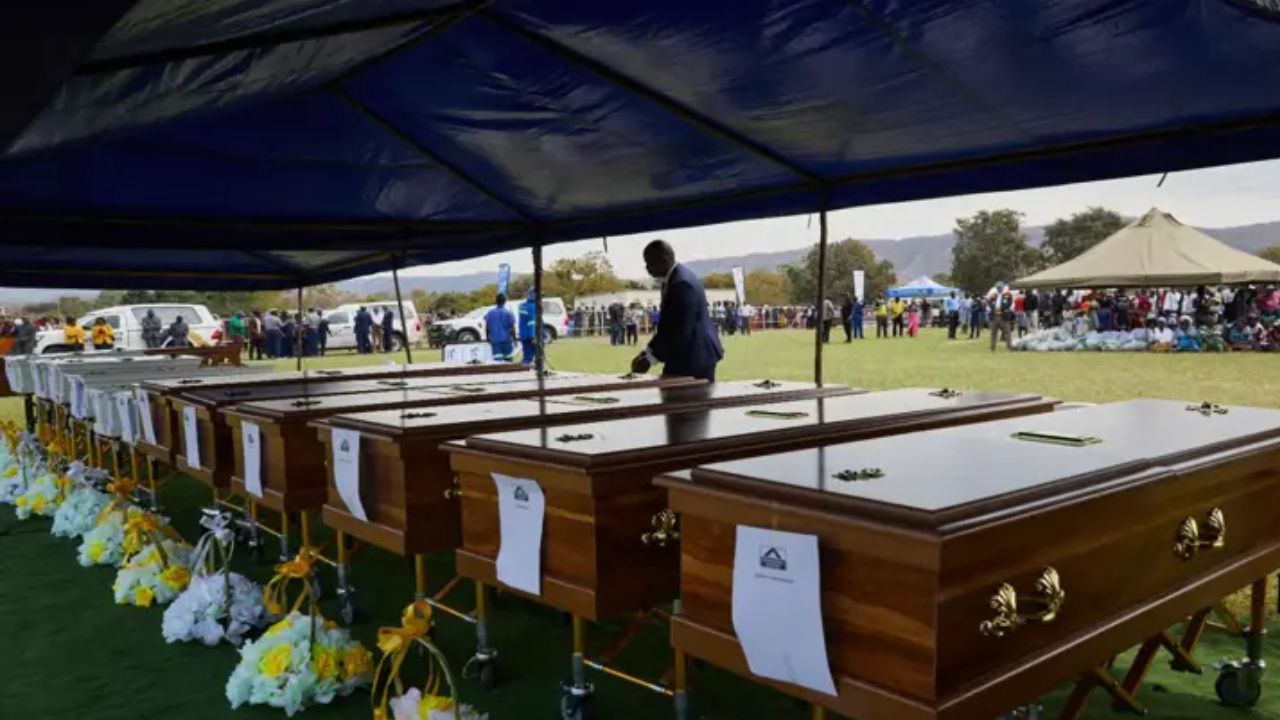



Over the past eleven years, 62,619 road crashes across Bangladesh have left 86,690 people dead and 153,257 others injured, according to figures presented by Bangladesh Jatri Kallyan Samity(JKS).
The organization shared the statistics during a discussion held on Saturday at the Dhaka Reporters Unity, where it also called on political parties vying in the upcoming national elections to prioritize safer and more efficient public transport systems in their manifestos to reduce congestion and road fatalities.
Citing the World Bank, the group’s general secretary Mozammel Haque Chowdhury said “intolerable traffic congestion in the capital alone wastes 32 lakh working hours every day, causing an economic loss of Tk98 thousand crore, with an additional Tk 11 thousand crore lost to fuel wastage.”
Health specialists at the event highlighted the serious toll of gridlock on both physical and mental well-being. Constant exposure to heavy traffic is leading to irritability, heightened anxiety, and weakened immunity. Problems such as high blood pressure, respiratory illnesses, lung cancer, kidney and heart disease, and reproductive complications are reportedly on the rise.
Noise and air pollution tied to worsening congestion in Dhaka are further aggravating health risks. Experts warned that daily frustration in gridlocked conditions raises the chance of family breakdowns by 50% and may also be contributing to impaired cognitive development and neurological damage in children. They further cautioned that congestion, coupled with unemployment, is driving many teenagers toward destructive behaviors.
Speaking about policy shortcomings, Mozammel noted that “the Road Transport Act of 2018, formulated to address accidents, congestion, and chaos, has failed because the views of passengers and civil society were ignored in its drafting.”
He added that the absence of a modernized public transport system has forced reliance on smaller vehicles such as ride-sharing bikes, easy-bikes, and autorickshaws, with 56% of people depending on private transport as a result.
The meeting also pointed out that traffic jams, once confined to urban centers and ports, have now spread into rural areas—an outcome of corruption and flawed transport policies under the previous government. Despite the interim government coming to power through what was described as the sacrifice of thousands of students and citizens, no reforms in the road sector have yet been implemented.
Mozammel therefore urged political parties to incorporate concrete measures in their election pledges to reduce the yearly death toll on the roads and ease the suffering caused by chronic traffic congestion.


