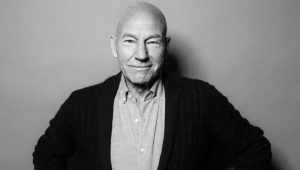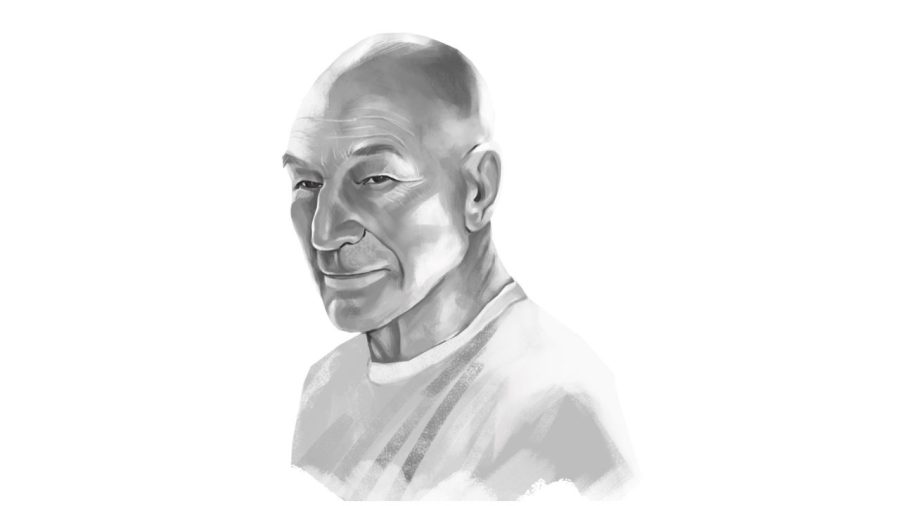



For millions, he was the captain who commanded a starship with a single sentence. For others, he was the professor who offered hope to those who felt they did not belong.
Long before Captain Jean-Luc Picard and Professor Charles Xavier made him a global icon, Sir Patrick Stewart was a Yorkshire boy who found refuge in Shakespeare and discovered his calling on stage.
With his unmistakable voice and commanding presence, Stewart moved effortlessly between classical theatre, science fiction, superhero adventures and comedy, bringing intelligence and humanity to every role.
The acclaimed British actor died at his Los Angeles home on Wednesday, 28 October, aged 86. He had been living with Alzheimer’s disease and Lewy body dementia. His spokesperson, Kelly Bush Novak, confirmed that he died surrounded by his wife, Sunny Ozell, family and friends.

Born on 13 July 1940 in Mirfield, West Yorkshire, Stewart was the youngest of three sons of Alfred, a military veteran and skilled labourer, and Gladys, a textile weaver. His working-class childhood was marked by domestic violence. His father, a Second World War veteran with undiagnosed post-traumatic stress disorder, was often violent, and Stewart frequently tried to protect his mother.
At 12, an English teacher cast him as Shylock in a school production, awakening his love for acting. Theatre became a refuge from his troubled home life. Alopecia left him bald at 19, eventually becoming one of his most recognisable features.
After training at Bristol Old Vic Theatre School from 1957, he joined the Royal Shakespeare Company (RSC) in 1966, spending 16 years performing in productions including Antony and Cleopatra and Hamlet. He made his Broadway debut alongside Ben Kingsley and Frances de la Tour in Peter Brook’s A Midsummer Night’s Dream and became a regular at the Royal National Theatre. His classical career earned him three Laurence Olivier Awards, a Grammy for narrating Peter and the Wolf and a Tony nomination for Macbeth. Queen Elizabeth II knighted him in 2010.




His international breakthrough, however, came unexpectedly. In 1987, aged 47, Stewart accepted the role of Captain Jean-Luc Picard in Star Trek: The Next Generation. His agent reportedly expected the series to last six months, while longtime friend Ian McKellen urged him to remain in Shakespearean theatre. Stewart signed a standard six-year contract. The show instead ran for seven seasons and 178 episodes, reaching 12 million viewers at its peak. Its 1994 finale attracted more than 30 million. The franchise produced four films and the three-season spin-off Star Trek: Picard.
Drawing on Shakespeare, particularly Henry IV, Stewart gave Picard authority, intelligence and compassion. He established weekend Shakespeare workshops for cast members through the Paramount Shakespeare Company. His catchphrases, “Make it so” and “Engage!”, entered popular culture, as did Picard’s fondness for Earl Grey tea. The role made Stewart wealthy and internationally famous, while his bald appearance challenged conventional ideas of leading-man glamour.
In 2000, he took on another iconic role: Professor Charles Xavier in X-Men. The telepathic mutant founded Xavier’s School for Gifted Youngsters, a sanctuary where young people facing discrimination could understand and control their abilities. His ideals of tolerance and coexistence contrasted with Magneto, played by McKellen.
Stewart portrayed Xavier in seven films through Logan (2017), later returning in Doctor Strange in the Multiverse of Madness. The seven films grossed a reported $3.32 billion worldwide, alongside his appearances in two other Marvel Cinematic Universe films. His performance in James Mangold’s Logan, opposite Hugh Jackman’s ageing Wolverine, was especially poignant. As an unknown brain disease disrupted Xavier’s telepathic powers, Stewart explored ageing, memory, regret and the burden of the past.
His range extended beyond blockbuster franchises. He displayed his comic flair in Seth MacFarlane’s Blunt Talk, Ricky Gervais’s Extras and Ted, and lent his voice to American Dad, The Simpsons and The Sheep Detectives alongside Jackman.

Stewart never abandoned the stage. In 2008, he returned to Broadway as Macbeth in Rupert Goold’s production, opposite Kate Fleetwood as Lady Macbeth, revealing the king’s paranoia, insecurity and vulnerability beneath his ambition. In 2013, he reunited with McKellen for a Broadway double bill of Harold Pinter’s No Man’s Land and Samuel Beckett’s Waiting for Godot. They had first shared an RSC stage in 1977.
Away from acting, Stewart showed a playful side, sharing photographs of apple picking, a bathtub appearance in a lobster costume and a ball-pit outing with Ozell. They married in 2013, with McKellen officiating. Stewart also joked that his appearance on TV Guide’s “Top Turn-Ons” cover alongside Cindy Crawford was absurd.
When he joined Star Trek, the Los Angeles Times described him as an “unknown British Shakespearean actor”. His distinguished stage career would soon make that description seem unthinkable.
From Shakespeare’s troubled kings to the Enterprise and Xavier’s school, Stewart gave extraordinary emotional depth to every character. The captain has left the bridge, and the final curtain has fallen. But his voice, his characters and his legacy will endure far beyond the final frontier.