


School and university students across several Italian cities are set to take to the streets on Friday, demanding increased funding for education and greater support for affordable housing, as security forces prepare for possible unrest.
The demonstrations follow weeks of student activism, with young people establishing tent camps and occupying educational institutions to draw attention to their demands. The movement has also echoed similar protests taking place in neighbouring France.
The student demonstrations have unfolded alongside protests by truck drivers and farmers over rising fuel prices, the increasing cost of living and higher government spending on defence.
“We expect a massive mobilisation of students on Friday, who will block and empty schools,” Laura Teresi, an 18-year-old student at Rome’s Cavour High School and spokesperson for the OSA student movement, told AFP.
Teresi said the protests would challenge the rearmament policies of Prime Minister Giorgia Meloni’s government and highlight the growing financial pressure on families, workers and students.

She also criticised what she described as persistent cuts to education funding.
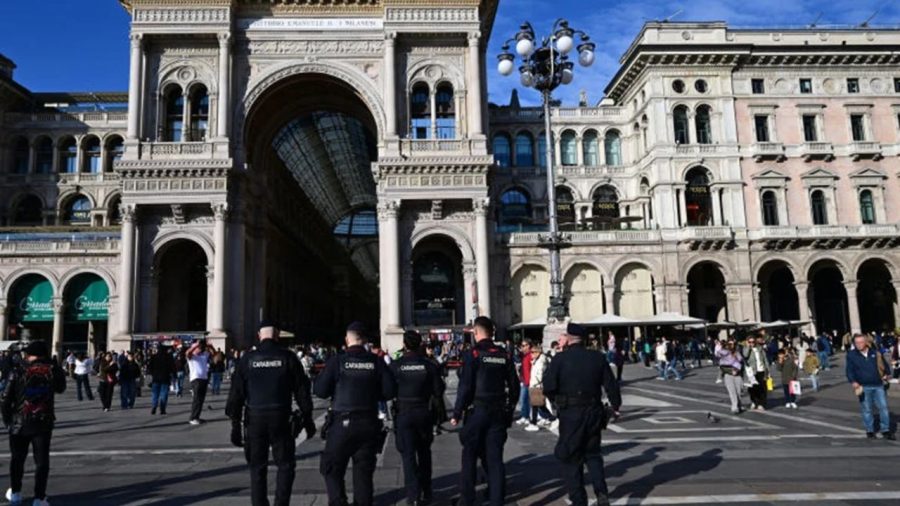
Authorities are particularly concerned about a possible recurrence of the violence witnessed in Milan on 17 and 18 October. During those incidents, groups of young people reportedly set vehicles on fire and looted shops in Italy’s financial capital.
Growing discontent among young people
Friday’s demonstrations will coincide with a general strike called by the radical-left USB trade union.


Rosario Forlenza, a professor of contemporary history and political anthropology at Rome’s Luiss University, described the wider situation in Italy and Europe as one of economic, social and cultural discontent affecting different sections of society.
He said younger people were particularly vulnerable because they remained underrepresented in politics and felt that political leaders were focusing their attention elsewhere.
As a result, many young Italians face uncertainty, social difficulties and a growing sense that they have limited prospects for the future, Forlenza added.
In response to the youth-led protests, Meloni’s right-wing government has relaxed regulations governing the detention of minors and introduced tougher measures concerning public gatherings.
Last week, the government also approved a 175.2-million-euro ($195 million) support package for truck drivers, farmers and fishermen affected by surging fuel prices linked to the conflict in the Middle East.
Additional assistance for young people and families is being considered under the draft 2027 budget, which is currently under discussion among governing parties. One proposed measure is an annual bonus of 2,500 euros for workers under the age of 30.
Speaking at a press conference on Wednesday, Meloni expressed hope that the proposed measures would address the concerns of young people who feel neglected by the state.

However, she stressed that the assistance was not intended for those who engage in vandalism, saying it was “not for those who smash windows”.
Calls for changes to education system
Psychologist and psychotherapist Matteo Lancini argued that educational institutions themselves were partly responsible for the growing frustration among young people.
He said schools had become disconnected from students’ actual needs and called for fundamental changes to the education system.
Speaking at a meeting with foreign media in Rome, Lancini argued that schools should be redesigned around the needs of younger generations rather than the interests of adults.
He also criticised the tendency to blame social media for the problems facing young people, saying such explanations allowed others to avoid addressing deeper structural issues.