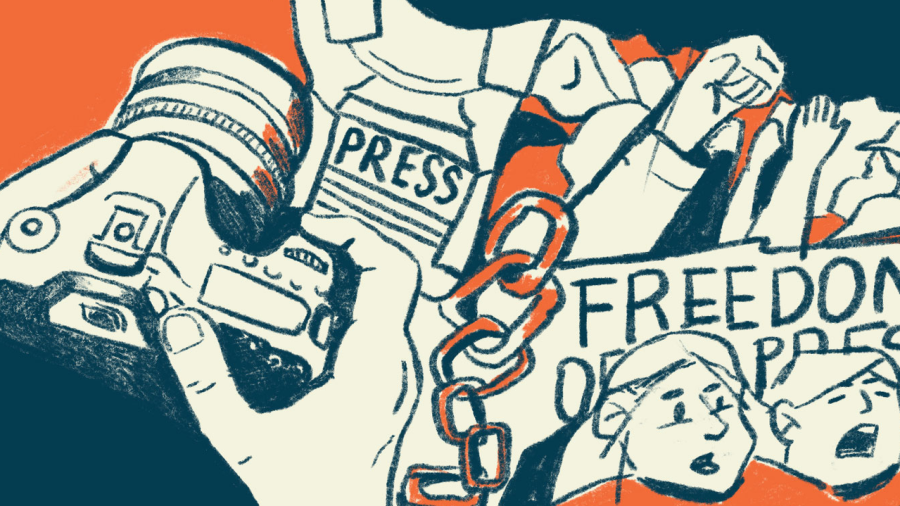



A newsroom may censor a journalist even without receiving a direct order. Sometimes the pressure arrives much earlier. Editors know which groups may object to a woman reporter. Journalists know which assignments may expose them to harassment. A newsroom anticipates a hostile crowd and sends a male reporter instead. A woman carries a scarf because she does not know how people at the assignment will react to her appearance. Gradually, external ideological pressure becomes part of everyday journalism.
This is one of the central findings of my recently published research titled Gendered Routines and Religious Censorship: Navigating Media Practices and Vulnerability in the Lives of Women Journalists in Bangladesh in the US-based Southwestern Mass Communication Journal. The study examined how conservative religious ideology and the threat of violence influence the professional work and career opportunities of women journalists in Bangladesh. The findings revealed more than discrimination inside newsrooms. The findings point to something more complicated: conservative religious expectations outside media organisations can enter the newsroom indirectly and shape routine editorial decisions.
Women journalists described certain religious and politically sensitive events as spaces where their presence could be considered difficult or risky. When an Islamist political organisation holds a demonstration, for example, a newsroom may send a male reporter even when a woman was originally assigned. In some cases, conservative organisations prefer male journalists. Women journalists may also encounter hostile looks, comments or other signals suggesting that their presence is unwelcome. The problem is not purely theoretical. In April 2013, Ekushey Television reporter Nadia Sharmeen was assaulted while covering a Hefajat-e-Islam rally in Dhaka. She said she was targeted because she was a woman. Her attackers questioned her presence at a male gathering and criticised her for not wearing a headscarf. More recently, in January 2025, a woman journalist was reportedly prevented from covering an event in Dhaka after organisers said their interpretation of Shariah did not permit her participation. These incidents help explain why newsroom managers may worry about sending women journalists into some conservative religious gatherings.
But they also raise a difficult question: What happens when anticipating conservative opposition becomes a routine part of editorial decision-making? The answer can be a form of informal gatekeeping. There may be no written newsroom policy saying that women cannot cover Islamist political groups. There may be no formal instruction prohibiting them from attending a religious rally. Instead, editors anticipate trouble and make what appears to be a practical decision: send a man. From a safety perspective, such a decision may seem reasonable. From a journalistic perspective, however, something important has changed. Outside ideological expectation has influenced who is allowed to gather news.

That distinction matters. Press freedom is commonly discussed through visible forms of restriction: government censorship, restrictive laws, political pressure, arrests or direct threats. Yet censorship can also operate more quietly. When journalists and editors adjust their professional behaviour because they expect opposition from powerful religious or social actors, that pressure has already begun influencing journalism. Women journalists may experience this more directly because their gender itself can become part of the controversy.
One journalist in my research described carrying a scarf when covering certain events so she could change her appearance if the situation demanded it. She was not simply deciding what to wear to work. She was calculating how much conformity might be necessary to enter a reporting space safely. Others described considering the possibility of harassment before accepting particular assignments. These experiences show how ideological pressure can work without an explicit command. Nobody needs to tell a journalist, ‘Do not go.’ The journalist may already know the possible consequences of going. The newsroom may know as well.




This creates a form of anticipatory censorship. Decisions are made before confrontation occurs. A reporter is reassigned. A controversial story is avoided. An appearance is modified. A subject is approached more cautiously. The influence can extend beyond assignment decisions. One journalist described a situation in which her television channel did not broadcast a report on a controversial women’s policy opposed by Islamist leaders because editors feared possible retaliation, including online abuse and an angry crowd gathering at the newsroom. At that point, conservative pressure was no longer affecting only those who could report a story. It was potentially influencing whether the story reached the audience at all. This issue concerns both women’s workplace experiences and journalistic autonomy.
There is another dimension to this pressure: social media. Women journalists frequently face criticism that has little to do with their journalism and much more to do with their gender, clothing and appearance. A woman appearing on television without a headscarf may be criticised for how she dresses rather than what she reports. Others face sexualised comments, personal insults and attacks on their character. This kind of harassment can enforce ideas about how women should look and behave in public. A journalist is supposed to be judged for the accuracy and quality of her reporting. Yet a woman journalist may simultaneously find herself being judged on whether her clothing, presence or behaviour conforms to someone else’s interpretation of religious or cultural expectations.
The effect does not necessarily end online. Repeated harassment can make journalists more cautious about the subjects they cover, the events they attend and even their visibility on television or social media. When criticism and intimidation begin influencing those decisions, they become relevant to press freedom.
The professional consequences can also accumulate over time. Political protests, major religious events and breaking news are not ordinary assignments. They provide experience, visibility and access to important sources. These are often the stories through which journalists build reputations and demonstrate their ability to handle difficult situations. If women are repeatedly removed from such assignments because conservative groups may object to their presence, their male colleagues receive opportunities that women lose.
The answer is not to pretend that security concerns do not exist. But news organisations have a responsibility to protect their journalists. Protection, however, should not mean surrendering editorial decisions to the ideological preferences of the groups being covered. A newsroom should decide who will cover an event according to journalistic needs, professional ability and appropriate security planning. A political or religious organisation should not effectively make that choice by signalling that women reporters are unacceptable. News organisations therefore need to move beyond the simple choice between sending a woman into an unsafe situation and keeping her away altogether. Better field-security planning, team reporting, safe transportation, clear protocols for dealing with harassment and stronger institutional support can reduce risk without making exclusion the default response.
This issue deserves attention because conservative religious ideology does not influence journalism only when somebody publicly demands censorship. Its influence can be quieter and more deeply embedded. It can shape which reporter enters an event. It can affect which assignment an editor considers safe. It can influence which subjects’ journalists hesitate to pursue. It can even affect how a woman dresses before approaching a crowd. When those adjustments become routine, ideological pressure has already entered the newsroom. And once that happens, the question is no longer simply whether women are allowed to work as journalists. The deeper question is whether they are equally free to practice journalism.
The views expressed in this article are solely those of the author
The writer is a PhD Student, Department of Journalism, University of Colorado Boulder, USA