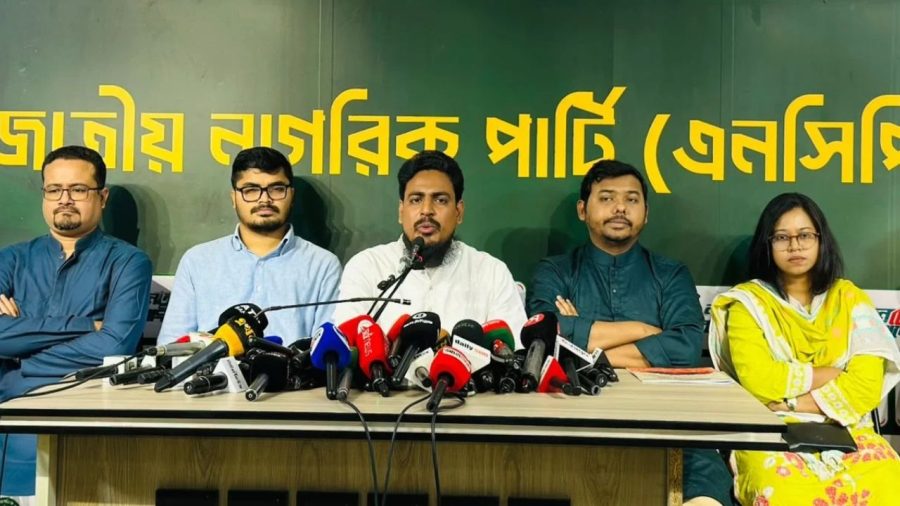



NCP has demanded the dissolution of the BNP government’s constitutional amendment committee, describing it as a “one-party” body, and called for the formation of a constitutional reform council in line with the referendum verdict.
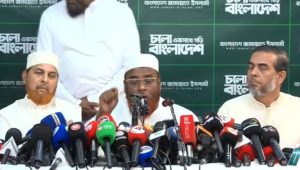
NCP Member Secretary Akhter Hossen made the demand at a press conference at the party’s temporary office in Banglamotor, Dhaka, on Saturday, marking the first anniversary of the signing of the July National Charter.
Akhter accused the government of deceiving the nation despite pledging to fully implement the July Charter.
NCP questions note attached to July Charter
Akhter criticised a note attached to several proposals in the charter, saying it allowed political parties or alliances to take measures on issues included in their election manifestos if they secured a public mandate.
He claimed the note was absent from the final draft sent by the Consensus Commission on the 17th and was added by a representative of the government side on the day of the signing without discussion.
According to Akhter, the note was included to give the government scope to avoid implementing the charter in the future.

Referring to the referendum, he said voters had backed the proposals by voting “Yes”, making it obligatory for every elected member of parliament to respect the verdict. He alleged that attempts were now being made to dismiss the referendum result by portraying it as unconstitutional.
The NCP would not join the constitutional amendment committee, Akhtar said, insisting that the government dissolve the panel and form a constitutional reform council in line with the referendum verdict.
He described the committee as a betrayal of the referendum and said it could not resolve the constitutional crisis.
Questions over judicial independence and parliamentary committees
Akhter called for the establishment of a Supreme Court Secretariat to ensure judicial independence. He alleged that the interim government had established the secretariat but the BNP government abolished it after taking office.




He also claimed that the BNP had not submitted a note of dissent on the issue.
Questioning the allocation of parliamentary standing committee chairmanships, Akhter said there had been a consensus to give opposition representatives leadership of several committees, but the government had failed to implement the arrangement.
He rejected the argument that opposition parties should be denied committee chairmanships because they had not participated in the constitutional amendment committee.
Opposition constituencies ‘deprived’ of development funds
Akhter alleged that constituencies represented by opposition parties were being excluded from development allocations.
He claimed special allocations had been made for 203 constituencies represented by the ruling party, while the remaining 97 constituencies had received none.
He also alleged that opposition-held constituencies had been overlooked in a project worth around Tk8,000 crore for constructing bridges and culverts.
“Political disagreements may exist with opposition MPs or their parties, but there can be no justification for having a dispute with the people,” he said.
Referring to the failure to implement the three-party alliance framework announced in 1990, Akhter warned that the BNP could also fail to implement the July National Charter.
“You cannot continue your activities for long by deceiving the people. You may have a two-thirds majority, but a two-thirds majority cannot move forward when it does not have the people’s verdict behind it,” he said.
NCP alleges favouritism in fertiliser dealer appointments
Akhtar also accused the government of favouritism in appointing fertiliser dealers, alleging that some people had secured licences because of their political connections and family ties to influential leaders despite lacking the required qualifications.
He warned that the appointments could aggravate fertiliser shortages.
Accusing the government of politicising state activities and neglecting public interests, he said public dissatisfaction with the administration had grown within six months of it taking office.
NCP Joint Convener Sarwar Tushar, speaking at the same press conference, alleged that the BNP was seeking to begin the political process from 12 February while ignoring the referendum.
He said the government had moved to amend the constitution under public pressure but was conducting the process unilaterally and unlawfully.
NCP Joint Member Secretary Saleh Uddin Sifat said the BNP had backtracked on several reform measures after taking office, including some on which it had not submitted notes of dissent. He described reform as the NCP’s principal political agenda.