


The ongoing conflict in the Middle East could have an immediate impact on remittance inflows into Bangladesh as many workers in the region have lost their jobs, some have been forced to return home, and others are struggling to remain without employment.
State Minister for Foreign Affairs Shama Obaed Islam acknowledged the issue on Monday while attending a seminar in Dhaka, noting that Saudi Arabia alone hosts more than three million Bangladeshis.
She, however, expressed optimism that the government would overcome these long-term challenges by exploring new overseas employment markets through coordinated efforts between the Ministry of Foreign Affairs and the Expatriates’ Welfare and Overseas Employment Ministry.
Exploring new overseas markets
The government also aims to create employment opportunities for workers who returned home after losing their jobs abroad.
In this regard, Prime Minister Tarique Rahman has emphasised skilled migration and technical education to expand legal overseas employment and curb irregular migration, hoping that Bangladeshi workers will access new job markets through enhanced skills and technical training.
Referring to recent attacks in Saudi Arabia, the state minister disclosed that Bangladesh lost two nationals in incidents over the past two days, while at least 24 other Bangladeshis are receiving treatment at various hospitals in the kingdom, with several admitted to intensive care units.

Expressing hope that the war will stop soon to prevent ordinary people from being killed and families destroyed, she added that the government is closely monitoring the situation.
Energy security and Mecca Pact
On the question of energy security, the state minister explained that the government has long been working to achieve greater self-sufficiency in the energy sector by exploring alternative sources.
Under the leadership of the prime minister, the Energy Ministry has been identifying new energy sources, while Aninda Islam Amit, state minister for power, energy and mineral resources, is currently in Saudi Arabia to discuss bilateral energy cooperation.
She noted that she had received no indication of an immediate problem in the national energy sector, suggesting that detailed information could be obtained from the energy minister, while expressing hope that ministry preparations and plans would cushion potential disruptions.
She added that if the war creates difficulties for Bangladesh, nations worldwide would face similar issues, though Bangladesh does not view itself in that situation at present.




Addressing queries on whether Bangladesh would send troops to Saudi Arabia, the state minister clarified that Bangladesh has not yet joined the Mecca Pact, meaning the question of sending troops does not arise at this stage, adding that a decision can only be confirmed once formally announced.
Obaed expressed solidarity with the Saudi government and people, calling for an immediate end to the attacks.
She highlighted that the security of Mecca and Madinah carries both diplomatic and emotional significance for Muslims globally, emphasizing that Bangladesh, as a Muslim-majority country, would not remain unmoved or hesitate to extend a helping hand if the two holy cities faced a threat.
Communal harmony and regional relations
Deliberating on broader foreign policy, the state minister observed that an increasingly complex international order, strategic rivalries, and regional conflicts underscore the necessity of a foreign policy anchored firmly in national interests while adapting to emerging global realities.
Describing current global conditions as living in a global turmoil, she pointed out that a crisis in one region carries far-reaching consequences elsewhere, shaping international trade flows and strategic choices across continents.
Turning to domestic matters, the state minister thanked the prime minister for holding a three-hour open discussion with over 200 members of parliament regarding constituency and national issues.
She shared that the prime minister urged lawmakers to remain vigilant to ensure peaceful celebrations during the upcoming Durga Puja festival and to maintain communal harmony across their respective constituencies.
Obaed alleged that elements connected with the previous fascist regime and other groups might attempt to disrupt celebrations, stressing the need for constant vigilance.
Regarding local government elections, the state minister indicated that no fresh instructions are required, adding that the ruling BNP would determine its stance on candidates for union parishad elections and by-elections when those polls take place.
On relations with India, she noted that Bangladesh has no assessment to offer at present, describing the situation as an internal issue of India.
Foreign policy in a shifting world
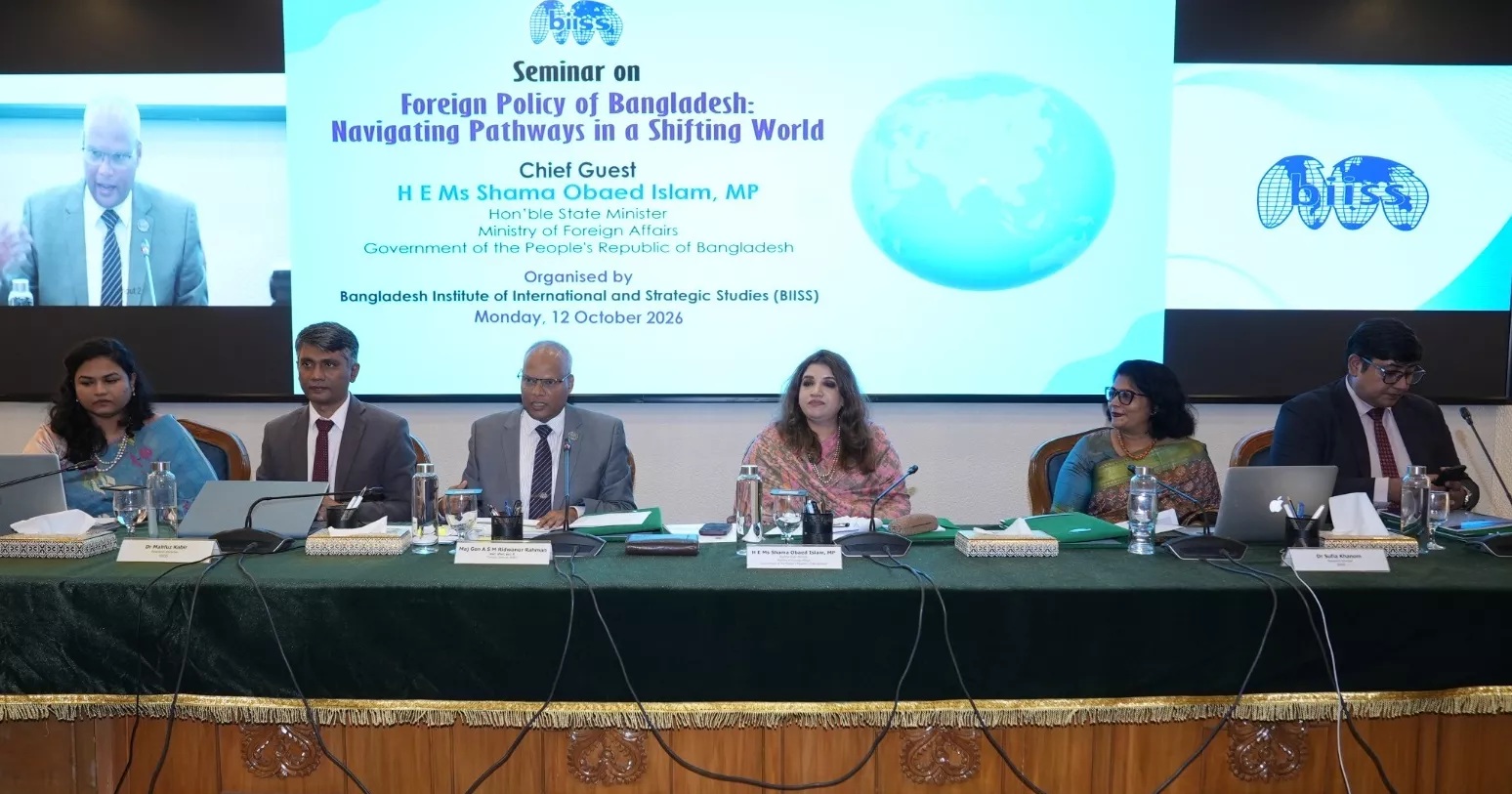
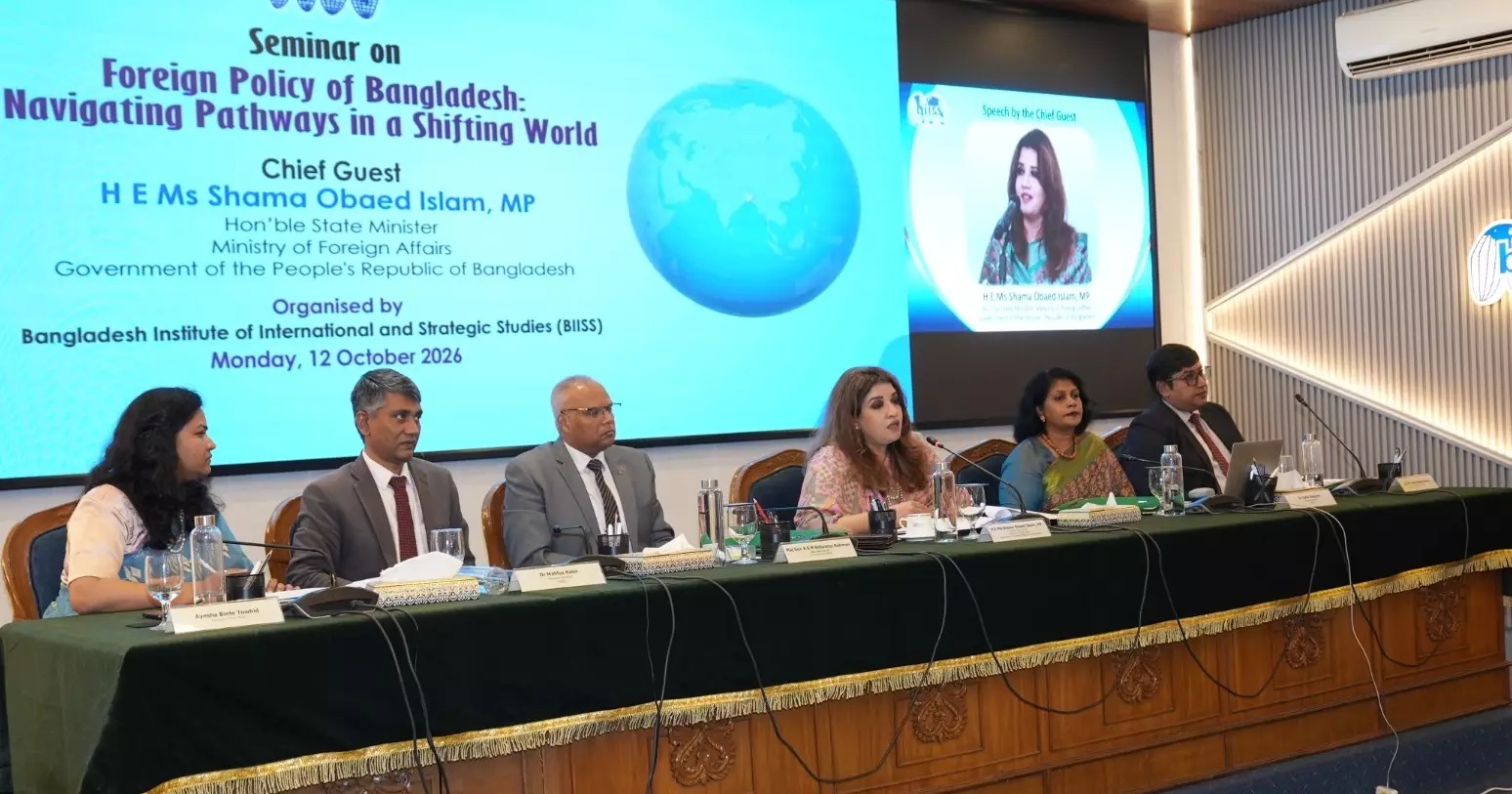
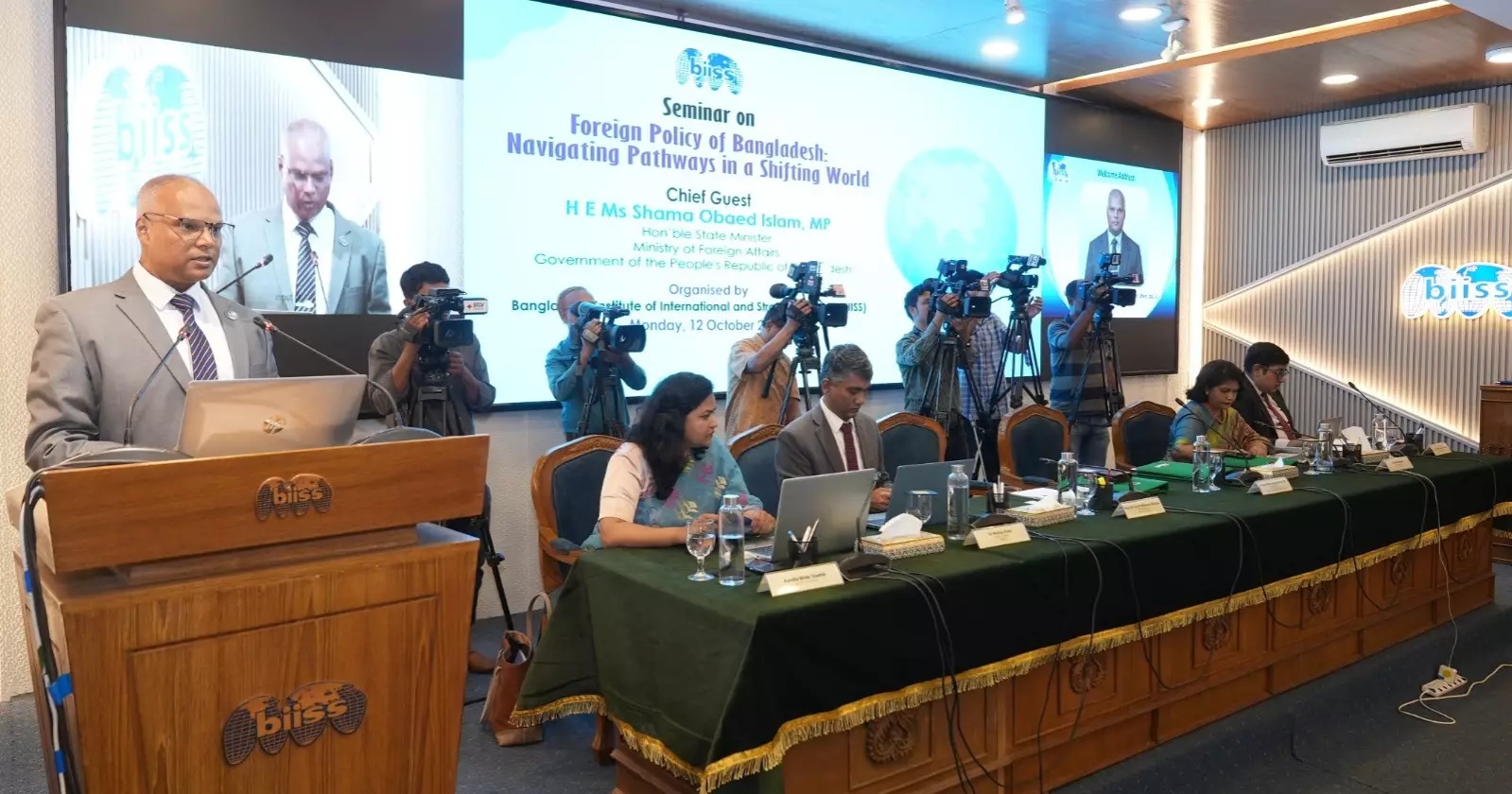
The seminar, titled “Foreign Policy of Bangladesh: Navigating Pathways in a Shifting World”, was organised by the Bangladesh Institute of International and Strategic Studies (BIISS) at the BIISS auditorium. Major General ASM Ridwanur Rahman, director general of BIISS, chaired the event and delivered the welcome speech.
Four research papers were presented during the seminar by BIISS researchers: Dr Mahfuz Kabir, research director; Dr Sufia Khanom, research director; ASM Tarek Hassan Semul, research fellow; and Ayesha Binte Towhid, research fellow.
The speakers explored the importance of advancing a national interest-driven foreign policy responsive to geopolitical realities while safeguarding national sovereignty and strategic autonomy.
They also focused on aligning foreign policy with defence and security priorities, prioritising economic interests within an uncertain multilateral system amidst the rapid growth of AI, upholding ideological commitments, and building a pragmatic, forward-looking framework to reinforce Bangladesh’s role as a responsible global actor.
The event was attended by senior ministry officials, foreign diplomats, media representatives, business leaders, university academics, students, researchers, and think tank representatives.