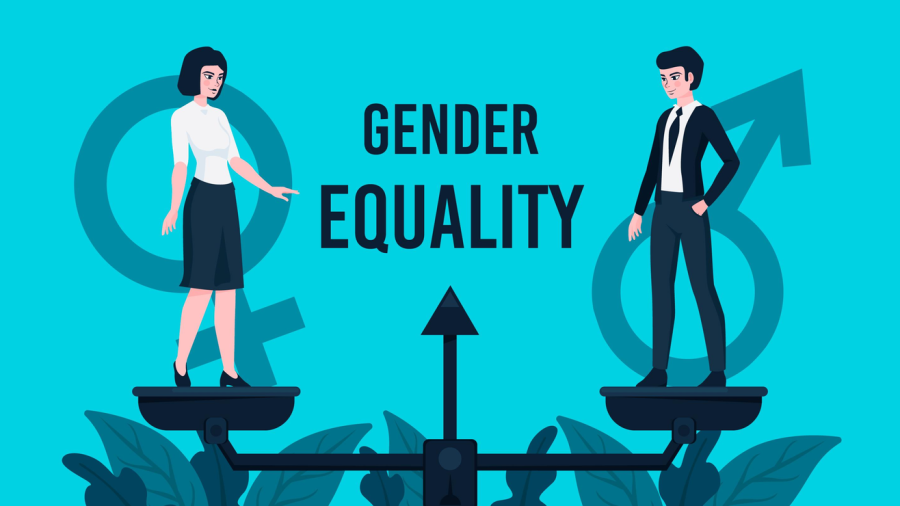



A company can have a gender policy, an anti-harassment policy and a diversity statement – and remain deeply unequal. The real test of organisational development is not what is written in the HR manual. It is what happens in the meeting room, in the corridor, on a video call and during a promotion discussion. This is where Bangladesh’s private sector needs to move from gender-sensitive HR to gender-transformative organisational development.
The stakes are enormous. Bangladesh’s private sector is not a small part of the economy; it is the economy’s principal employment engine. A World Bank assessment estimated that about 57 million people – 95% of total employment – were in the private sector in 2017. At the same time, Bangladesh’s employment landscape remains overwhelmingly informal, accounting for roughly 85% of total employment.
Yet women’s participation and progression remain a concern even within the more formal corporate economy. IFC’s research on private-sector commercial banks in Bangladesh found women represented only 18% of the overall banking workforce and 19% at entry level. If women are entering at the bottom but not progressing proportionately, the question cannot simply be: How do we recruit more women? It must be: What happens to women after they enter?
A gender-transformative approach recognises that inequality is not created by one discriminatory policy. It can emerge from the entire organisational ecosystem: who speaks first in a meeting, whose disagreement is interpreted as “leadership”, whose assertiveness is labelled “aggression”, whose body language is judged differently, who is expected to stay late, who is assumed to be less committed because of family responsibilities, and who quietly leaves because the cumulative cost becomes too high. Bias does not always arrive as a written rule. Sometimes it arrives through a tone, a gesture, an informal conversation or an unwritten expectation.

The development sector and some multinational corporations have begun to understand this. But many national agencies and privately owned organisations still treat HR policy as a management document rather than an organisational transformation process. Employees are often consulted after a policy has been drafted – or only when a grievance emerges. That is backwards.
The ICCDR, B’s Gender Policy was developed through contributions from different divisions and organisation-wide consultations, allowing staff to review and comment. It established mechanisms including a Gender Equality Committee and gender focal points, while linking gender to representation in decision-making, career development, childcare responsibilities, safe transport and the working environment.




Dhaka’s office-centric model is increasingly colliding with the realities of urban life. Congestion, transport uncertainty, rising housing costs and long commuting hours mean that an eight-hour workday can become a twelve-hour commitment. For women, caregivers and employees living far from central business districts, this can determine whether a career is sustainable.
Evidence from Bangladesh suggests that flexible working can improve work-life balance, but poor internet connectivity, inadequate home working environments and insufficient managerial support can undermine its benefits. Internationally, the demand for flexibility is also visible: Kantar’s 2024 research across Malaysia, Indonesia and the Philippines found 56% of employees preferred hybrid working, with women particularly represented among hybrid-work advocates. But hybrid work should not become another imported HR fashion.
Every organisation needs a feasibility study before changing its work model. Which jobs require physical presence? Which can be measured through outputs rather than hours? What happens to mentoring and junior staff development? How will remote employees access leadership? Could hybrid work unintentionally disadvantage people who cannot create an adequate home workspace? The answer is not ‘work from home’. The answer is to design work around the reality of work.
Not only performance, promotion and retention – but leadership behaviour, employee voice, policy awareness, psychological safety, actual working hours, commute burden, work-life balance, employee satisfaction, participation in decision-making and representation in leadership. Most importantly, organisations need a form of periodic employee health check-up. Do employees understand the policy? Do managers apply it consistently? Do women feel safe speaking up? If these questions are asked only during an exit interview, the organisation has already received the signal too late.
Bangladesh’s private sector now has an opportunity to move beyond the language of ‘women-friendly workplaces’ towards human-centred, gender-transformative organisations. This is not simply a diversity agenda. It is a sustainability agenda. The future workplace will not be defined by whether an organisation has an HR policy. It will be defined by whether people can actually live that policy without paying a career price.
The next generation will not only ask: What does your policy say? They will ask: Who helped design it, how does it work in my life, and can I challenge it when it doesn’t? That is where organisational development must begin.
The views expressed in this article are solely those of the author
The writer is an Organisation Development Strategist and freelance consultant. Email: [email protected]