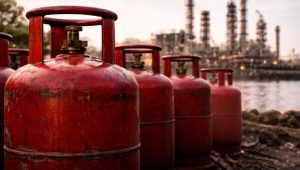
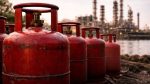
The severe Liquefied Petroleum Gas (LPG) shortage persists across Bangladesh, as supply remains severely inadequate even after the Bangladesh Energy Regulatory Commission (BERC) raised the official price of a 12kg cylinder by Tk252 on Sunday.
For street food vendor Hafizur Rahman, who sells fried fast-food items along roadside pavements in Dhaka, coping with everyday living costs was already a desperate struggle.
“The LPG prices will force the price of everything else to go up, but I cannot raise my food prices. I do not know how I am going to survive amid this ongoing inflation,” he said with a look of utter frustration.
LPG filling station owners and distributors in various districts confirmed that multiple operating companies have either drastically cut or completely halted their cylinder deliveries.
Md Sohel, proprietor of Anas Enterprise at Hatirpool in the capital, noted that whilst supply has ticked up slightly, it remains well below normal thresholds.
“A 12kg LPG cylinder is now selling for Tk2,500. We can do nothing about it because the rate charged by operators has surged, and several major operators have completely stopped supplying gas to the market,” he explained.
The widespread crisis has also forced an estimated 700 to 800 auto-gas filling stations across the country to remain effectively shut for nearly a month, crippling motorists and transport operators dependent on LPG.
Md Mamun, an official at Energy Filling Station in Mirpur, reported that they had yet to receive fresh stock from suppliers.

“We were told that we would receive a consignment on Monday night. If pumps across the nation receive supplies alongside us, the situation may gradually normalise,” he remarked.
A survey by TIMES across multiple retail and wholesale outlets in four different areas of the capital revealed a consistent picture of acute scarcity.
The crisis endures despite BERC revising the official rate for a 12kg LPG cylinder from Tk1,585 to Tk1,837 on 4 October, whilst auto-gas was increased from Tk73.09 to Tk84.62 per litre.
However, LPG remains virtually non-existent at government-stipulated prices.
Industry stakeholders estimate that roughly 10 million consumers rely on LPG, primarily for domestic cooking, with the remainder used across industrial and transport sectors.
The private sector imports almost the entirety of the nation’s supply.


Intriguingly, import volumes have not fallen significantly over the past two months; the LPG Operators Association of Bangladesh (LOAB) recorded 1,58,000 tonnes imported in August and 1,56,000 tonnes in September, indicating stable import levels.
Responding to allegations of artificial hoarding, BERC dispatched urgent letters to 12 major LPG importing firms on Saturday, requesting daily import and distribution figures for the entire month.
Several operators submitted their data on Sunday, which regulatory officials are currently scrutinising.
Although BERC has been setting monthly retail price caps since April 2021, consumers routinely complain that the fuel is never sold at official rates.
Paying an extra Tk100 to Tk200 had become routine, but buyers now report being gouged by Tk500 to Tk1,000, and in some cases up to Tk1,500, above the official ceiling.
Despite overseeing licensing and price setting, BERC has announced no new enforcement mechanisms to penalise non-compliant distributors.
In Chattogram, 12kg cylinders are fetching between Tk1,950 and Tk2,100.
A retailer in Chandanaish Municipality, speaking anonymously, revealed that cylinders previously priced at Tk1,650 to Tk1,750 now sell for Tk2,100.
“We make a modest profit margin of around Tk50 per cylinder, but we simply cannot obtain sufficient inventory from primary dealers,” he said, adding that retail sales have plummeted by over 60 per cent.
At Hanif & Brothers near Chattogram’s Nasirabad No. 2 Gate, proprietor Mohammad Hanif charged Tk1,950 for a 12kg Petromax cylinder bought directly, with home delivery costing an extra Tk50.
The exorbitant costs have driven households back to primitive cooking methods.
Khadija Begum, a homemaker from Dohazari, explained that she switched to a wood-burning stove because cooking with gas became financially unbearable and highly unpredictable.
Explaining the structural failure, Khorshedur Rahman, President of the LPG Gas Distributors’ Association, attributed the supply deficit to inadequate planning among major importers.
He noted that whilst 55 companies hold operational licences, only about 25 are active, and several major importers recently suspended operations due to political volatility and banking complications.
“Only five or six companies are currently active, and they cannot meet national demand,” Rahman stated, adding that current deliveries satisfy barely 30 per cent of requirements.
Consequently, out of an estimated 50 million cylinders in the country, roughly 25 million lie idle.
Rahman urged authorities to focus on market oversight and engage distributors in policymaking rather than penalising small retailers.
“Large companies sell gas above the fixed price without issuing receipts, whilst grassroots traders face heavy fines from mobile courts for failing to adhere to BERC pricing,” he asserted.
Meanwhile, the auto-gas sector remains severely crippled.
According to the Bangladesh Petrol Pump Owners Association, 70 to 80 per cent of the country’s 1,000 auto-gas stations have been closed for a month.
Association President Sirajul Mawla estimated that the sector requires 20,000 tonnes monthly and cautioned that it could take up to three weeks for supply lines and station operations to fully recover.
Until then, millions of domestic and commercial consumers face ongoing scarcity, inflated prices, and deep economic uncertainty.