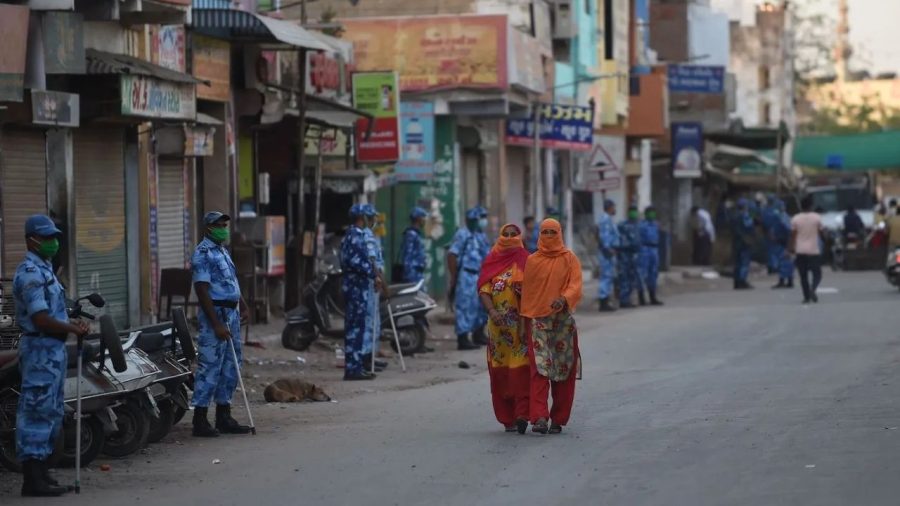



An initiative has been launched to create a comprehensive digital database to systematically document incidents of hate crimes and discrimination targeting religious minorities in India.
According to long-term data and observations compiled by various civil society and human rights organisations, incidents of hate crimes targeting Muslims have increased at an alarming rate since the BJP-led government came to power at the Centre in 2014.
The organisations claim that BJP workers, supporters, or members and supporters of allied hardline Hindutva organisations have been directly or indirectly involved in around 85 percent of such incidents of violence and harassment. It has also been alleged that when victims or their families approach the authorities seeking protection and justice, law enforcement agencies in many cases have displayed extreme indifference, inaction, or even hostile behaviour towards the victims.
The database is being developed with the stated objective of documenting issues concerning the constitutional rights and security of India’s nearly 200 million Muslims.
The project seeks to collect and verify detailed information about each incident, including the exact date and location, the alleged motive behind the crime, the identities of victims and accused persons, and subsequent administrative or legal action, including the progress of FIRs. Ultimately, the information will be converted into an open, searchable, and analytical database that can serve journalists, social workers, researchers, academics, and legal professionals as a source of documented evidence on religious intolerance and as a tool for raising public awareness.

According to human rights organisations involved in compiling the data, at least 54 incidents of hate crimes and communal provocation were documented across India in August 2026 alone. The incidents varied considerably in nature and geographical location, ranging from popular tourist destinations and cultural platforms to public roads.
In Maharashtra, a family visiting the historic Naneghat waterfall near Pune reportedly faced hostile behaviour. In the presence of women and children, a group of Hindutva supporters allegedly began loudly reciting war-related verses from “Haldighati”, a poem written in the 1940s depicting the valour of Maharana Pratap.



It was alleged that the historical poem was deliberately used in a public place to cause mental distress and fear among the Muslim family. The incident has been cited as an example of the social polarisation surrounding cultural and historical narratives at tourist destinations.
In West Bengal, strong reactions followed remarks made by controversial writer Taslima Nasrin at a civic reception held at Rabindra Sadan in Kolkata. She alleged that madrasas in the country were effectively “factories producing jihadists” and claimed that there was a serious lack of government supervision and control over such institutions.
She also alleged that child abuse and hostility towards non-Muslims were being promoted in some madrasas, and called for stricter regulation and fundamental reforms of the madrasa system. Her remarks were criticised by sections of society, who accused her of targeting Muslim religious institutions and attempting to promote hatred against the community.
In Uttarakhand, an altercation during the Kanwar Yatra reportedly escalated into serious violence. A vehicle belonging to a family from Akbarpur Dharki was allegedly surrounded and vandalised by a group of people. Several videos circulated on social media purportedly showed a mob smashing the vehicle’s windows and attacking women and children inside.
It was alleged that police personnel were present at the scene but failed to take immediate action to stop the mob. The injured women and children were later rescued and admitted to hospital. The incident has raised allegations of administrative inaction and discriminatory treatment.
Alongside these recent incidents of violence, the database also highlights what the organisations describe as a pattern of prolonged administrative and legal harassment of minorities. One such case relates to a recent landmark judgment by a special NIA court in Lucknow.
Mohammad Naeem had been charged with sedition over allegations that he raised “Pakistan Zindabad” slogans, waved a black flag, and attempted to provoke the creation of “another Pakistan” in Ismailpur, Gorakhpur, on Republic Day in 1993. After 33 years of proceedings, the court acquitted the 78-year-old Naeem of all charges, citing a lack of adequate evidence.
The judge pointed to several serious shortcomings in the investigation, including the absence of a seizure memo and a lack of reliable witness testimony and evidence. After spending much of his life under the allegation of being “anti-national”, Naeem expressed relief following his acquittal in old age. The case has been cited as an example of how prolonged legal proceedings can contribute to the harassment of alleged victims.
Human rights organisations involved in the initiative said that reliable media links, eyewitness accounts, digital video evidence, and First Information Reports, or FIRs, have been preserved in support of each of the 54 incidents documented in August.
The stated objective of the initiative is to bring the reported scale and nature of hate-related behaviour and physical attacks against minorities into the public domain and to promote greater accountability in protecting social harmony.