


What does a Muslim film look like?
Western cinema has often reduced Muslim stories to conflict, extremism, migration, oppression or cultural difference. New York’s first Muslim Film Festival offers a wider answer: they can centre secret marriages, childhood, fantasy, family and ordinary life.
The inaugural NYMFF takes place on 11 October at Manhattan’s SVA Theatre, bringing 12 short films from seven countries across documentaries, dramas, comedies, animation and experimental works. Most directors are women. Variety says submissions required one key crew member to identify as Muslim and films to centre Muslim stories, characters or communities; any language was accepted, with English subtitles for non-English dialogue.
Why now?
NYMFF aims to change who defines Muslim experiences on screen, offering “authenticity, nuance and care”. Artistic director Hassan Babar says Muslim stories should not merely be “counter-narratives”. “They should be the establishing paradigm.” Co-founder and director Nawal Mubin says they deserve “a stage in this city, not on the margins of someone else’s”.
Twelve films, twelve Muslim worlds
Justin Mashouf’s documentary $17.74 follows a former gang member imprisoned since the 1980s whose support for Gaza sparks viral solidarity. Karim Emara’s Qatar-US dramedy Baba Is Melting follows a son confronting his father over a secret second marriage.

Zaid Ahmed Hassan’s Ghusl follows a dying father asking his son to learn Islamic burial rites. Basma Khalifa’s UK experimental Henna traces the henna plant alongside women from 16 African and SWANA countries.
Sima Naseem’s Canada-Pakistan animation My Friend in the Jingle Truck follows a Karachi girl and magical bird inside a painted truck, exploring friendship and letting go.
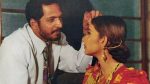

Alex Aljouni’s Bukra follows a young Syrian refugee racing to collect a football before her friend leaves. Haram Salami, by Negine Jasmine Sekandari and Ayda Rojhantalab, follows three generations of Afghan women navigating desire, identity and tradition.
Maram Taibah’s Saudi fantasy Malika explores a girl’s imagination and bond with her grandmother amid expectations of obedience.
Bilal Shams Khan’s Pakistani drama Sabr O Shukar follows 10-year-old Akram’s bicycle dream as a lesson in patience and gratitude. Imran J. Khan’s The Boy With Dinosaur Head follows a boy who believes he is a dinosaur and a teacher bringing him back to reality.
Canadian comedy Unqualified, by Ilhan Abdullahi and Sherry Rashidan, follows Warsan, the lone Muslim employee asked to cleanse a haunted lunchroom. French drama Ya Hanouni, by Lyna Tadount and Sofian Chouaib, follows two parents competing to make their baby say their name first before an event changes everything.
Together, the films span Pakistan, Saudi Arabia, Qatar, France, Canada, the UK and US, covering Afghan, Syrian, African, SWANA and South Asian experiences.
Why New York matters
New York is a global film, media and cultural centre with Muslim communities across South Asia, the Middle East, Africa and beyond. Yet it had never had a dedicated Muslim film festival.
The Watermelon+ Discovery Award gives the winning filmmaker or rights holder an exclusive limited-period streaming licence.
Partners include the Islamic Scholarship Fund, Lost in Space and Aneesa Talks. The six-member jury includes Emmy winner Aasif Mandvi, Darine Hotait, Munir Atalla, Abubakar Khan, Sarah Mokh and Abubakr Ali.
But the festival leaves a bigger question: do we really need to categorise cinema by religion?
A dedicated space can help a community whose stories have been unfairly represented. But perhaps the bigger hope is that the category becomes less limiting that audiences see these films not simply as “Muslim stories”, but as stories first.
Perhaps the festival’s real success will be measured by how far they move beyond the stereotypes that made the space necessary.