



Supply chains do not break first on spreadsheets. They break in the lives of the people expected to make impossible promises work.
At four in the morning, a farmer in Rangpur heads home after loading his truck with potatoes. By noon, a driver eats a cold meal in his vehicle on the Dhaka-Chattogram highway. In Gazipur, a sewing operator finishes her third night of overtime after a buyer demands last-minute design changes. In Dhaka, a rider delivers a parcel in the rain as a customer complains that it is nine minutes late.
We call this a supply chain. We draw it as boxes and arrows and measure it in lead times, landed costs and inventory turns. But every box represents a person, and every arrow a promise someone must keep. When companies optimise the numbers while ignoring the people carrying the pressure, apparent efficiency becomes fragility.
End-to-end supply chain management means treating the journey from field or factory to customer – and back through returns and recycling – as a single interconnected flow. Yet most organisations still operate in silos. Procurement is rewarded for buying cheaply, production for volume, logistics for cutting costs and sales for growth. Each department can hit its targets while making the overall system slower and more fragile.

The problem is that pressure travels downward. When a brand squeezes prices, a factory squeezes its subcontractor. The subcontractor cuts wages, maintenance or rest hours. When a retailer delays payment by ninety days, a small supplier may have to borrow at high interest to survive. The saving appears on one dashboard; the cost falls on the person least able to refuse it.
That is not merely unfair. It is bad supply chain management. Tired workers make mistakes. Underpaid farmers plant less. Sleepless drivers crash. A saving in one part of the chain can easily become a larger cost elsewhere.




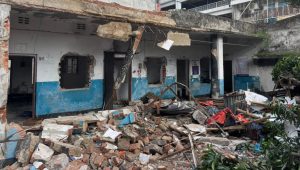
Bangladesh has paid an extraordinarily high price for such failures. Rana Plaza was not only a structural disaster but also a supply chain disaster. Speed and cost were measured precisely while the impact on people’s safety received far less attention. What the system failed to measure, it failed to manage.
This is where empathy becomes a business discipline rather than an act of charity. It means designing processes around the realities of the people who must execute them, rather than the assumptions of those drawing the flowchart.
Consider a merchandiser who accepts an unrealistic shipment date because saying no may appear unhelpful. The planner knows the deadline cannot be met but remains silent. The supervisor makes up the difference with overtime. Quality deteriorates, shipments are rejected and expensive air freight follows. Every decision may appear rational on its own. Together, they produce an irrational result.
A better system would allow the planner to challenge the deadline and propose one that can actually be met. Operational constraints would be treated as useful information, not resistance to be overcome.
The same principle applies across the chain. Sharing forecasts gives suppliers time to prepare. Realistic lead times reduce pressure on workers. Paying vendors on time protects smaller businesses from unnecessary borrowing. Planning warehouse shifts around the last bus home recognises that efficiency depends on how people actually live and work.
These considerations are becoming harder for companies to ignore. Supply chain due diligence requirements are expanding and traceability is increasingly becoming a condition of market access rather than a marketing bonus.
Ultimately, a supply chain is a chain of promises between people who may never meet. Good processes help them keep those promises.
Design the system around that principle and empathy stops being a slogan. It becomes a source of resilience.