


Bangladesh has emerged as one of the world’s leading producers of inland freshwater fish, strengthening food security, nutrition, livelihoods and the national economy. Over the last three decades, the sector has been transformed by technological innovation, supportive government policies, entrepreneurial fish farmers and rapid expansion of pond-based aquaculture. Fish contributes more than 60 percent of the nation’s animal protein intake and supports millions of livelihoods.
Yet beneath this success lies a challenge. The traditional pond-based model of aquaculture is approaching its practical limits. Agricultural land faces increasing pressure from urbanisation, industrial development, infrastructure projects and competing food production. Population growth and rising incomes continue to increase demand for affordable fish.
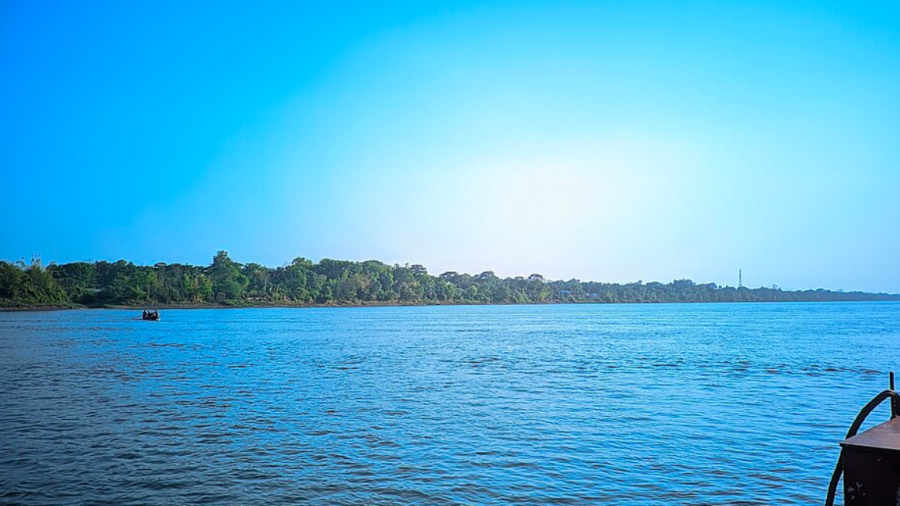
The critical question is therefore no longer whether Bangladesh can produce more fish, but where future production will come from. The answer may lie in one of the country’s most underutilised natural resources: Kaptai Lake.
Despite its vast size, fish production remains largely dependent on traditional capture fisheries and periodic stocking. Every year, government agencies release millions of fry and fingerlings. While stocking supports production, survival is uncertain because fish face predators, changing conditions, illegal harvesting and competition for food. Consequently, productivity remains relatively low compared with the lake’s biological and economic potential. Stocking can support fish populations, but it cannot maximise production from such a vast water body. For a country seeking sustainable ways to increase food production without expanding land use, relying mainly on capture fisheries in Kaptai Lake represents a missed opportunity.
Countries facing similar constraints have increasingly turned to cage aquaculture. Cage culture involves rearing fish in floating enclosures installed in lakes, reservoirs, rivers or coastal waters. Fish are stocked, fed, monitored and harvested under controlled conditions while benefiting from the surrounding water environment. Cage aquaculture has become an important food production system worldwide.
China, the world’s largest aquaculture producer, has extensively adopted cage farming in reservoirs and lakes. Vietnam has integrated cage culture into river systems and reservoirs, while Indonesia operates thousands of floating cages in reservoirs. Malaysia has also used freshwater reservoirs for commercial cage farming.

These experiences show that open water bodies can become productive when supported by technology, regulation and investment. Bangladesh possesses the same opportunity, provided local ecological conditions are respected.
The opportunity offered by Kaptai Lake is enormous. If only 10 percent of its water body approximately 70 square kilometres – were designated for regulated cage aquaculture, the potential increase in fish production could be substantial.
For illustration, 70 square kilometres equals 70 million square metres. Assuming a conservative production of 30 kilograms of fish per square metre during a six-month production cycle, the potential output would be 2.1 million metric tonnes in one cycle. With two six-month cycles, the theoretical annual production could reach 4.2 million metric tonnes. This is a theoretical estimate, not a guaranteed harvest. Actual production would depend on cage density, fish species, stocking levels, feed, water quality, disease control, the lake’s carrying capacity and proper management. Yet the calculation gives us a glimpse of the enormous potential hidden in Kaptai Lake. Some advanced aquaculture systems have achieved production of around 100 kilograms per cubic metre. This figure is not a prediction of actual production; rather, it gives us an idea of how much Kaptai Lake could contribute if its vast water resources are developed carefully and scientifically.
Such additional production could strengthen national food security, help stabilise fish prices and reduce pressure on overexploited natural fisheries. Importantly, cage culture could increase production without converting agricultural land, clearing forests or creating large numbers of new ponds.




Cage culture offers benefits beyond fish production. Large-scale aquaculture creates value chains that generate employment across multiple sectors. Cage manufacturing, feed production, hatcheries, transportation, processing, cold storage, marketing and export services can develop alongside farming. For the Chattogram Hill Tracts, cage culture could become a driver of inclusive regional development. The sector could create thousands of direct and indirect employment opportunities.
Cage farming can create opportunities for communities with limited land ownership. Traditional aquaculture requires substantial land, creating barriers for poorer households. Cage farming, however, allows production within shared public water bodies. Through cooperatives and community management, residents could become participants and beneficiaries, supporting poverty reduction, employment and rural development.
Bangladesh has long sought to diversify its exports beyond traditional sectors. Aquaculture offers another avenue. Controlled production can improve consistency in growth, feed management, health monitoring and size, supporting processing and export markets. Global demand for sustainably farmed fish continues to grow. If developed strategically, Kaptai Lake cage aquaculture could support production of species such as tilapia, pangasius, carp and potentially higher-value native species.
With appropriate processing facilities, traceability and certification, Bangladesh could strengthen its position in international seafood markets while generating foreign exchange. Export ambitions should follow, not compromise, ecological sustainability and domestic food security.
Critics rightly raise environmental concerns. Poorly managed systems can cause nutrient accumulation, deterioration of water quality, disease transmission and ecological disturbance. These risks call for careful governance, not necessarily rejection of cage culture.
International experience shows that risks can be reduced through scientific site selection, appropriate stocking densities, routine water-quality monitoring, responsible feed management, fallowing and strong regulatory oversight. Kaptai Lake’s ecological sensitivity makes such safeguards essential.
The key question is how, where and at what scale. Environmental sustainability must therefore be integrated into every stage of planning and operation. The technology required for cage culture is neither new nor complex. International expertise can be adapted through training, research collaboration and technology transfer.
The greater obstacle is institutional rather than technological. Bangladesh needs a comprehensive framework for large-scale cage aquaculture in public water bodies. Licensing, water-use rights, environmental standards and revenue-sharing must be clearly defined. Overlapping mandates among government agencies can also complicate decisions and delay implementation. Without clear arrangements, responsible investors may hesitate. This policy gap should be addressed before large-scale expansion.
The first step should be a monitored pilot project in selected areas of Kaptai Lake, followed by assessment before wider replication. The government should establish a regulatory framework covering site selection, environmental management, licensing, production standards, monitoring and carrying capacity.
Training should build local expertise and prepare communities to participate. Public-private partnerships can attract investment while ensuring that local communities share fairly in the benefits. Scientific institutions and fisheries agencies should jointly monitor ecological and production outcomes.
Bangladesh’s fisheries success has been built largely on pond aquaculture, a strategy that has served the country well. But future growth will require new approaches. Land constraints, rising demand and environmental pressures make it increasingly difficult to rely exclusively on traditional production systems.
Kaptai Lake offers a rare convergence of opportunity: vast water resources, proven technology, favourable climatic conditions and significant economic potential. The challenge is vision, governance and responsible implementation. Carefully planned cage aquaculture could make Kaptai Lake an engine of fish production, employment and regional development. The opportunity exists and risks can be managed through science and regulation.
The question is no longer whether Kaptai Lake can contribute to transforming Bangladesh’s fisheries sector. The question is whether Bangladesh is ready to seize this opportunity responsibly.
The views expressed in this article are solely those of the author
The writer is a Captain, Bangladesh Navy