A consignment containing around 8.25 tonnes of tobacco or tobacco-like materials, including suspicious coloured powders resembling narcotics, and 9.26 tonnes of suspected scrap paper has been seized at Chattogram Port following a physical inspection by the Customs Intelligence and Investigation Directorate (CIID).
The consignment was imported using the name and import-related information of a third-party business, although the proprietor of the company named as the importer/consignee has reportedly denied any knowledge of the shipment.
The consignment was found in Container No. DFSU6753849 under two House Bills of Lading (B/Ls). According to customs authorities, the contents found during physical examination differed significantly from the declared goods in one of the B/Ls.
Sagar Sen, Joint Director of the CIID’s Chattogram Regional Office, confirmed the seizure of the consignment containing tobacco, suspicious powder and scrap paper to TIMES.
According to a press release issued by the National Board of Revenue (NBR), customs records show that the consignment arrived from Kolkata aboard MV UDDIPON EXPRESS under Manifest No. 4524/2026 and Voyage No. 011.
The vessel departed on 20 September 2026, and arrived at Chattogram Port on 22 September.
The goods were covered by a single Master B/L, No. 301174347, and two separate House B/Ls. Under the first House B/L, ISLCCU2627CGP095, the goods were declared as “PAN MASALA AND ZARDA (CHEWING TOBACCO PRODUCT).”

The customs documents showed 473 packages with a gross weight of 8,974 kg.
However, during a physical examination conducted on 27 September, customs officials found 470 packages weighing 8,250.4 kg, or approximately 8.25 tonnes, of tobacco or tobacco-like materials.
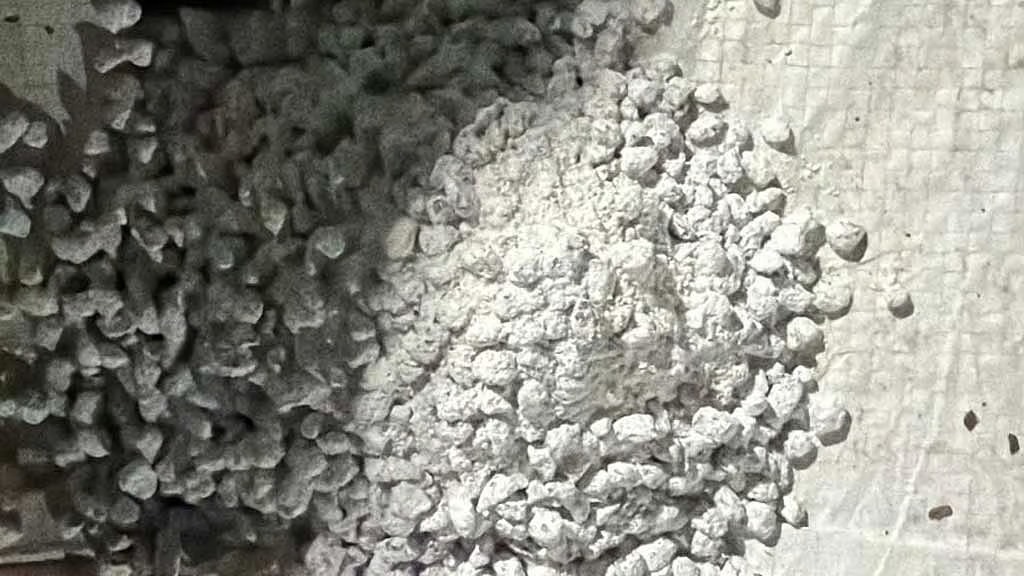
The materials were categorised according to colour as Dark Brown, Brown, Grey and White.
Of these, 421 packages contained 7,325.4 kg of dark-brown material, 31 packages contained 527 kg of brown material, 13 packages contained 273 kg of grey material, and five packages contained 125 kg of white material.




Some of the materials were in powdered form and appeared visually similar to narcotic substances, according to officials.
However, customs authorities have not yet established whether the powders actually contain narcotics or any other prohibited or controlled substances.
Officials said chemical and laboratory tests would be required to determine the exact nature and composition of the materials. The final identification of the substances will therefore depend on the laboratory test results.
Meanwhile, the second House B/L, ISLCCU2627CGP096, declared the goods as “PRINTED PAPER CATALOGUE.”
The documents showed 1,570 packages with a gross weight of 9,859.60 kg.
Physical examination, however, found 1,570 packages of suspected scrap paper weighing 9,263 kg, or approximately 9.26 tonnes.
The discrepancy between the declared description of the goods and the materials actually found has raised questions about the accuracy of the import declaration and is now part of the customs investigation.
Combining the two House B/Ls, officials found a total of 2,040 packages weighing 17,513.4 kg, or approximately 17.51 tonnes, during the physical examination.
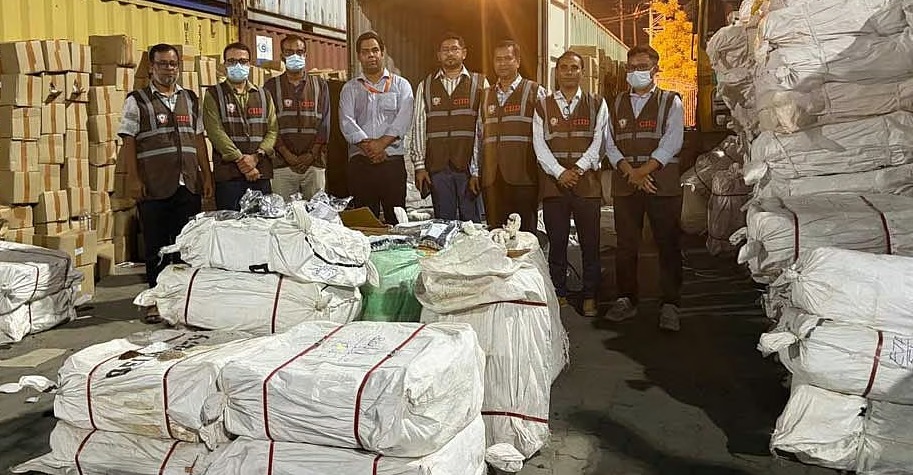
Of the total, around 8.25 tonnes comprised tobacco/tobacco-like materials and suspicious powdered substances, while another 9.26 tonnes consisted of suspected scrap paper.
Importer denies knowledge
The identity of the importer has added another dimension to the investigation.
Customs documents identify Authoy Enterprise as the importer/consignee. However, the proprietor of the company has reportedly informed the authorities in writing that neither he nor his business had any knowledge of the consignment.
He also denied having any direct or indirect involvement in the import.
According to the proprietor’s statement, an unidentified group may have used the company’s name and import-related information to bring the consignment into the country.
He has requested the authorities to identify the persons actually involved in the import and take legal action against them.
The use of a legitimate company’s identity without its proprietor’s knowledge has raised concerns over possible misuse of importer credentials and business registration information in the customs clearance process.
The CIID is investigating the circumstances surrounding the shipment, including the actual identity of the importer, the source and nature of the tobacco and powdered substances, the discrepancy between the declared and physically found goods, and the alleged misuse of the company’s identity.
Officials said further action would be taken based on the findings of the investigation and the results of laboratory examinations of the suspicious substances.