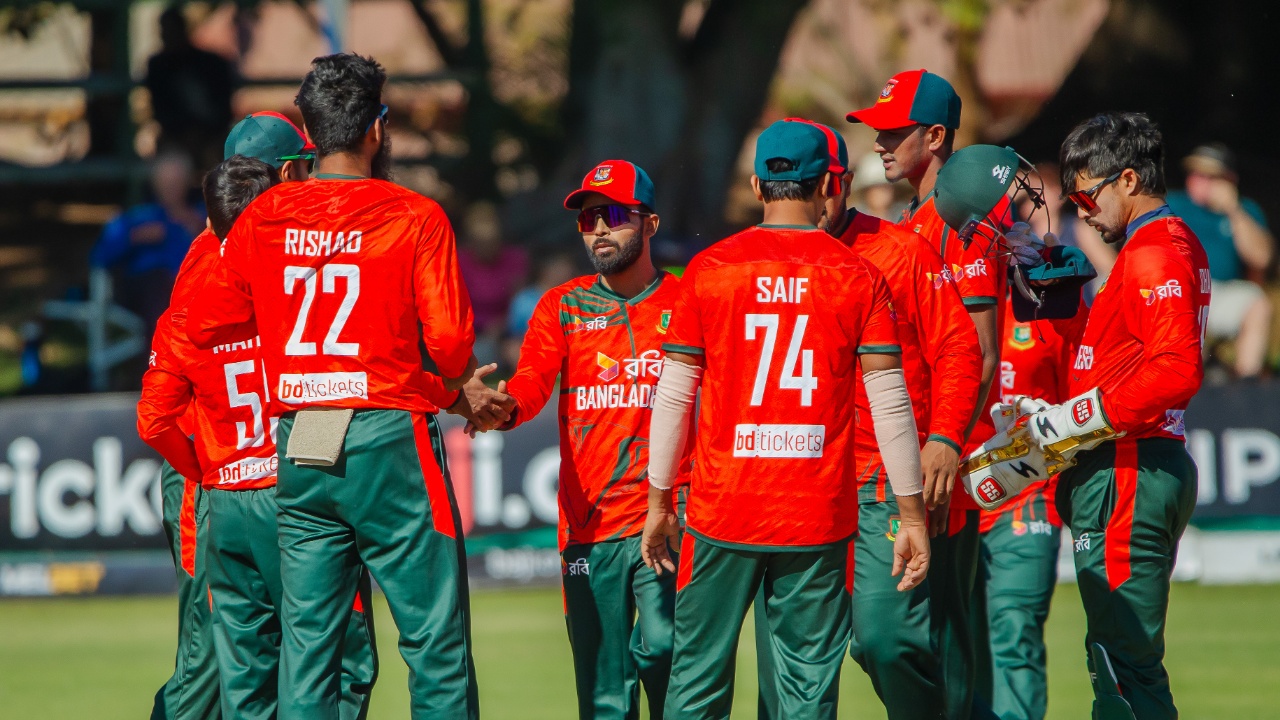


Standing in 2026, for Bangladesh, teams like Malaysia, Indonesia seem like mountains to overcome.
The statistics give us a clear picture: we haven’t been able to win against these two sides for decades. Indonesia currently ranks 118 while Malaysia is 136, way ahead of Bangladesh at 181.
While many football enthusiasts brush aside ranking, the fact remains, unless a team produces consistent results, the ranking will never improve. Admittedly, any side below 150 is a solid outfit.
For Bangladesh, the FIFA ASEAN Cup Trophy, featuring 14 teams, will be a welcome chance to try out new recruits while helping the current side under a new coach develop into a cohesive unit before the SAFF Football tournament in Dhaka, next November.
SAFF is our main target now and should be for the next few years, because as far as regional dominance is concerned, Bangladesh simply cannot claim to be among the top three sides anymore.
Results do the talking and therefore, the regional crown is, arguably, the desperate need of the moment.

The saddest part is, a large number of football lovers who are in their mid to late 20s hardly remember the 2003 SAFF tournament, which Bangladesh won on home soil.
A rejuvenated side must win a trophy to inject a sense of pride into the young fans.
For those like us who are just as old as the country, there are countless memories of outstanding triumphs of the national team.
In fact, Bangladesh in 1982 won their Asian Games football match against Malaysia in Delhi.



At that time, this was deemed a tremendous achievement because after the group matches, India progressed to the second round while Bangladesh, with that win, took the third spot as Malaysia were last.
A creditable result back in a time when the country was still grappling with the post-independence socio economic turmoil, pervasive social malaise and regular political upheavals.
A golden generation of young footballers under German coach, Werner Bickelhaupt, played the 1978 Asian Youth Championship in Dhaka and several from the youth side went on to play for the national team later on.
By mid 80s, the national team featured a selection of sublime footballers, Chunnu, Badal Roy, Aslam, Ashish, Salahuddin, Anwar, Ranjit, Kaiser Hamid, Ilias, Ameli, Wasim, Tutul, Babul, Johnny, Ranjit and others.
Most of these players were in Bangladesh’s first ever qualifiers for the 1986 World Cup.
In Dhaka, Bangladesh overcame both Indonesia and Thailand – a feat, which stirred the Asian footballing sphere, injecting renewed hope in the future of football.
Regrettably, the football trajectory of our national side has never been consistent – it has been more like a roller coaster.
In 2026, Bangladesh winning against Malaysia will be big news since the boys in red and green haven’t managed to overcome the south-east Asian side in the recent past.
What do I think about the possible result?
Well, Bangladesh certainly has the talent, but the team has to perform on the field with minimum goalkeeping blunders.
Actually, in the game against Malaysia, any error will be punished. Therefore, goalkeeping has to be sharp.
If Mitul Marma is selected in the first eleven as the keeper, he must be extra cautious about the corners.
In several previous games, especially the one against Hong Kong in Dhaka, when the game was in the dying seconds and moving towards a 3-3 draw, he failed to anticipate a shot to the corner which gave Hong Kong a victory. Never was a game so heart shattering.
In the home game against India for the Asian Cup qualifiers, while Bangladesh was leading, he made another howler coming out of the goal post. It was Hamza Choudhury’s swift reaction, which saved the game and sealed a victory.
Bangladesh in 2026 taking on Malaysia will have to take inspiration from the 1982 win and ensure the defense line is compact with extra attention given to low shots at the corners.