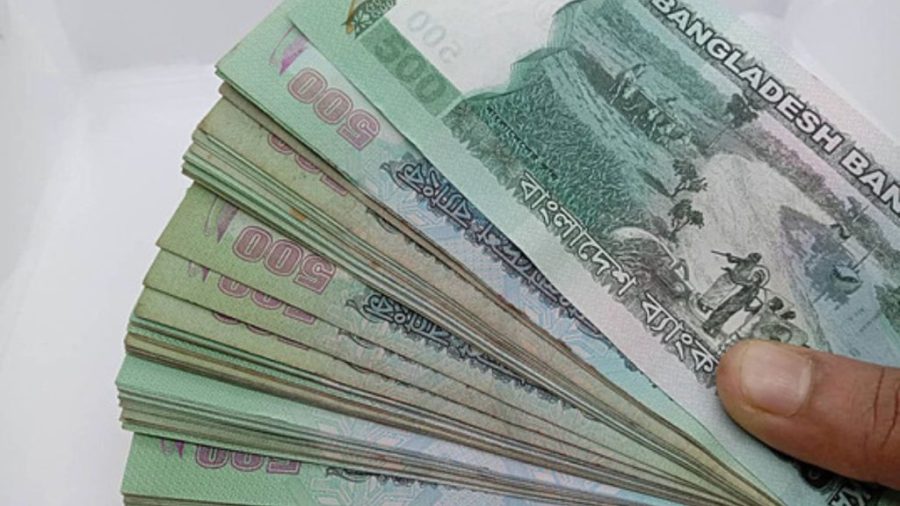

The Bangladeshi Taka has risen sharply against the Indian rupee over the past two years, gaining about 11.6 per cent in value, including a 7.6 per cent increase in the last year alone.
On 22 September, Tk1 was worth around ₹0.78, compared to ₹0.73 a year earlier and ₹0.70 in 2024. This means the Taka gained about 5.5 paisa against the rupee in one year, boosting its purchasing power.
In reverse terms, one rupee was valued at Tk1.281 in September 2026, down from Tk1.3782 in 2025 and Tk1.4292 in 2024. The decline shows that fewer Taka are now needed to buy one rupee, reflecting an 11.6 per cent strengthening over two years, reports BSS.

Bangladesh Bank data confirm this trend.
On 21 September, the INR cross rate stood at Tk1.2789–Tk1.2796 per rupee, equal to about ₹0.781–₹0.782 per Taka.




Bank spokesperson Arif Hossain Khan said the stronger Taka could ease import costs from India and reduce expenses for Bangladeshis travelling there. Importers may spend fewer Taka on Indian goods and services, while businesses importing raw materials, machinery, and industrial inputs could also benefit.
He noted, however, that the final impact on market prices depends on other factors such as global commodity rates, freight and logistics costs, tariffs, taxes, and traders’ pricing decisions.
Arif added that the exchange rate is only one element shaping cross‑border trade costs and should be viewed in the wider context of bilateral trade and foreign‑exchange market conditions.
He also said a stronger Taka could help Bangladeshi travelers by lowering the cost of accommodation, food, transport, and other local payments in India. But he stressed that exchange‑rate movements alone do not determine overall expenses, as other domestic and international market forces also play a role.
Bangladesh Bank continues to monitor exchange‑rate developments to maintain stability and ensure an orderly foreign‑exchange market.