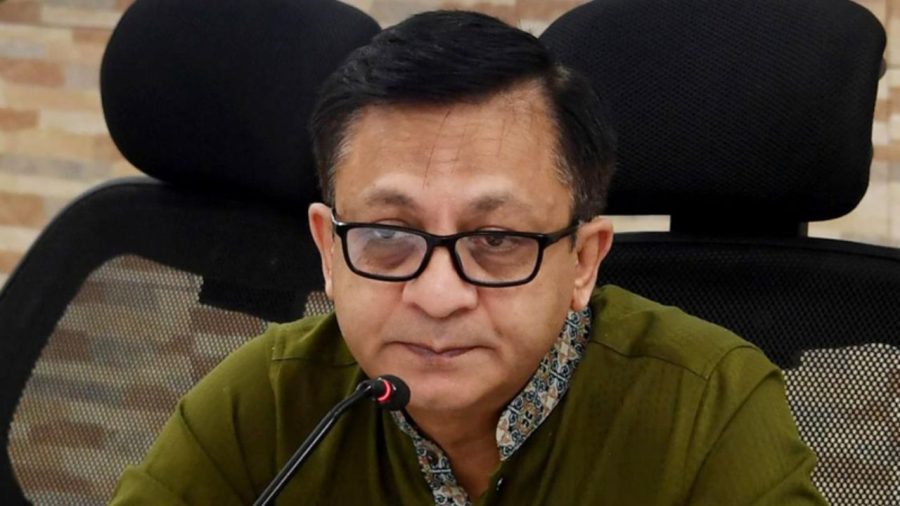

Commerce, Industries and Textiles and Jute Minister Khandakar Abdul Muktadir has said the government is closely watching the market and supply chains to prevent traders from using the recent fuel price adjustment as an excuse to raise the prices of essential commodities abnormally.
Speaking to journalists after distributing raincoats among tea workers at the Lakkatura Tea Garden field in Sylhet, the minister said the government is prioritising an uninterrupted supply of essential goods to prevent unscrupulous businesses from making excessive profits following the increase in fuel prices.
He said authorities are monitoring market conditions and taking steps to ensure that the adjustment in fuel prices does not trigger an unusual rise in the prices of other essential commodities.
According to Muktadir, international crude oil prices have risen considerably in recent times, and Bangladesh’s domestic fuel prices have been adjusted in response to changes in the global market.
Addressing concerns over fuel smuggling, he said border security forces remain alert and district administrations are also keeping the situation under observation.
He noted that authorities are taking into account the difference between fuel prices in Bangladesh and neighbouring countries. However, he said he did not believe there was currently a significant fuel-smuggling problem resulting from price differences.

On the demand to increase the daily wage of tea workers to Tk500, Muktadir said the tea industry has unique characteristics and that many tea gardens have been struggling financially for a prolonged period.
He said determining the wage figure alone should not be the sole focus, stressing that workers’ incomes must ultimately be sufficient to allow them to maintain a normal and dignified standard of living.
The government, he said, is working to improve the profitability and long-term sustainability of tea gardens while simultaneously raising the living standards of their workers.




As part of the plan to increase tea garden revenues, the government is considering solar power generation in suitable areas without damaging tea plants. The initiative would particularly focus on gardens where electricity transmission and distribution infrastructure is available.
Muktadir also said the authorities are exploring ways to generate additional income from appropriate resources within tea gardens, including spice cultivation and timber.
The minister said the government intends to improve education, healthcare and road communication facilities in tea-growing areas.
Schools would be established based on local requirements, while road infrastructure would be upgraded in coordination with the relevant authorities, he said.
Healthcare services for tea workers would also be strengthened, with community clinics playing a role in providing primary healthcare.
The government further plans to create opportunities for younger members of tea workers’ families to pursue higher education and receive technical and vocational training.
“The government is working to restore the tea industry to its previous position,” Muktadir said. “Our goal is to make the industry sustainable through coordinated initiatives to increase garden income, improve production and management, and improve workers’ living standards.”
Speaking about salaries and allowances in the public and private sectors, Muktadir said the government has taken initiatives to gradually raise the salaries of government employees, whose pay had not been revised for a considerable period.
He said the government is implementing the increases in phases rather than through a large, one-time adjustment, taking into consideration the need to avoid creating additional inflationary pressure.
In the private sector, wages are generally determined by employers based on market demand and prevailing labour-market conditions, he said.
“If an institution pays lower wages than the market rate, it becomes difficult for it to find the necessary workers,” the minister said.
He also said some organisations currently operating under the Ministry of Industries would eventually be brought under private-sector initiatives.
The raincoat distribution programme was chaired by Sylhet Deputy Commissioner Abdullah Al Mamun.
Sylhet City Corporation Administrator Abdul Qayyum Chowdhury, District Council Administrator Abul Kaher Chowdhury Shamim, Sylhet Metropolitan BNP President Nasim Hossain, General Secretary Emdad Hossain Chowdhury, Sadar Upazila Nirbahi Officer Khoshnur Rubaiyat, officials from various government and private organisations, and tea garden workers were present at the programme.