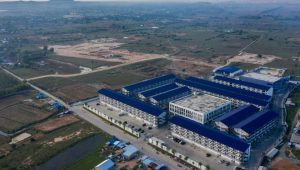
The Cabinet on Monday approved sweeping duty and tax exemptions on imports of solar power machinery and spare parts to rapidly expand renewable energy production and tackle the nation’s electricity crisis.
The decision was taken during the 20th Cabinet meeting, chaired by Prime Minister Tarique Rahman at the National Parliament Building.
Solar tax relief
Under the approved proposal, the government will waive all customs duties exceeding 1 per cent, along with the entire regulatory duty, supplementary duty, Value Added Tax (VAT), advance tax, and advance income tax on machinery and spare parts imported for setting up renewable solar power plants.
This exemption will remain active for 180 days from the date the official notification is gazetted.

The move aims to alleviate public suffering caused by persistent power shortages, keep industrial factories running, lower production costs, reduce equipment damage, and stimulate investment and economic activities.
Cigarette price hike
To curb the illicit trade of low-tier cigarettes and address revenue deficits, the Cabinet approved a revision to minimum cigarette pricing under the Value Added Tax and Supplementary Duty Act, 2012.




The maximum retail price for a 10-stick pack of low-tier cigarettes has been raised from Tk 62 and above to Tk 65 and above. This adjustment will see modifications made to two existing notifications concerning cigarette pricing and the rules governing stamp and banderol usage.
Bangladesh-Hong Kong investment pact
The Cabinet also cleared a draft bilateral agreement titled the “Promotion and Protection of Investment Agreement” to be signed between Bangladesh and Hong Kong.
Hong Kong, ranked as the sixth-largest direct investor in Bangladesh, holds substantial investments in key sectors like garments and textiles.
This Investment Promotion and Protection Agreement is designed to strengthen bilateral economic ties and attract fresh foreign direct investment.
It is expected to drive industrialisation, create employment, facilitate technology and knowledge transfer, expand production capacity, and guarantee robust safety and protection for mutual investments.
The agreement will remain in force for 10 years, with a provision allowing either party to propose amendments three years after signing. Officials expect the pact to establish an effective institutional framework that will boost foreign capital inflows and broaden overall economic co-operation.