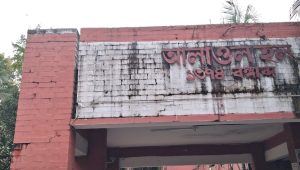

When Mohammad Yusuf Sardar, the childless founder of Dhaka’s iconic women’s shopping centre Gausia, decided to donate his property for public welfare before his death, he wanted his wealth to continue serving people beyond his lifetime.
The intention behind the donation was simple – income generated from the property would be used for public benefit.
Years later, however, questions remain over whether that purpose has been fulfilled.
The property, managed as a Waqf estate, now houses 588 shops. But despite being located in one of Dhaka’s busiest commercial areas, the income generated from it remains far below its potential.
Monthly rent collected from the shops ranges from only Tk112 to Tk2,118, depending on the shop.
Just across the road at New Market, a shop of similar size earns between Tk15,000 and Tk20,000 a month, depending on location.
The gap is not only about lost revenue. It represents lost opportunities for the public welfare activities that Waqf was created to support – from education and healthcare to assistance for disadvantaged communities.
Gausia is only one example of a wider problem facing Bangladesh’s Waqf properties. Assets donated for public benefit are often affected by weak management, low returns and illegal occupation, preventing them from delivering the impact donors intended.
In Islam, such charitable endowments are known as Waqf. The government has a dedicated institution – the Office of the Administrator of Waqfs, Bangladesh – responsible for overseeing these properties.

Yet many donated assets remain unable to generate the social and economic benefits expected from them.
Waqf Administrator Safiz Uddin Ahmed told TIMES that Bangladesh has more than 5.37 lakh acres of Waqf property.
Of this, around 1.12 lakh acres are under illegal occupation, meaning nearly 20 percent of Waqf land is outside official control.
Explaining government efforts to recover occupied properties, Safiz Uddin said, “Recovery of occupied properties will continue as long as the world exists. Several cases are ongoing, and possession will be taken back after legal proceedings.”
Asked whether influential individuals were involved in occupying Waqf land, he said, “Those who are habitual litigants file cases. There is nothing we can do here.”
However, government figures on Waqf property remain inconsistent.

On 7 May, Religious Affairs Minister Kazi Shah Mofazzal Houssain Kaikobad said Bangladesh had 6.14 lakh acres of Waqf property – 77,000 acres more than the figure provided by the Waqf administrator.
Officials could not explain the discrepancy.
The problem is not limited to land occupation. Even properties under management often generate far less income than their market value.
At Shahi Mosque in Chawkbazar, monthly rent increased to Tk2.52 lakh after a committee change in 2025. The previous committee collected only Tk35,000, leaving a gap of Tk2.17 lakh per month. No accountability was established over the low collection.
The Shah Ali Shrine in Mirpur presents another example. Official documents show the shrine owns 32.14 acres of land, but a Mirpur Land Office report found only 5.76 acres under possession.
Shrine manager Morshed Alam claimed ownership of 27.77 acres. Even according to that figure, 22.01 acres remain occupied.
With land prices in the area exceeding Tk1 crore per katha, the occupied land could be worth around Tk1,500 crore.
The loss of control over Waqf assets has also affected revenue collection.
According to the annual report of the Office of the Waqf Administrator, the collection target for 2022–23 was Tk18.13 crore, but actual collection stood at only Tk9.20 crore.
During the same year, 1,350 Waqf properties were audited, while action was taken to remove illegal occupants in only 11 cases.
Professor Mohammad Zahirul Islam of Dhaka University’s Department of Islamic Studies said weak supervision has discouraged people from creating new Waqf.
“Due to a lack of proper supervision, people are no longer as interested in creating Waqf as before. A large portion of existing Waqf properties were donated during the British and Pakistan periods,” he told TIMES.
Income from Waqf properties is supposed to be spent according to donors’ wishes. However, officials were reluctant to provide details about how revenue is being used for public welfare.
Focal point officer Farid Ahmed said activities are conducted according to Waqf deeds and monitored by auditors and inspectors.
However, the Waqf administrator could not provide details of specific public welfare programmes funded from Waqf income.
In July 2025, then religious affairs adviser AFM Khalid Hossain announced plans to digitise Waqf estates. More than a year later, publicly available information remains limited.
Sections on procurement plans, expenditure and audit reports contain no updates after 2023, while monitoring reports and project budgets remain unavailable.
Experts say properly managed Waqf assets could become a major source of social development.
Abul Khair Mohammad Yunus, director of Dhaka University’s Centre for Moral Development, said Waqf income can support education, healthcare and infrastructure according to donor conditions.
Professor Mohammad Zahirul Islam said Waqf is not limited to mosques and religious institutions.
“Road construction is also a public welfare activity. Any work that benefits people can be supported through Waqf resources,” he said.
Waqf properties are generally classified into three categories: Waqf Fi Lillah, donations for public welfare and religious purposes; Waqf Al-Awlad, properties for family and descendants that later transfer to public welfare; and Mixed Waqf, where income is divided between religious institutions and family beneficiaries.
According to the Ministry of Religious Affairs, Bangladesh has 2,12,099 acres of Waqf Al-Awlad property and 3,77,120 acres of Waqf Fi Lillah property.
Historically, Waqf has supported scholarships, libraries, educational institutions, hospitals, healthcare services, clean water projects and public infrastructure.
Countries such as Malaysia have integrated Waqf into wider social and economic development programmes, using such assets for housing, education and healthcare through professional management and investment.