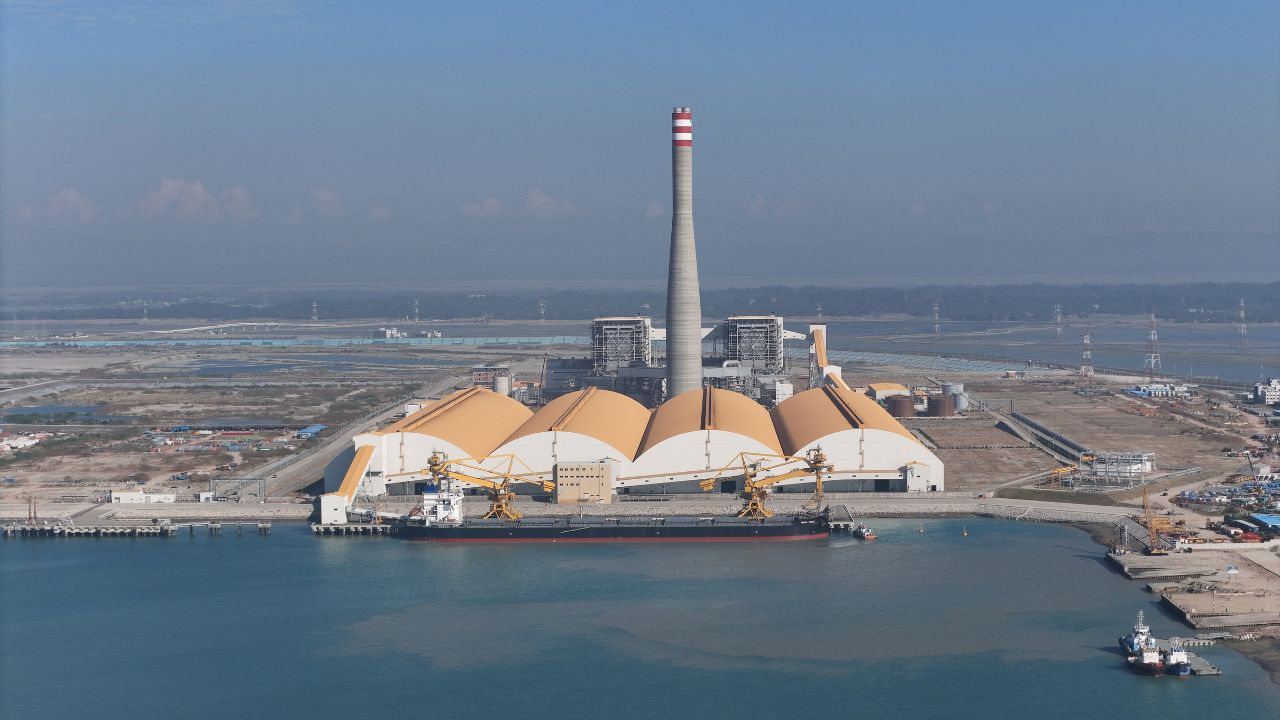



Business leaders and industrial entrepreneurs in Chattogram have come up with a seven-point demand, including a 60-70-kilometre high-speed corridor linking Matarbari Deep Sea Port with the Bangabandhu Sheikh Mujibur Rahman Tunnel (Karnaphuli Tunnel).
Their demands also include a six-lane, controlled-access expressway on the Dhaka–Chattogram Highway, 24-hour operations at Shah Amanat International Airport, a solar-powered “energy belt” in the Chakaria-Cox’s Bazar region, and the extension of the gas pipeline to Cox’s Bazar.
The proposals were presented on Monday at a dialogue titled “Integrated Growth Network Development”, jointly hosted by the Asian Development Bank (ADB) and the Chattogram Chamber of Commerce and Industry (CCCI) at the World Trade Centre in Agrabad.
CCCI President Mohammad Amirul Haque chaired the meeting, which was attended by current and former chamber directors, prominent industrialists, and senior institutional officials.
Addressing structural bottlenecks
Business leaders emphasised that despite Chattogram’s strategic location, maritime access, and economic potential, growth continues to be stymied by weak connectivity, acute energy shortages, and policy constraints.

They urged stakeholders to prioritize an integrated economic and logistics framework over piecemeal infrastructure projects.
Highlighting logistics costs, Amirul Haque stressed the urgency of expanding river transport, noting that water transport is approximately ten times cheaper than road freight.
He called for the dredging of the Sandwip Channel to restore key waterways, asserting that past inaction stemmed from a lack of policy commitment rather than technical capacity.
“If given the opportunity, the private sector has the capability to overcome these major challenges,” he noted.



Syed Mohammad Tanvir, managing director of Pacific Jeans, underscored the need to prepare for surging trade volumes at Matarbari Deep Sea Port, whose under-construction container terminal is projected to handle three million TEUs annually once operational.
He warned that without a direct 60-70km high-speed link connecting Matarbari to the Karnaphuli Tunnel, cargo movement will face severe gridlock.
Addressing the highway network, ADB consultant Mohammad Tahsin H Chowdhury revealed that the bank is actively evaluating a project worth approximately Tk7,150 crore to upgrade the Dhaka-Chattogram Highway into a six-lane controlled-access expressway.
He noted that land acquisition remains a primary obstacle, leading planners to consider alternative designs, including an elevated expressway or flyovers above the existing route. The proposed funding model includes Tk5,580 crore in foreign loans and government financing.
Infrastructure and energy reforms
Participants expressed frustration over operating constraints at Shah Amanat International Airport, calling its 10pm closing time incompatible with Chattogram’s status as a major regional trade hub.
They noted that during adverse weather in Dhaka, flights are frequently forced to divert to Kolkata or Chennai because Chattogram cannot accept late-night landings. The chamber called for 24-hour operations, a modern cargo terminal, and targeted incentives for international carriers.
Regarding energy security, Tanvir pointed out the inefficiency of transporting LNG hundreds of kilometres from offshore units in Moheshkhali and Matarbari while local heavy industries in Chattogram operate well below capacity due to gas deficits. He advocated for establishing gas-based heavy industries closer to the landing points to reduce transit losses.
Additionally, he proposed a green energy belt in the high-radiation Chakaria-Cox’s Bazar area to supply renewable power directly to industrial zones along the planned Matarbari expressway.
CCCI Vice-President AM Mahbub Chowdhury urged the government to formally gazette Chattogram as Bangladesh’s “Commercial Capital”, a designation agreed upon in policy but yet to be officially published.
He also called for dedicated regional energy quotas and the extension of the main gas pipeline through Patiya to Cox’s Bazar to facilitate industrial expansion.
Concluding the discussions, CPDL Managing Director Iftekhar Hossain highlighted the social requirements for sustainable growth.
He stressed that industrial zones must be developed alongside civic infrastructure – including worker housing, healthcare facilities, and educational institutions – to avoid long commutes that degrade worker productivity and long-term economic viability.