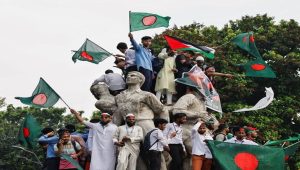
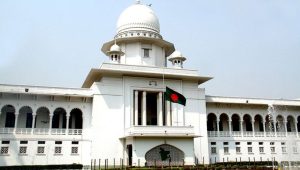
Student activism has historically shaped politics across the Indian subcontinent, most notably in Bangladesh. From the 1952 Language Movement, where protesting students were killed, inspiring International Mother Language Day – to the 1971 Liberation War and the 1990 anti-autocracy protests, students have been central to national resistance. Most recently, the July-August 2024 uprising saw students spearhead massive demonstrations despite severe casualties, ultimately forcing Prime Minister Sheikh Hasina to resign after over 15 years in power.
In Bangladesh, the phrase ‘tail-based politics’ describes a long‑standing system in which student and teacher organisations act less as independent voices on campus and more as extensions – literal ‘tails’ of national political parties. Teachers’ associations at public universities attaching themselves as subordinate wings – ‘tails’-of national political parties rather than operating as independent professional bodies. Teachers join this system for several reasons. First, career advancement – promotions, administrative posts and research funding are often distributed through political patronage networks rather than merit alone. Second, job security and protection from harassment or transfer are more assured for those with strong political backing. Third, access to resources – housing, foreign scholarships, project grants, and consultancy opportunities – frequently flows through politically connected channels. Fourth, social and institutional pressure plays a role, as teachers who remain neutral can be marginalised within a highly polarised campus culture. Some teachers are genuinely ideologically committed to a party’s platform.
On 19 September 2024, the University of Dhaka administration imposed a comprehensive ban on all forms of student, teacher, and staff political activities across its campus. This decision forms part of a broader post-uprising restructuring of campus politics. Since the fall of Hasina’s government following a student-led mass uprising, a total of 33 higher education institutions has prohibited student politics. These include 18 government universities, four government colleges, and 10 government medical colleges. Subsequently, on 23 October 2024, the interim government outlawed the Bangladesh Chhatra League (BCL) under the Anti-Terrorism Act of 2009. The ban was enacted in response to allegations of the BCL’s involvement in violence during the previous regime, including its role in suppressing student-led protests and carrying out attacks during the July 2024 Movement.
Bangladesh’s neighbours and regional peers offer instructive contrasts, not because their systems are flawless, but because most of them have deliberately separated campus governance from party machinery. The experience of other Asian countries shows both why such entrenched party control over campuses is damaging. Recently, tens of thousands of students occupied Jantar Mantar in New Delhi, creating one of the largest youth challenges to Prime Minister Narendra Modi’s administration. India’s Education Minister Dharmendra Pradhan resigned on July 25, following a 37-day youth-led protest campaign by the Cockroach Janata Party over major competitive medical exam paper leaks.

Nepal’s student unions were historically tied just as tightly to national parties, but that model was upended in 2025: after Gen-Z-led protests brought former mayor Balendra ‘Balen’ Shah to power as prime minister, his government ordered all partisan student unions off university campuses within 60 days, replacing them with neutral, welfare-focused ‘Student Councils’ – a reform hailed by some as overdue and criticised by others as too blunt an instrument. Sri Lanka shows the other side of the coin. Its powerful, left-leaning Inter University Students’ Federation was central to organising the 2022 Aragalaya protests, and student organisations played a major role in the nationwide demonstrations that ultimately forced President Gotabaya Rajapaksa’s resignation, demonstrating how organised student politics can hold power to account even outside a party structure.
Bhutan stands apart from all of these. As a young democracy that introduced party politics only in 2008, it has deliberately kept campuses – as well as monastic and secular schools – largely insulated from party competition. Student bodies are oriented toward welfare and cultural life rather than partisan mobilisation, reflecting the state’s broader emphasis on gradual, controlled political development.



Student organisations in Bangladesh function as extensions of political parties, and the resulting clashes and factional rivalries have killed many students over the years while seriously disrupting academic life. The pattern is not incidental; districts with a higher concentration of educational institutions consistently saw more violence, and large numbers of students were drawn into nearly every incident. This is not simply about occasional unrest. It is a structural feature of how power operates on campus. Since the early 1990s, student politics in Bangladesh has increasingly served as a political weapon for national parties rather than as a genuine platform for student interests, and the quality of education has suffered as a direct result. After nearly every national election, it has become routine for the winning party’s student wing to take over halls of residence and expel students affiliated with rival groups.
The human cost has been severe enough to shock the nation more than once. The 2019 killing of BUET student Abrar Fahad remains a painful symbol of how deadly campus politics can become. Student politics was banned on the BUET campus after his murder. Students at the university are still against all kinds of political activities on the campus. On December 9, 2012, activists of the Bangladesh Chhatra League (BCL) from Jagannath University brutally murdered Biswajit Das in broad daylight on a street in Old Dhaka. Das, a 24-year-old tailor, was mistakenly identified as an opposition protester during a blockade enforced by the opposition. The activists chased him and beat and hacked him with machetes and iron rods. Despite desperately seeking help from passersby, Das succumbed to his injuries shortly afterward.
Ending tail-based politics does not mean silencing young people or pretending politics does not matter to them. Legal separation of student unions from national parties, so unions represent student welfare and campus issues rather than functioning as party front organisations. Merit-based, transparent processes for faculty hiring, promotion, and hall administration, removing political litmus tests from academic careers. Independent, elected student representative bodies – along the lines of the historic DUCSU model – that channel genuine student concerns without party control. Accountability and enforcement mechanisms so that bans on politically motivated violence are not merely symbolic, as several universities have already begun to test since 2024. Protecting the right to political belief and expression for students and teachers as individuals, while removing the institutional machinery that turns campuses into party assets.
What is needed now is not the suppression of youthful political energy, which is healthy and even necessary in a democracy, but the dismantling of the tail-based structure that ties student and teacher organizations directly to party power. It is possible to keep space for student voice and civic engagement while protecting classrooms, laboratories, and dormitories from becoming extensions of party warfare. For Bangladesh, that separation may be the single most important reform standing between its current education system and a genuinely better one.
The views expressed in this article are solely those of the author
The writer is the Editor, GOLPOKAR, and Board Member, PEN Bangladesh