
Saudi Arabia, Turkey and Pakistan signed a landmark joint defence agreement in Makkah on Friday, pledging to treat an armed attack on any one of them as an attack on all three as turmoil across the Middle East fuels demands for stronger regional security.
The “Makkah Joint Defence Agreement” brings together three of the Muslim world’s most influential powers: oil-rich Saudi Arabia, nuclear-armed Pakistan and Turkey, which commands Nato’s second-largest military and has a rapidly expanding defence industry.
“The agreement is intended to strengthen collective deterrence against any act of aggression, and stipulates that any armed attack against any one of the three states shall be regarded as an attack against them all,” a joint statement said, reports AP.
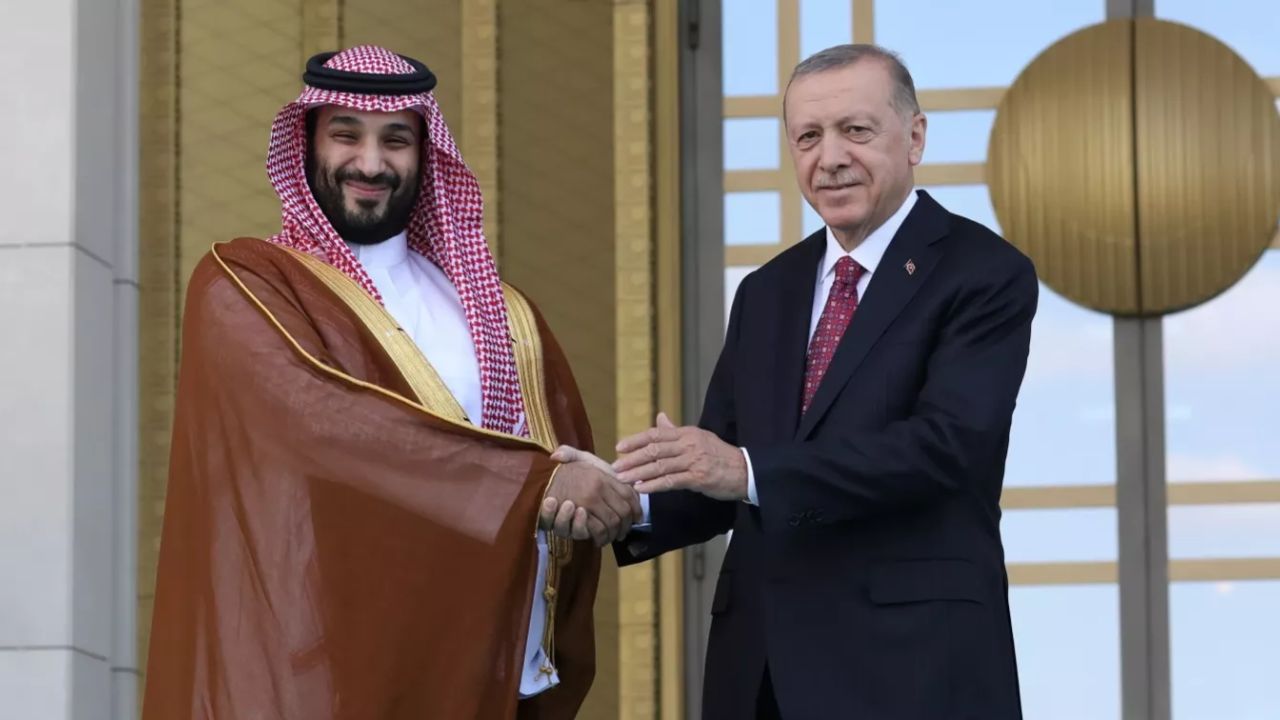
Saudi Crown Prince Mohammed bin Salman, Turkish President Recep Tayyip Erdogan and Pakistani Prime Minister Shehbaz Sharif signed the agreement following nearly a year of negotiations.
The pact comes as the Middle East reels from escalating conflict, with Iranian attacks hitting Saudi Arabia and other Gulf states since the US and Israel attacked Iran on 28 February.
The turmoil has threatened Gulf energy exports and raised questions over the reliability of the longstanding US security umbrella in the region.
Yet the agreement stops short of spelling out exactly what military commitments each country would be required to make if another were attacked, leaving unclear how automatically the collective-defence pledge could translate into military action.

Turkish Vice President Cevdet Yilmaz said the agreement was not directed at any particular country, while a Turkish official described it as “purely defensive in nature”.
Saudi Arabia also rejected suggestions that the pact marked the birth of a new military or sectarian alliance.
“The agreement does not represent any orientation toward building a military axis or sectarian/religious bloc, and it is not linked to nuclear endeavors or an arms race, but rather to building sustainable self-reliant capabilities,” a Saudi statement said.
The deal nevertheless carries powerful strategic symbolism.




Turkey brings Nato’s second-largest military and a sophisticated defence industry, Pakistan contributes extensive military experience and the Muslim world’s only nuclear arsenal, while Saudi Arabia adds enormous financial weight, regional influence and its position as one of the world’s leading oil exporters.
“Three of the Muslim world’s most influential states are convening at a moment of heightened uncertainty, demonstrating a growing willingness among regional and middle powers to coordinate more closely on security matters,” said Abdulaziz Sager, chairman of the Gulf Research Center.
“The trilateral framework could strengthen the three countries’ collective diplomatic and defense weight while contributing to the emergence of a more regionally driven security architecture,” he added.
The agreement builds on decades of military cooperation.
Pakistan has long provided training and technical assistance to Saudi forces, while Turkey and Pakistan have exchanged warships and training aircraft. Saudi Arabia is also a major buyer of Turkish drones.
Pakistan and Saudi Arabia signed a bilateral mutual defence pact last year, although Islamabad has not responded militarily to Iranian attacks on the kingdom and has played down suggestions that its nuclear deterrent could be extended to allies.
Friday’s agreement adds Turkey to that security framework at a time when Ankara and Riyadh have dramatically repaired relations following years of tensions.
It also comes amid mounting Turkish-Israeli tensions over Gaza and other regional conflicts.
Iran reacted critically. Ebrahim Rezaei, a member of the Iranian parliament’s National Security and Foreign Policy Commission, said the agreement would not bring security to Saudi Arabia.
Defence analyst Abdullah Khan described the deal as the natural evolution of longstanding strategic ties among the three countries.
He said their strengths were complementary: Pakistan offered military experience and expertise in managing escalation, Saudi Arabia economic power and regional influence, and Turkey advanced defence technology and industrial capacity.
Ozgur Unluhisarcikli, director of the Ankara office of the German Marshall Fund, said the three countries shared concerns about regional fragmentation, civil conflict and armed non-state groups.
“At the end of the day, all three countries are concerned about instability,” he said.
For Riyadh, the agreement also reflects a push to diversify security partnerships after years of conflict have threatened its oil infrastructure, shipping routes and ambitious development plans.
For Ankara and Islamabad, meanwhile, regional instability poses growing risks to their security and economies.
Signing the agreement in Makkah adds considerable political and religious symbolism to a partnership that could reshape the region’s security architecture – even as its ultimate military reach remains to be tested.