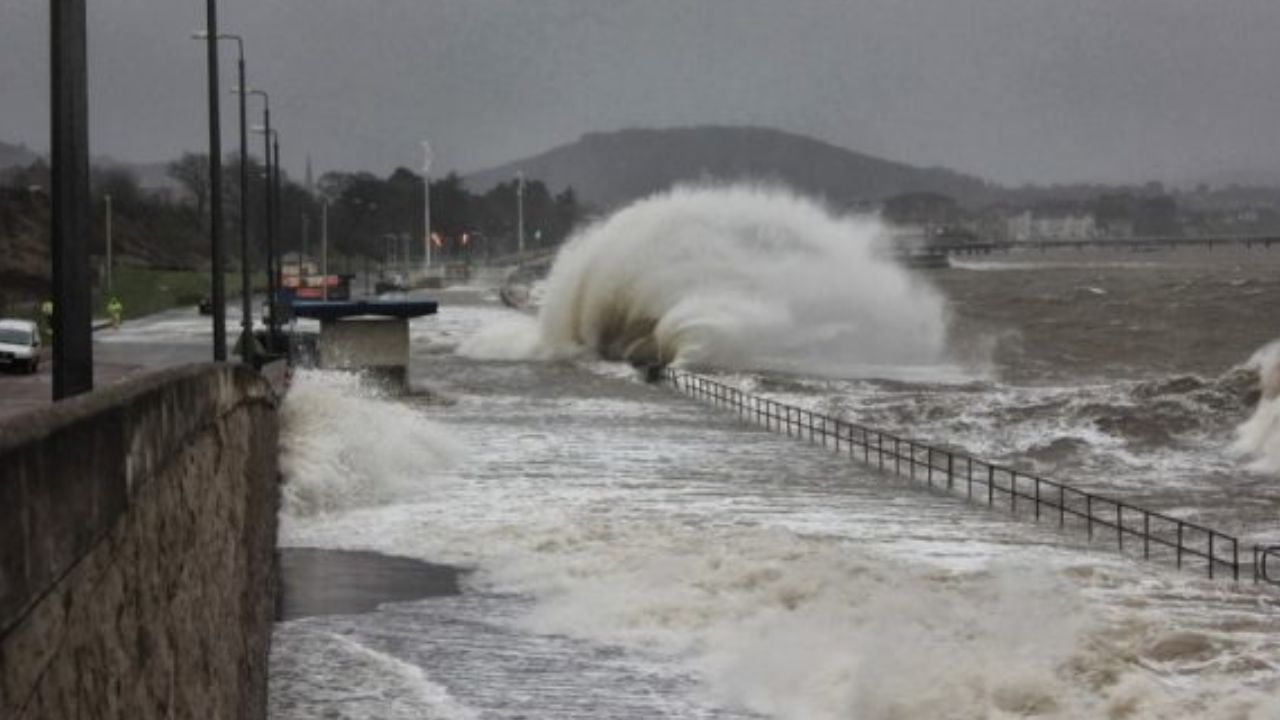



Scientists have cautioned that as many as 13 million people across the United Kingdom may face long-term threats from coastal flooding unless significant climate measures are taken.
A “reasonable worst-case scenario” indicates that a radically altered coastline could eventually necessitate mass population relocation, reports The Guardian.
Even if current global promises to decrease carbon output are fulfilled, approximately 1.4 million additional individuals will be vulnerable to coastal surges by 2200, rising to 1.7 million by 2300 due to thermal expansion of oceans and melting ice.
Adhering to Paris Agreement objectives, however, could spare one million people from such exposure by the year 2300.

Over the past century, sea levels surrounding the UK have increased by roughly 20cm, a trend that is currently picking up speed.
Experts estimate that an additional 40cm to 60cm rise is already inevitable by 2100, placing another half a million people at risk on top of the 2.5 million currently living in hazardous coastal zones. The most vulnerable regions identified include Lincolnshire and the Humber estuary.




University of Bristol Professor Matt Palmer, who spearheaded the research, described rising sea levels as the “sleeping giant” of the climate crisis because of the delayed reaction of oceans and ice to global warming.
The study, published in Nature Communications, warns that a rapid collapse of ice sheets could trigger a catastrophic 15-metre rise in sea levels by 2300, which would submerge extensive portions of London and other urban centres.
Dr Rob Larter from British Antarctic Survey emphasised that these high-impact projections should be viewed asF “genuine possibilities” rather than mere alarmism.
The research utilised a sophisticated flood model from the Bristol-based firm Fathom to provide the first quantification of long-term flooding threats to the British public.
Notably, England and Wales are under greater threat than Scotland and Northern Ireland, which are still experiencing a slow vertical rebound following the last ice age.
Dr Joanne Williams of National Oceanography Centre in Southampton noted that bolstering existing flood barriers to withstand these extreme scenarios would be immensely difficult and costly. While the study highlights coastal dangers, it did not account for the impact of intensified storm surges or future shifts in population and infrastructure.
The researchers pointed out that river and flash flooding already impact a larger segment of the population and are becoming more severe due to heavier rainfall. The report concludes that a mixture of enhanced physical defences and “managed retreat” from the coast will be essential to handle risks beyond the turn of the century.