
The scoreboard still read 0-0 when the whistle sounded for half-time at the 2026 FIFA World Cup final.
For a few moments, everything felt familiar. Spain’s players disappeared down the tunnel. Argentina followed. Tens of thousands of supporters stretched their legs, reached for refreshments and discussed a tense first half that had produced everything except a goal.
Then football’s oldest routine disappeared.
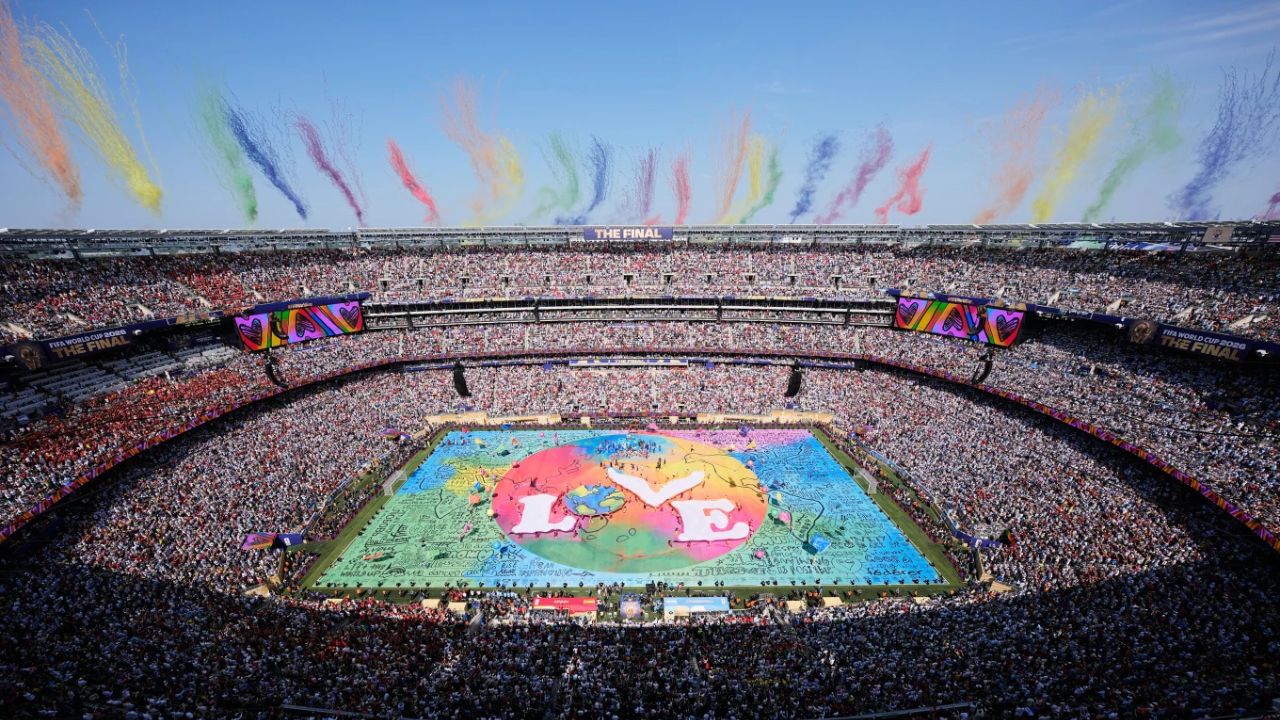
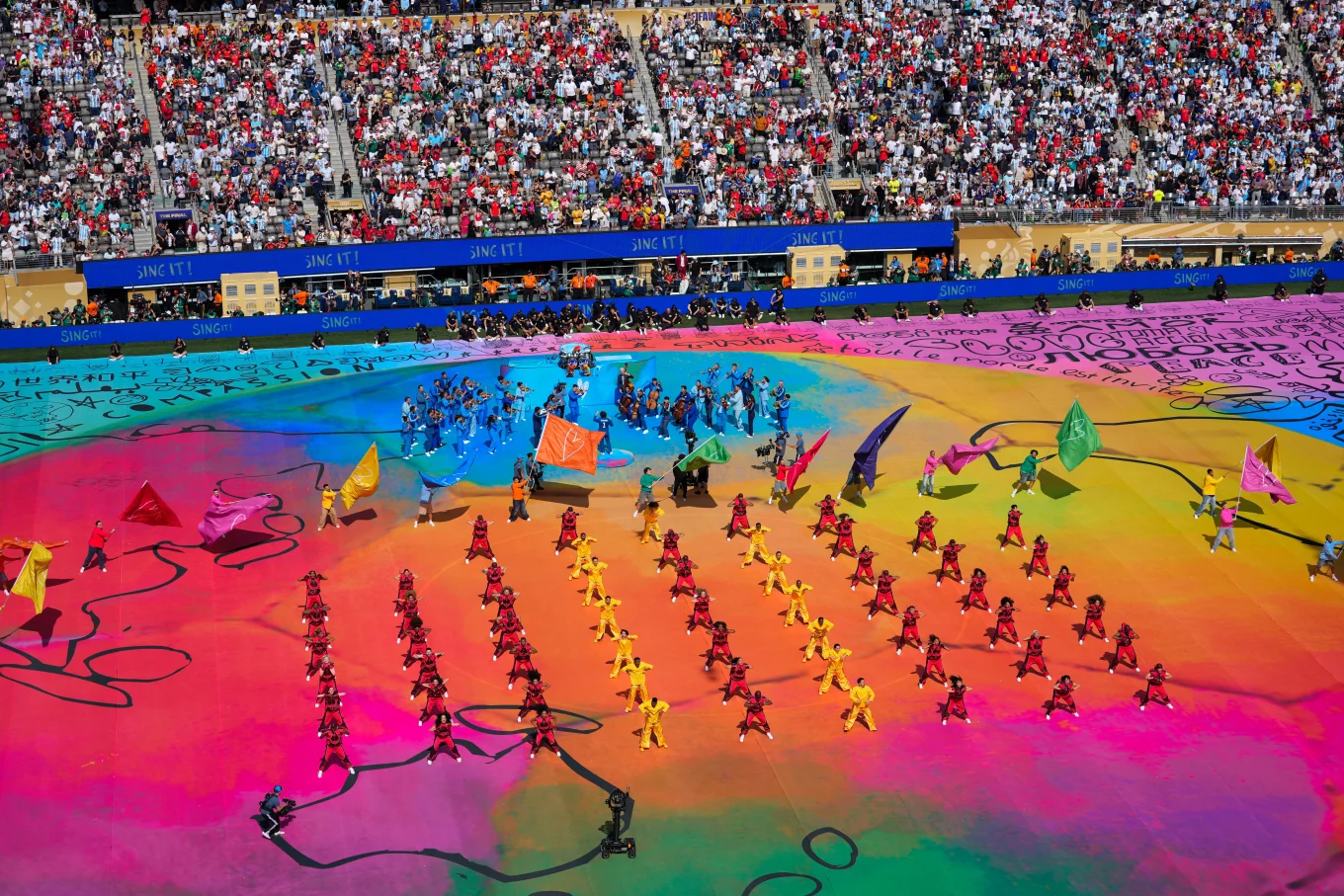
Within seconds, the green pitch at New York New Jersey Stadium transformed into a global entertainment stage. Giant colourful tarpaulins covered the field, crew members moved with military precision, cameras shifted into position and dancers appeared from every corner of the stadium. Fireworks waited above for their cue.
It was as if someone had paused the World Cup final and switched to the world’s biggest music festival.
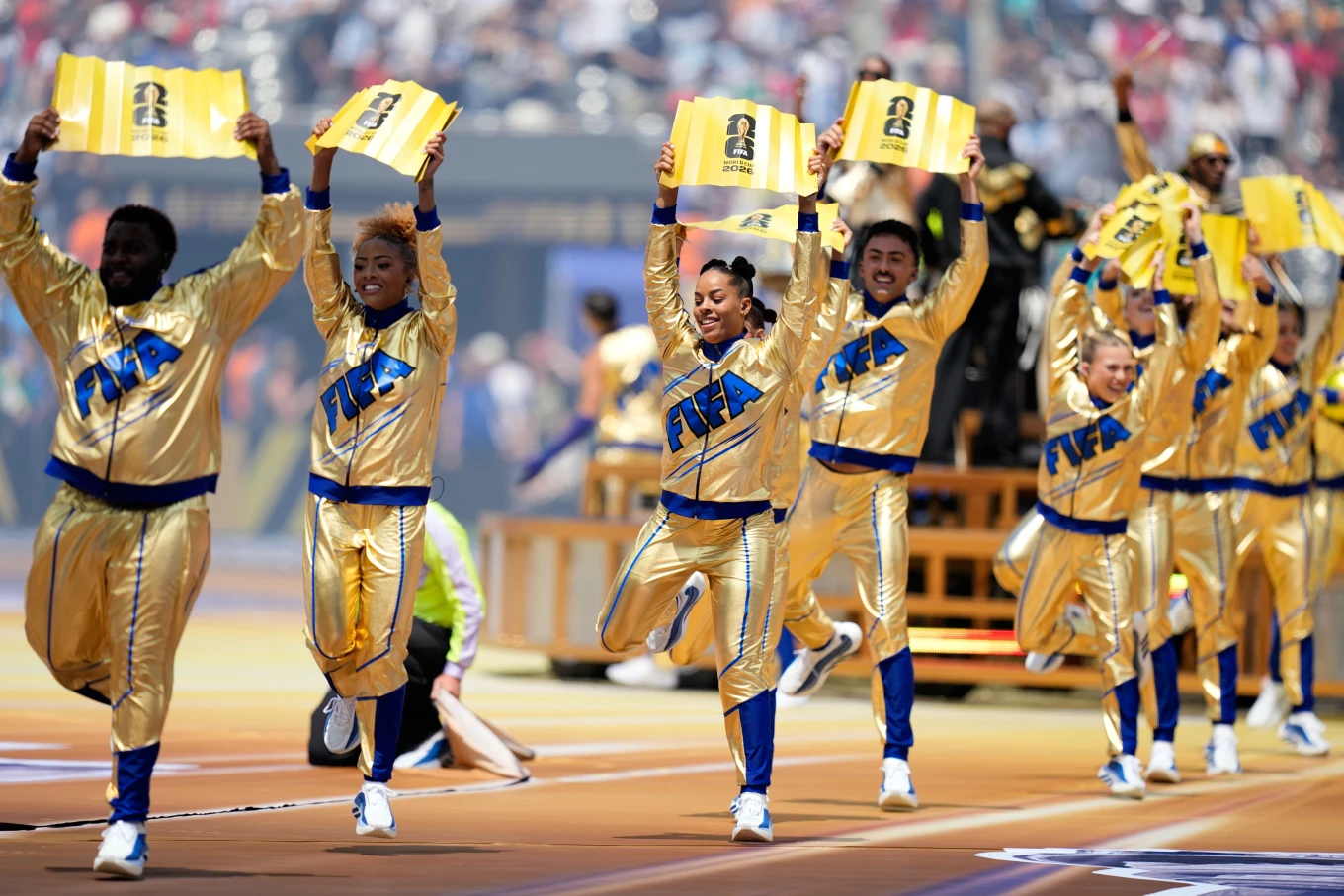
For nearly a century, the World Cup final belonged solely to football. On Sunday night, music demanded equal billing.
The scale of the production also sparked debate, with some questioning how an 11-minute performance could involve such a complex setup unless much of it had been heavily pre-planned or pre-recorded. The precision of every transition only added fuel to the speculation.
FIFA’s first-ever World Cup halftime show, curated by Coldplay’s Chris Martin in support of the FIFA Global Citizen Education Fund, attempted to bring together global music, culture and entertainment in a production lasting just over 11 minutes.
The show also faced controversy over its length. Originally planned as a 30-minute spectacle, FIFA later reduced the halftime window to just over 11 minutes, forcing organisers to compress a star-studded lineup into a rapid-fire performance.

From the opening moments, FIFA made clear it had no intention of easing audiences into the spectacle. The performance moved at extraordinary speed, with every transition introducing another major artist, visual element or surprise.
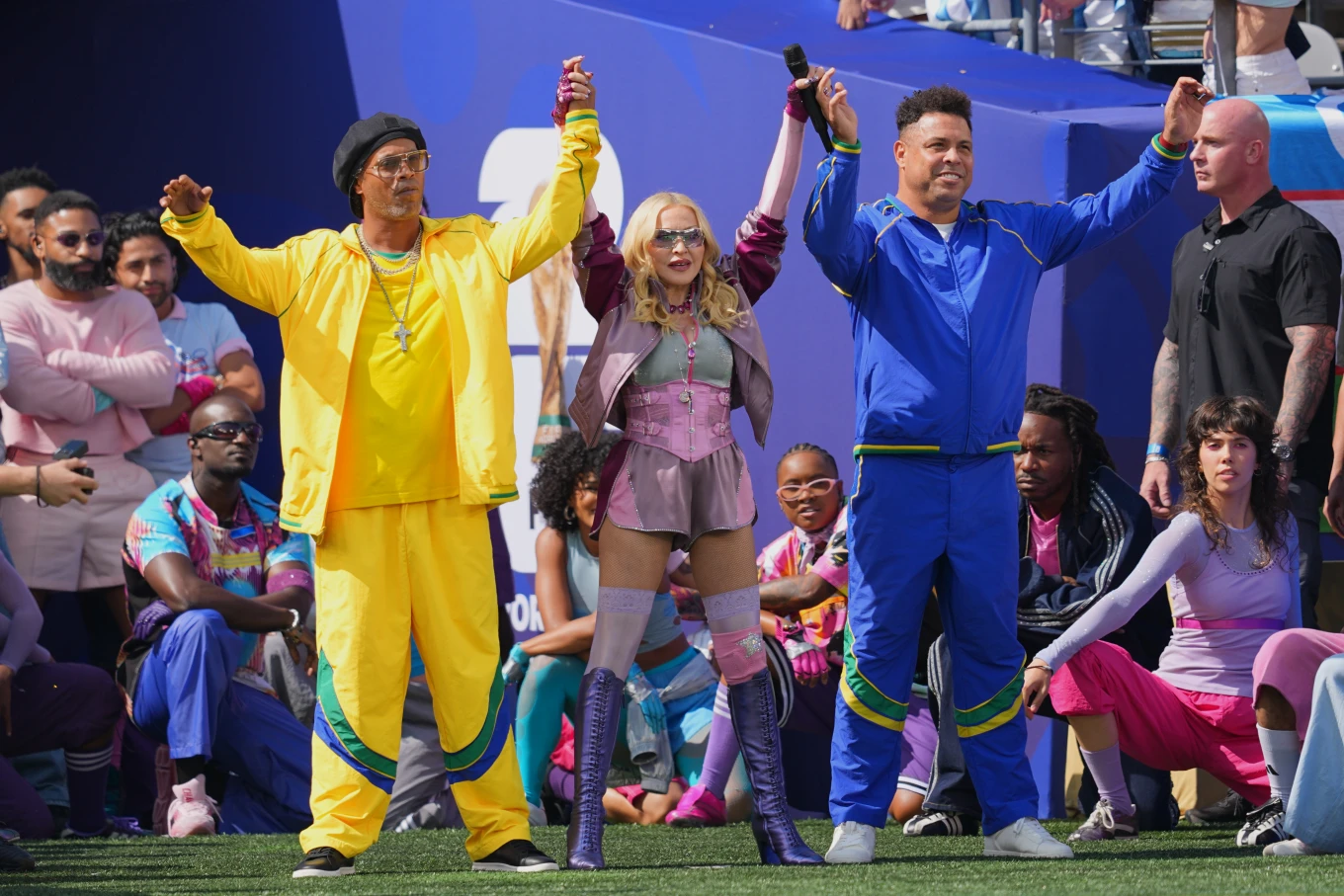
Madonna opened the show by reminding audiences why she remains one of pop music’s greatest performers. Wearing a vivid pink outfit that shone beneath the stadium lights, she transformed the centre circle into a giant dance floor as Music echoed around the arena. Producer Stuart Price stood behind the decks, while Brazilian football legends Ronaldo and Ronaldinho arrived on the pitch in a jeep, drawing one of the loudest reactions of the night.
The mood changed almost immediately as Venezuelan conductor Gustavo Dudamel stepped onto the stage. Musicians from the New York Philharmonic and Venezuela’s Simón Bolívar Symphony Orchestra performed a powerful version of Seven Nation Army, turning one of football’s most recognisable terrace anthems into a symphonic arrangement.
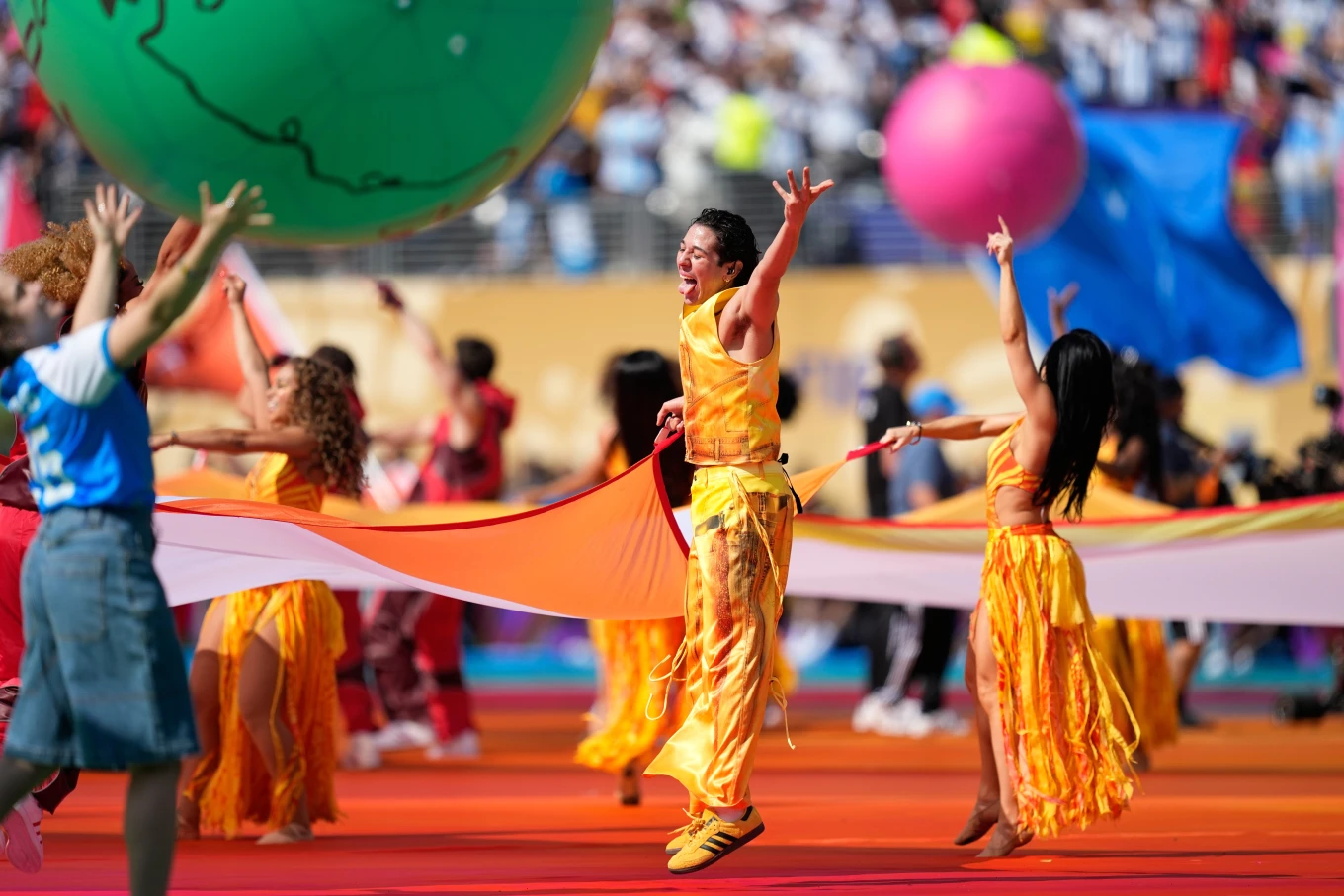
An enormous globe was unfurled across the pitch as flags filled the stadium. Sesame Street characters and the Muppets joined dancers and musicians, creating an unusual combination of children’s entertainment, classical music and football culture.
Then the lights changed again.
A sea of red covered the stadium as BTS appeared to deafening cheers. RM, Jin, Suga, J-Hope, Jimin, V and Jung Kook performed Dynamite in coordinated red-and-black leather outfits inspired by motorcycle racing gear.
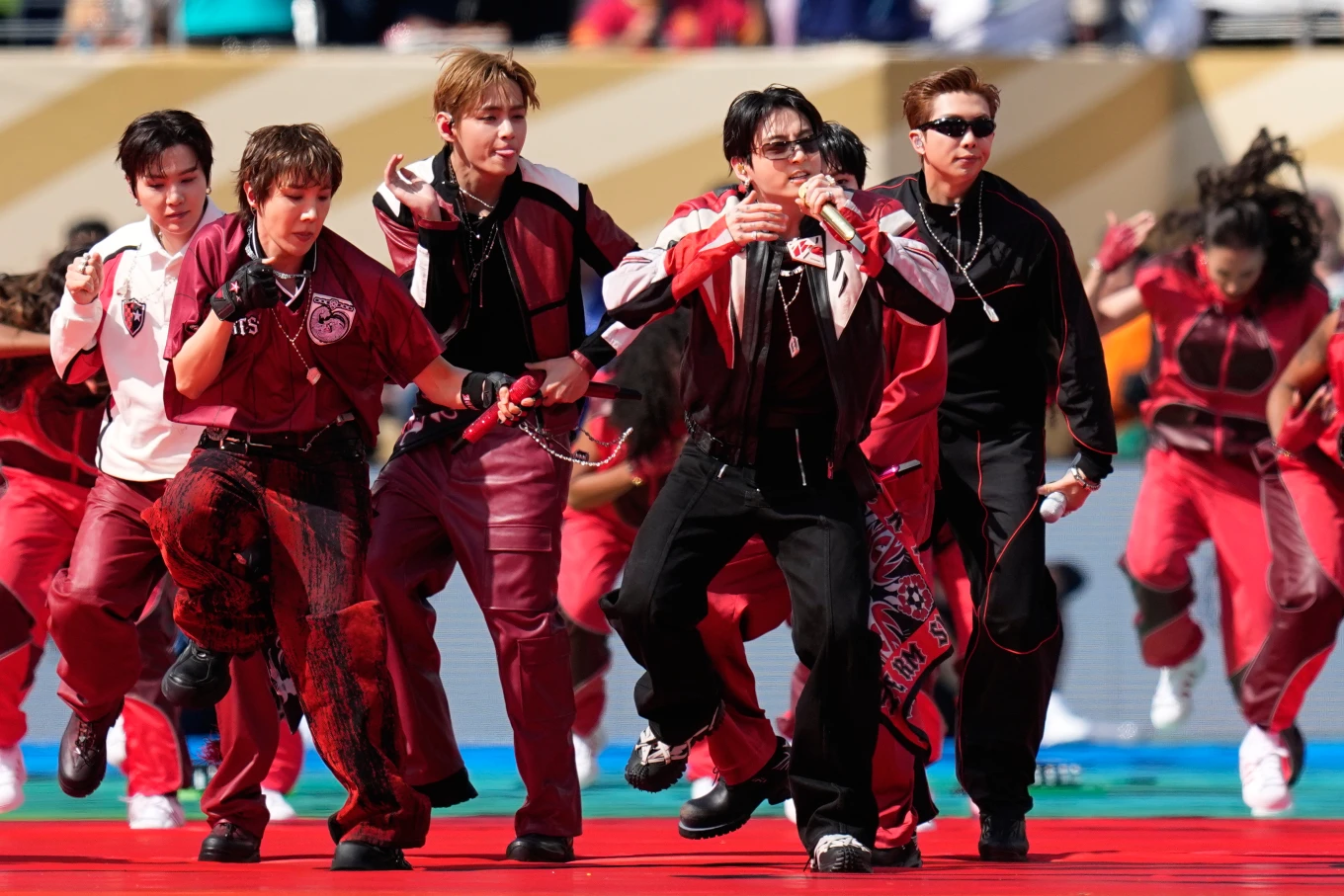
Despite the limited time, the South Korean group delivered the precise choreography that has made them a global phenomenon. Every formation landed perfectly and every camera movement captured the scale of the performance.




The energy shifted once again when Jason Sudeikis and Brendan Hunt returned as Ted Lasso and Coach Beard before introducing Justin Bieber.
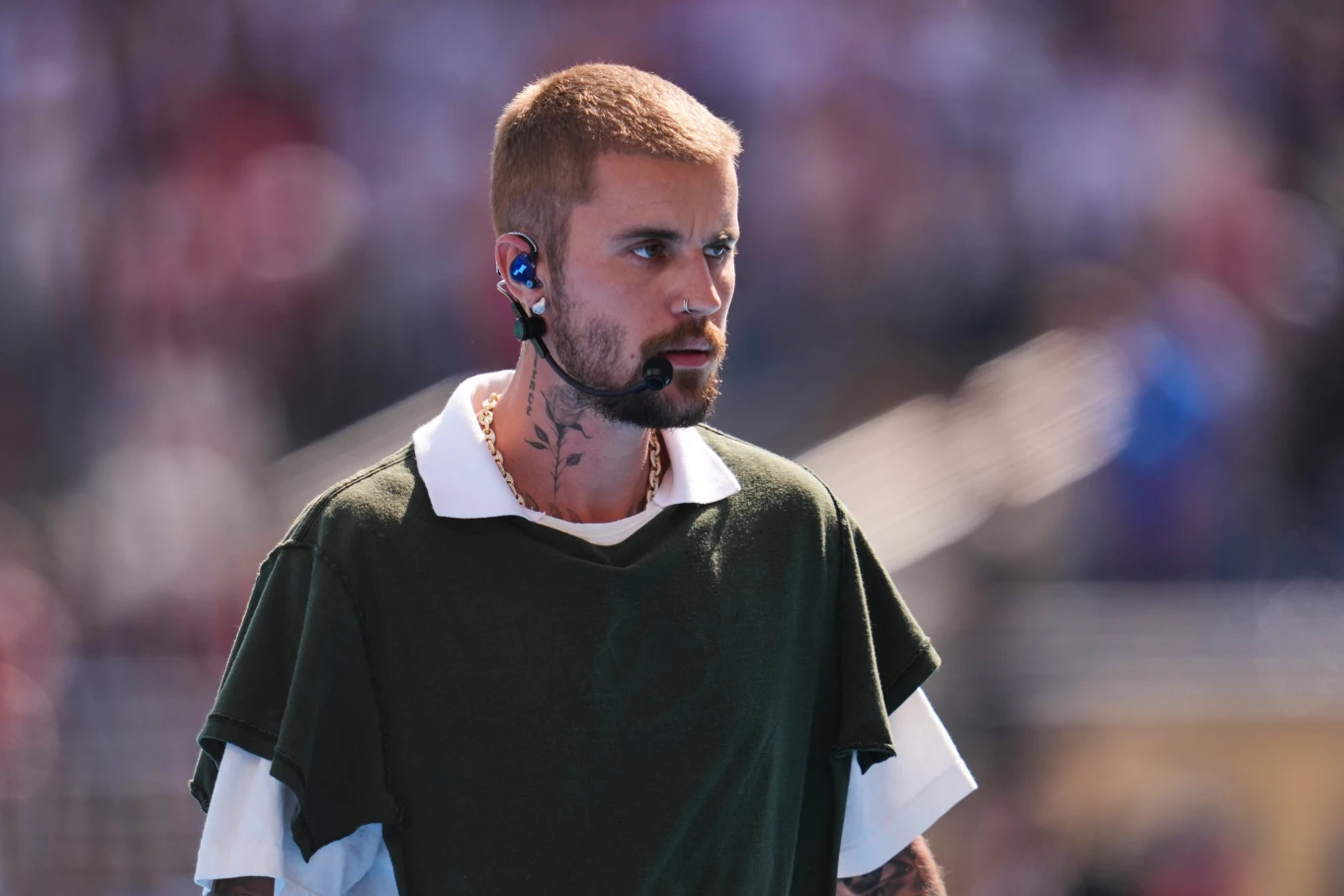
Unlike the larger performances surrounding him, Bieber walked onto the stage alone with an acoustic guitar. Wearing a simple outfit and sporting a full beard, he performed Everything Hallelujah with a quieter approach.
The stripped-back moment offered a contrast to the evening’s overwhelming spectacle. While close-up camera shots created an intimate atmosphere for viewers at home, the vastness of the stadium reduced some of that impact for those inside the venue.
Any sense of calm disappeared when Shakira arrived.
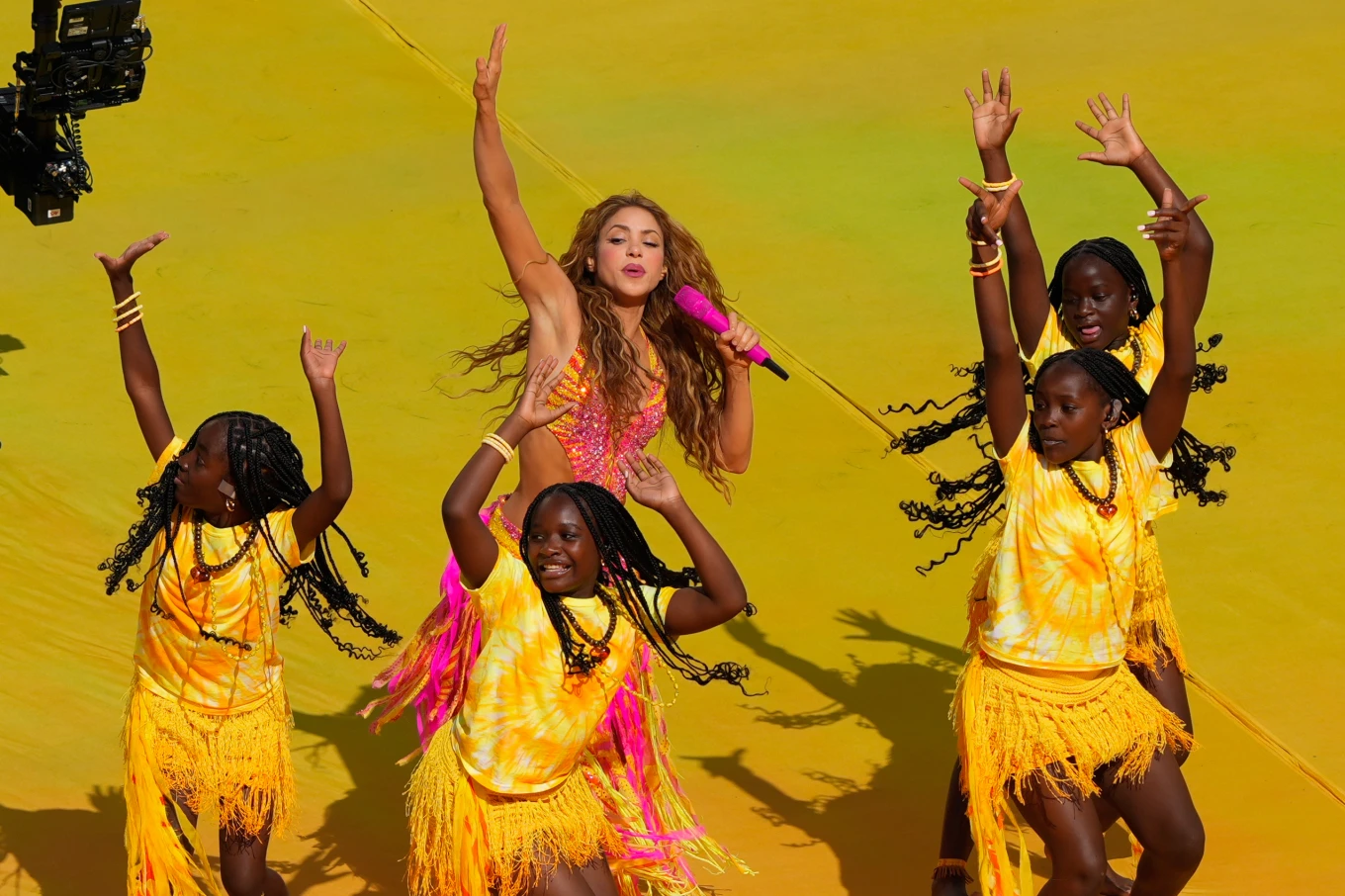
The Colombian superstar, who has long been associated with football through previous tournament performances, brought the show back to full energy. Wearing a vibrant pink-and-yellow costume, she performed alongside Burna Boy, who appeared in white clothing with layered gold jewellery and a knitted cap.
Together, they performed Dai Dai, the tournament’s official anthem. Uganda’s Ghetto Kids, drummers and dancers representing different cultures filled the stage as Shakira encouraged the crowd to sing louder.
This time, they did.
For several minutes, the boundary between football match and music festival vanished. Supporters who had spent the first half cheering for their teams now sang and danced together.
Stars shine beyond the pitch at World Cup final
The World Cup final was also a celebration of celebrity culture, with New York New Jersey Stadium hosting one of the most star-studded gatherings in tournament history.
Alongside Madonna, Shakira, Justin Bieber, BTS, Burna Boy, Dudamel, the PS22 Chorus, Sesame Street and The Muppets, Jennifer Hudson performed the US national anthem. Post Malone, Laura Pausini, Nicole Scherzinger and Robbie Williams also joined the celebrations.
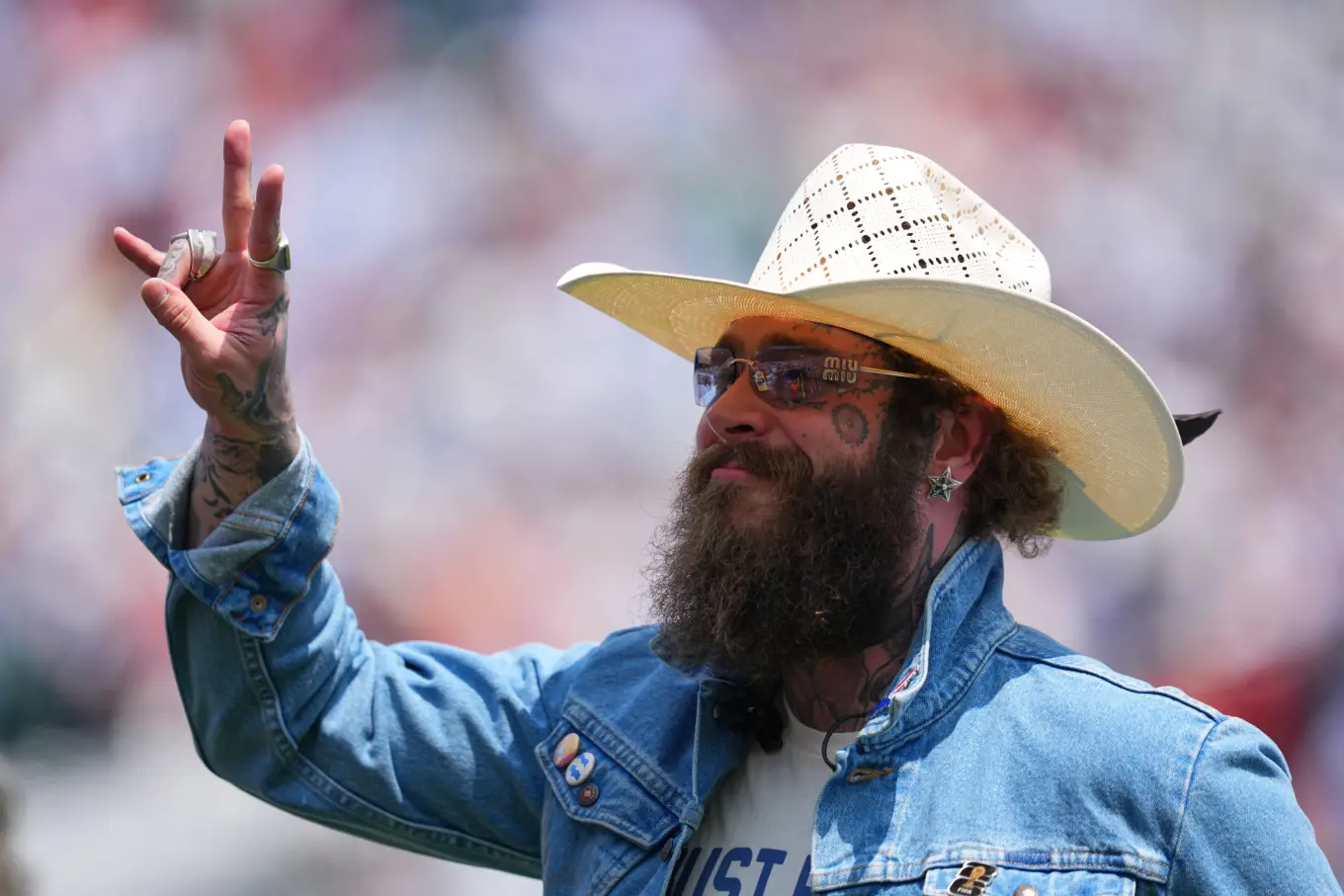
Football royalty filled the stands. David Beckham attended with Victoria Beckham, sons Romeo and Cruz, Romeo’s partner Kim Turnbull and Cruz’s partner Jackie Apostel.
Tom Brady, Serena Williams, Carlos Alcaraz, Novak Djokovic, Patrick Mahomes, Kevin Durant, James Harden, Dwyane Wade and Odell Beckham Jr. were also present. Alcaraz and actor Hoyeon presented the Louis Vuitton trophy trunk before kick-off, while Ronaldo and Ronaldinho later joined Madonna during the halftime performance.
Hollywood stars including Timothée Chalamet, who carried the match ball before joining Kylie Jenner in the stands, also attended. Matt Damon and Luciana Barroso, Jessica Alba, Danny Ramirez, Anya Taylor-Joy and Malcolm McRae, Julia Garner, Javier Bardem and Alejandra Silva, Adrien Brody, Jon Hamm, Norman Reedus, Brooke Shields, Sarah Jessica Parker and Matthew Broderick were among the guests.
Spanish actor Javier Bardem celebrated Spain’s victory, sharing a photo with World Cup winner Borja Iglesias and praising the team’s “unity, elegance and sportsmanship”. His wife Penélope Cruz and actor Antonio Banderas also shared messages celebrating the historic win.
Music stars Beyoncé and Jay-Z, Rihanna and A$AP Rocky, Pharrell Williams, Drake, Travis Scott, Ed Sheeran, Dua Lipa and Callum Turner, Tate McRae, Peso Pluma, Mick Jagger and Mohanlal were also present.
Digital personalities MrBeast, IShowSpeed, Trevor Noah and Druski represented the growing influence of online entertainment, while US President Donald Trump, First Lady Melania Trump, King Felipe VI and Queen Letizia of Spain, and Spanish Prime Minister Pedro Sánchez attended the final.
The finale brought the performers together for one enormous celebration. Chris Martin returned with New York City’s PS22 Chorus as Madonna, Shakira, Burna Boy, BTS and Dudamel joined the growing cast. Coldplay’s new song We Dance echoed around the stadium as fireworks filled the sky and performers surrounded a giant “LOVE” installation featuring a globe forming the letter “O”.
The scale was undeniable, but so was the challenge.
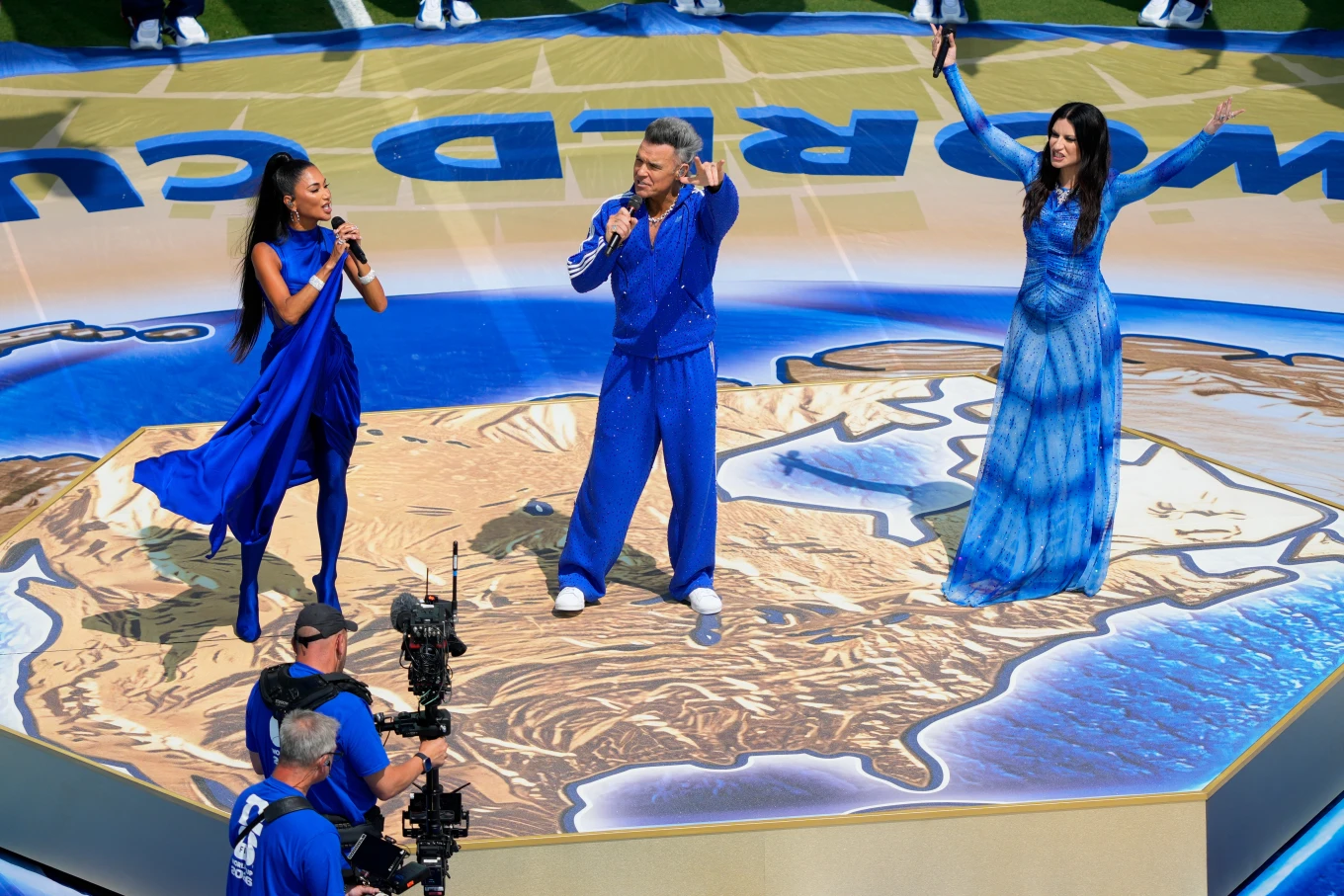
With so many performers, costumes and visual elements competing for attention, some moments struggled to breathe. Madonna’s glamorous pink look, BTS’s striking leather outfits, Shakira’s colourful costume and Burna Boy’s street style all added to the visual identity of the show, while the lighting, choreography and camera work delivered a technically impressive production.
However, the relentless pace sometimes worked against the performance. Just as audiences settled into one act, another arrived. Before one artist could fully command the stage, the spotlight moved elsewhere.
That became the defining debate around FIFA’s bold new direction.
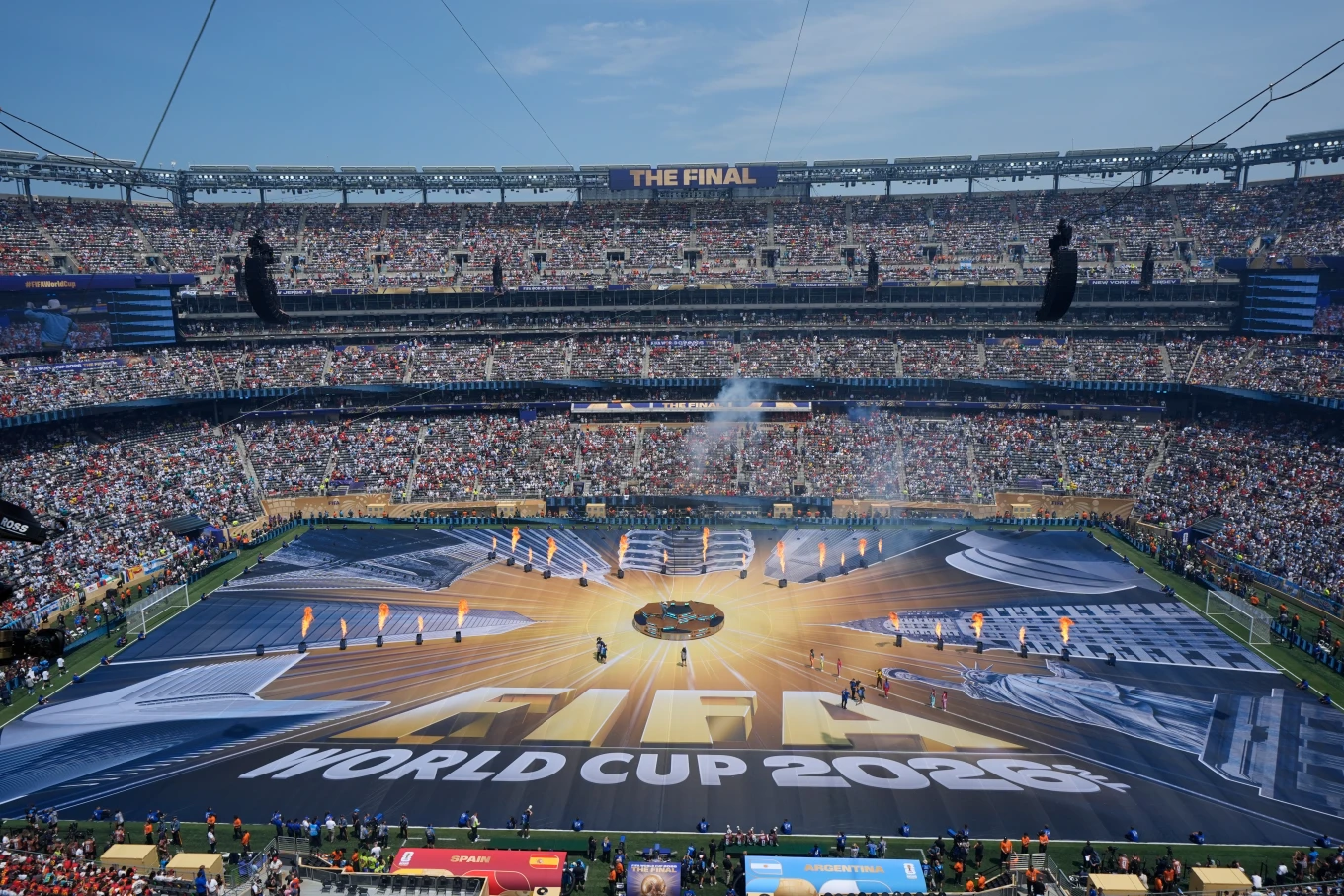
Supporters praised the show’s diversity and its attempt to represent the global nature of the World Cup. Critics questioned whether football’s biggest occasion needed an American-style halftime spectacle.
The inaugural halftime show was never likely to satisfy everyone. It carried the difficult task of representing countless cultures, musical styles and generations in little more than 11 minutes.
But when the lights faded and players returned to the pitch, one thing was clear: FIFA had changed the rhythm of the World Cup final forever.
Long after Spain lifted the trophy, conversations continued about the music as much as the football. Whether the halftime show becomes a cherished tradition or remains one of the tournament’s most debated experiments, its debut ensured this World Cup final would be remembered for far more than the action on the pitch.