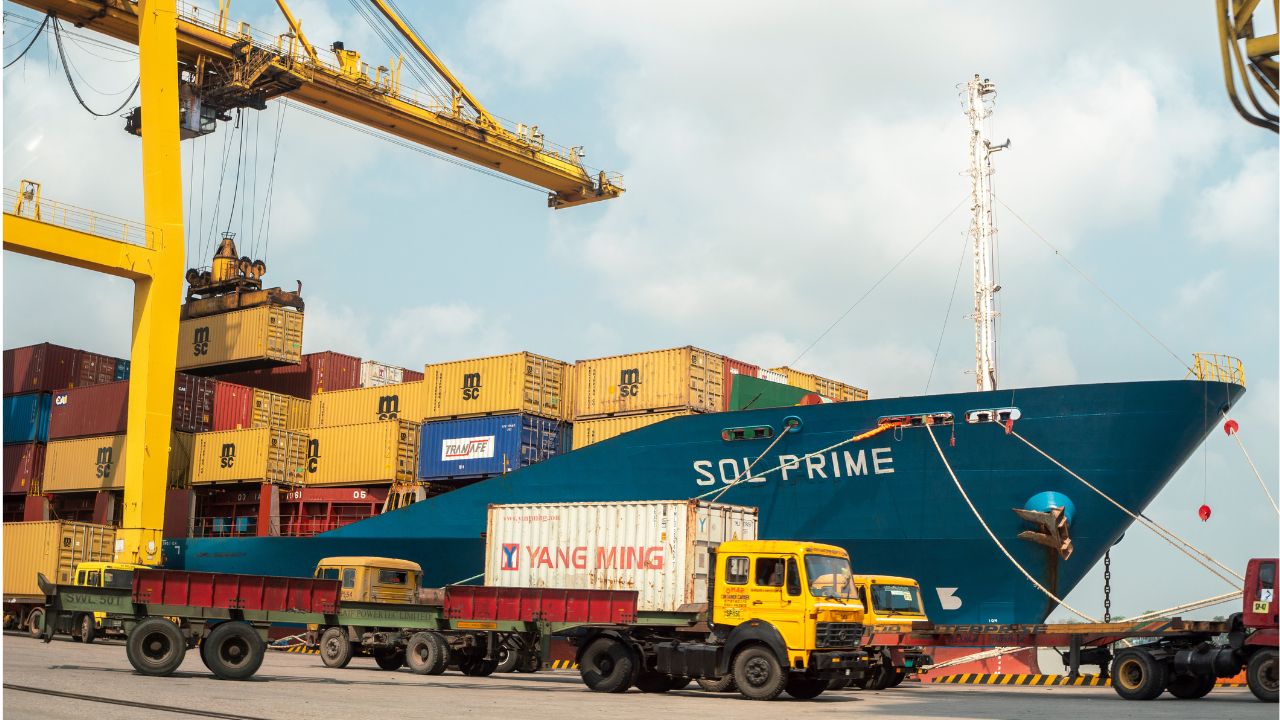

The Chattogram Port Authority (CPA) has said it will not accept liability for damage to imported goods, containers or cargo caused by heavy rainfall and severe waterlogging inside the port’s protected area, invoking the legal principle of an “Act of God” to reject compensation claims.
The decision, announced in an emergency public notice issued by the CPA’s Traffic Department on 10 July, has drawn criticism from importers, exporters, C&F agents and business leaders, who say the authority cannot avoid responsibility for cargo stored within its facilities.
Signed by Director (Traffic) Golam Md Sarwarul Islam, the notice said continuous rainfall since 5 July and waterlogging inside the port’s protected zone had created a high risk of damage to import-export cargo, containers and other goods. It said the CPA would not be responsible for losses caused by the natural disaster and would not entertain compensation claims from any party.
The notification cited Regulation 199(14) of The Regulations for Working of Chittagong Port (Cargo and Container), 2001, describing the flooding as an “Act of God”. The CPA said it was exempt from legal liability under the regulation and from compensation claims under relevant provisions of the Chittagong Port Authority Act, 2022 and the Port Procedure Rules.
Days of relentless rainfall have left large sections of the country’s principal seaport under water, with water entering container yards, warehouses and cargo sheds, raising fears of extensive damage to imported goods worth hundreds of millions of taka. During high tide, floodwater reportedly reached the lower levels of stacked containers in several yards and entered sheds holding Less than Container Load (LCL) cargo.

Chattogram Port operates 11 LCL sheds with a combined storage capacity of approximately 1,000 TEUs, where importers collect goods after customs and port formalities. Several facilities have been inundated. Videos obtained by The Times of Bangladesh showed several inches of dirty water inside Shed No. 7, with drums of textile chemicals, plastic-wrapped fabric rolls and sacks of goods partially submerged.
Hundreds of fabric rolls have been soaked, raising concerns over damage to imported textiles, chemicals, cotton and other raw materials for Bangladesh’s ready-made garment industry. Workers were seen wading through ankle-deep water while moving goods to safer locations.
Business leaders said prolonged waterlogging inside the port reflects inadequate drainage and insufficient infrastructure rather than an unavoidable act of nature. Several importers, requesting anonymity, said the CPA’s declaration places the financial burden of the disaster on traders despite the authority’s responsibility for maintaining safe storage facilities.




Port users have also questioned investment in modernising storage infrastructure despite the CPA generating annual revenues of around Tk5,000-6,000 crore.
The strongest criticism came from the Chattogram C&F Agents Association, one of the country’s largest port-user organisations. Association General Secretary Md Showkat Ali said the CPA was responsible for ensuring cargo safety inside the protected port area and could not avoid liability by citing an “Act of God”.
“No one has control over natural disasters,” he said. “But the Chattogram Port Authority cannot evade its responsibility simply by calling it an Act of God. Importers’ goods remain under the custody of the port, and protecting those goods is entirely the authority’s responsibility.”
He alleged that despite earning thousands of crores of taka annually, the CPA had made little progress in upgrading storage facilities and infrastructure over the past four to five years. He said renovating LCL sheds and installing elevated steel platforms or “steel cradles” at low-lying container yards could have reduced losses.
He warned that widespread cargo damage would increase business costs, discourage trade and put smaller importers at risk, despite many having insurance coverage until delivery. He urged the Chattogram Chamber of Commerce and Industry (CCCI) to examine the legal validity of the CPA notice and negotiate with the authority.
“The Chamber should immediately review whether the port authority can legally avoid liability in this manner and negotiate on behalf of the business community,” he said.
He also criticised alleged shortcomings in the port’s Traffic Department, saying imported goods are frequently exposed to rain during customs inspections in open areas, a concern the C&F Agents Association has repeatedly raised.
Chittagong Chamber of Commerce and Industry President Amirul Haque questioned whether the port authority had made adequate preparations for the heavy rains.
“What preparations did the Chittagong Port Authority take to deal with this disaster?” he told The Times of Bangladesh. “The authority cannot simply avoid responsibility for cargo damaged by rain by invoking an Act of God.”
When contacted by telephone, CPA Director (Traffic) Golam Md Sarwarul Islam declined to comment and advised this correspondent to speak with the authority’s secretaries.
CPA Secretary and spokesperson Syed Refayet Hamim said that since imported goods inside Chattogram Port are stored within containers and the port authority does not possess information regarding their contents, it is not possible to directly assess the extent of damage. However, he said there were no reports of waterlogging or related damages inside the port.