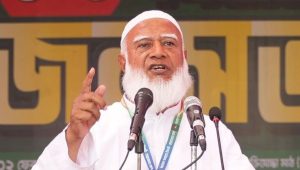
Jamaat-e-Islami Ameer and Opposition Leader in Parliament Shafiqur Rahman has said the party will take its movement directly to the public if constitutional reforms are not implemented in line with a people’s mandate.
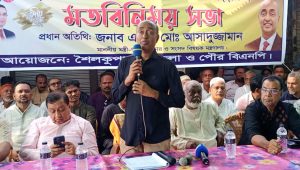
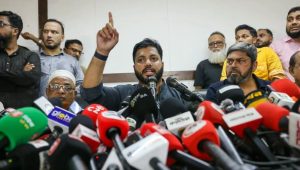
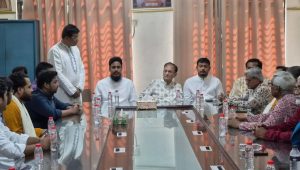
Speaking at a views exchange meeting with journalists at the National Parliament LD Hall on Wednesday, he said a reform charter had been prepared through the National Consensus Commission with participation from political parties and was later endorsed through a referendum in favour of constitutional reforms.
He alleged that despite the referendum result, the government has not moved to implement the reforms.
“If there is no scope for reform in Parliament, we will go to the people and continue our movement based on their mandate,” he said.
Shafiqur Rahman said the opposition does not believe in a “compromise-based movement,” adding that the party would cooperate if the government acted in the public interest but would strongly protest if public demands were ignored.

He said 31 political parties had agreed on the reform charter following discussions under the National Consensus Commission, with the exception of the Communist Party of Bangladesh (CPB). He also claimed that the BNP had initially agreed to the charter.
The opposition leader said there was consensus among political parties on holding the national election and a referendum on the same day, with the understanding that the referendum result would be binding. He added that a reform council was also part of the agreed framework.




He further claimed that while opposition members took oath as both Members of Parliament and reform council members, ruling party representatives only took parliamentary oaths, as the reform council provision was not included in the Constitution.
Citing referendum results, he said about 68.6 per cent of voters supported constitutional reforms, arguing that failure to implement the mandate had created a fresh political crisis.
Responding to arguments that certain provisions were not in the Constitution, he said several past arrangements, including the interim government, led by Muhammad Yunus and earlier referendums, were also not originally part of the constitutional framework but were implemented out of national necessity.
Criticising the move to form a constitutional amendment commission, he said the people had voted for reforms, not amendments, adding that the two processes are fundamentally different.
He also referred to past Supreme Court rulings on caretaker government provisions and judicial decentralisation, saying constitutional amendments have previously been struck down by the judiciary.
“We do not want laws that serve any political party’s interests. Laws must prioritise the people,” he said, adding that the movement would continue until the demands are met.
Senior Jamaat leaders and lawmakers were present at the programme.