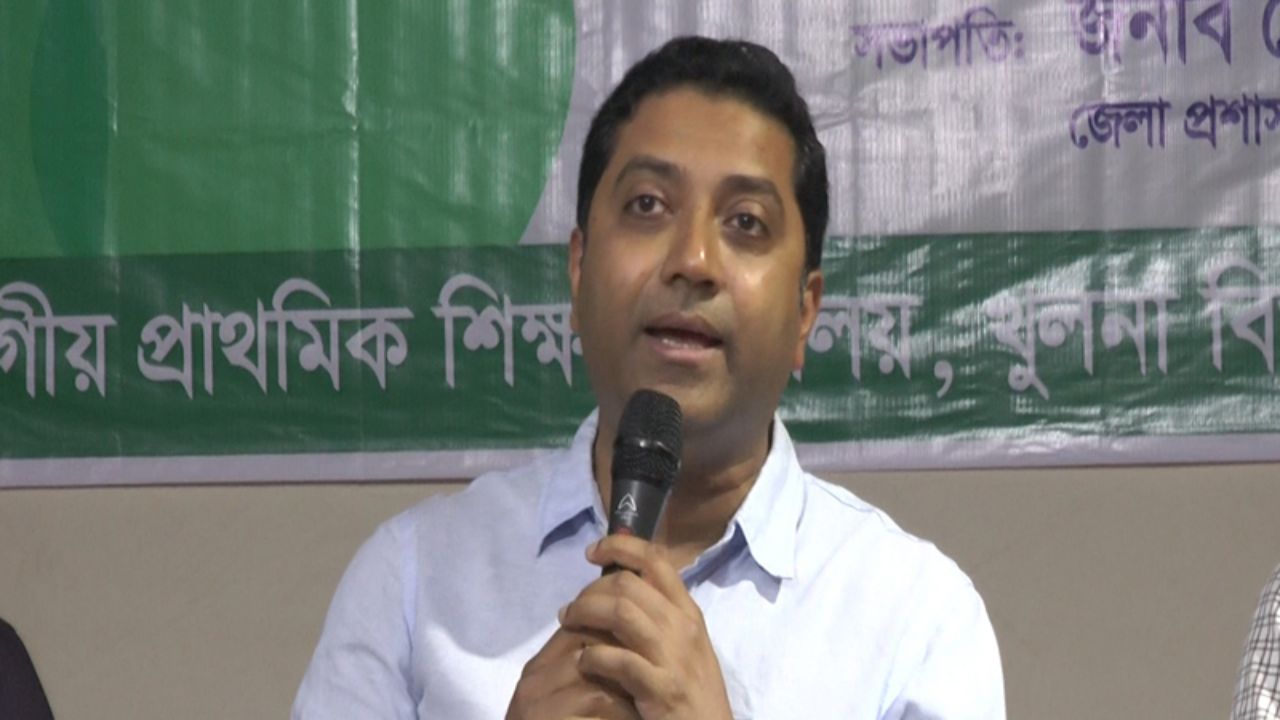
Prime Minister Tarique Rahman on Saturday warned of attempts to create instability in the country and alleged links between those currently trying to create disorder and political forces ousted from power on 5 August 2024.
“The people of Bangladesh drove them out of the country on 5 August,” he said while addressing a public gathering in Trishal, Mymensingh, after the re-excavation of the Dharar Canal in the Bailor area.
“Now they are trying to create anarchy again. Just as they did in 1996 and in 1986, new tails have now grown beside them, including some small but active ones.”
He said one of the greatest damages caused during the period of “ousted fascism” was the erosion of humanity, compassion, and Bangladesh’s long-standing religious and social values.
“The brutal killing of the innocent girl in Mirpur is the clearest proof of the extreme decline in human values,” he said.

Tarique urged people to remain alert against “conspiracies” aimed at disrupting the country.
He said any unrest at the current moment would obstruct the government’s development activities and put ordinary people at risk.
“Those who want to create chaos in the country today must be resisted by everyone,” he said.


Tarique said some groups were unhappy after BNP formed the government following the 12 February election.
“The people of Bangladesh voted for BNP and gave us the mandate to form the government. That is why certain quarters are burning with frustration, and from that frustration they are hatching conspiracies,” he said.
Referring to the killing of seven-year-old in Pallabi, the prime minister said the government would ensure the “highest punishment” for the accused within one month.
“We have said from the beginning that anyone committing a crime must face punishment under the law,” he said.
“We want to establish the rule of law, but everything must proceed according to legal procedures.”
He said the government would not tolerate violence against children or women under any circumstances.
“The government will ensure the highest punishment for Ramisa’s killer within the next month,” he said.
“That highest punishment will be the death penalty.”
Home Minister Salahuddin Ahmed, who accompanied the prime minister, later told reporters that police would submit the charge sheet in the Ramisa murder case to the court on Sunday afternoon.
During the programme, the prime minister also inaugurated a three-day festival marking the birth anniversary of national poet Kazi Nazrul Islam.
“Bangladesh and Kazi Nazrul Islam are inseparable entities,” he said.
“He is the true representative of our national identity, the symbol of our national consciousness and a pioneer of our nationalism.”