The Bangladesh Water Development Board (BWDB) has taken an initiative to introduce toll-free SMS services to deliver flood forecasts directly to people living in flood-prone areas across the country.
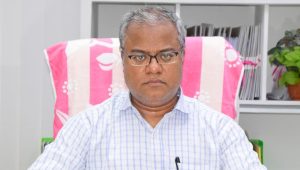
Partho Protim Barua, sub-divisional engineer at the Flood Forecasting and Warning Center (FFWC) under BWDB, said work is underway to launch the service and a letter has already been sent to Bangladesh Telecommunications Company Limited (BTCL) in this regard.
He said many people in remote flood-prone regions do not use smartphones and have limited access to the internet. To address this, BWDB plans to send flood-related information through toll-free text messages.
Partho Protim said agreements with mobile phone operators are required before launching the service and discussions with telecom operators are continuing.

“If flood forecasts can be delivered through SMS, it will help reach marginal people in vulnerable areas through mobile operators. This will allow them to prepare in advance and reduce flood-related losses,” he said.
On 25 October 2021, BWDB officially launched a digital flood forecasting system to help reduce disaster impacts. The system introduced a new dimension in flood forecasting by sending ‘push notifications’ to residents in flood-prone areas from three days to three hours before flooding.
The system was jointly developed by BWDB, a2i, Google, the Bangladesh Red Crescent Society and the International Federation of Red Cross and Red Crescent Societies.


Officials at the FFWC said the digital flood forecasting project was first launched on a pilot basis in June 2020 in 14 districts covering the Brahmaputra and Padma river basins. It is now operational in 55 districts.
Partho Protim said the FFWC currently monitors flood conditions through 127 stations and provides advance flood forecasts from 55 stations.
He added that the digital system can now send flood alert notifications to Android phone users living in flood-risk areas between three days and three hours before flooding, depending on predictive capability.
BWDB supplies flood data to Google, which improves flood mapping using topographical information and sends push notifications to people living in vulnerable regions.
BWDB officials said flood warnings are now also available through Google Maps and Google Feed.
In addition, BWDB, a2i, Google and international Red Cross organisations are jointly working to ensure that flood warnings and information reach vulnerable communities in the shortest possible time.
Flooding remains a common natural disaster in Bangladesh and causes major damage to lives and property every year.
Major floods hit the country in 1951, 1987, 1988 and 1998. The 2007 South Asian floods also affected large parts of Bangladesh.
However, the government has already implemented both infrastructural and non-infrastructural measures to improve flood management and mitigation efforts.