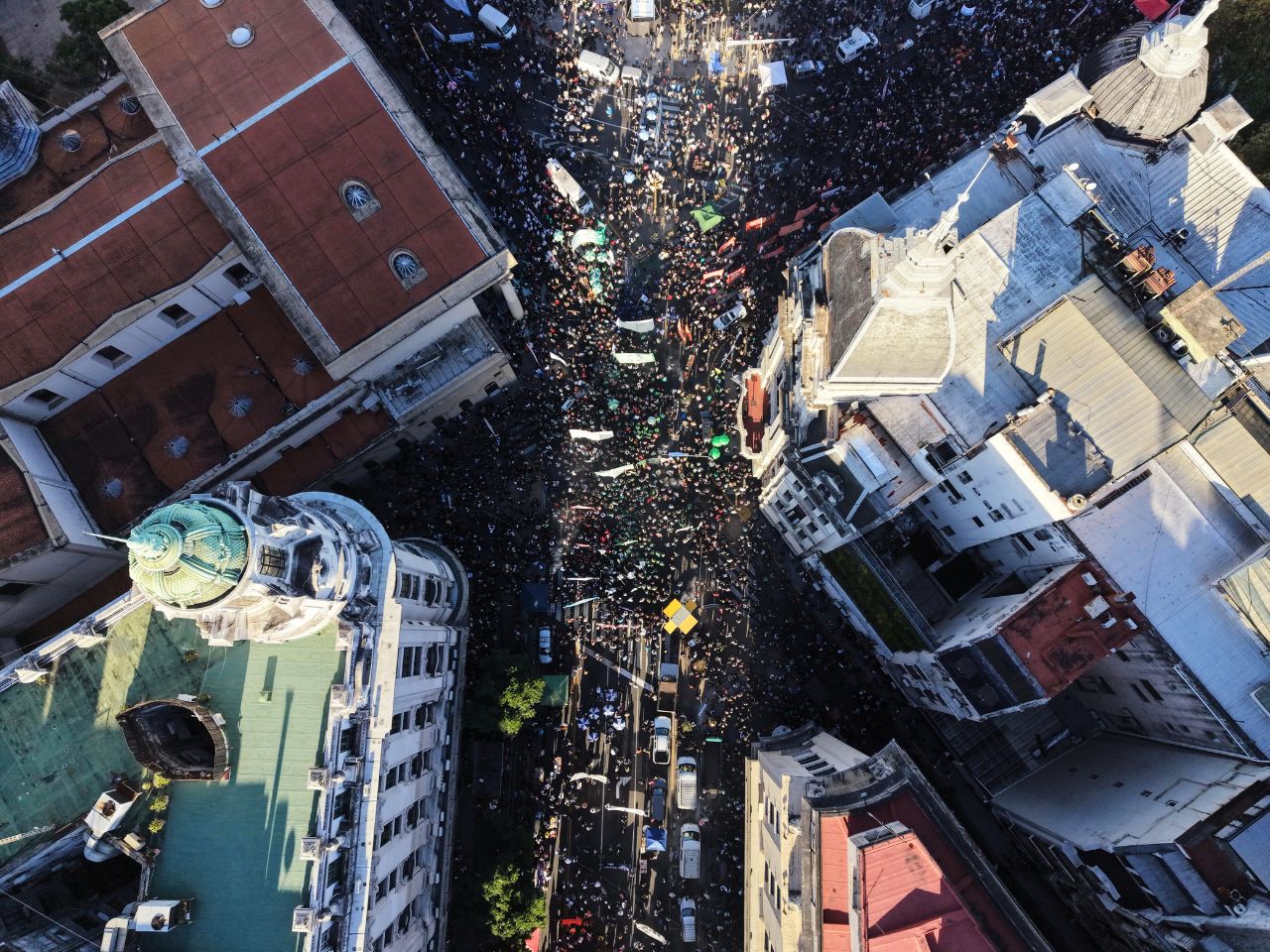
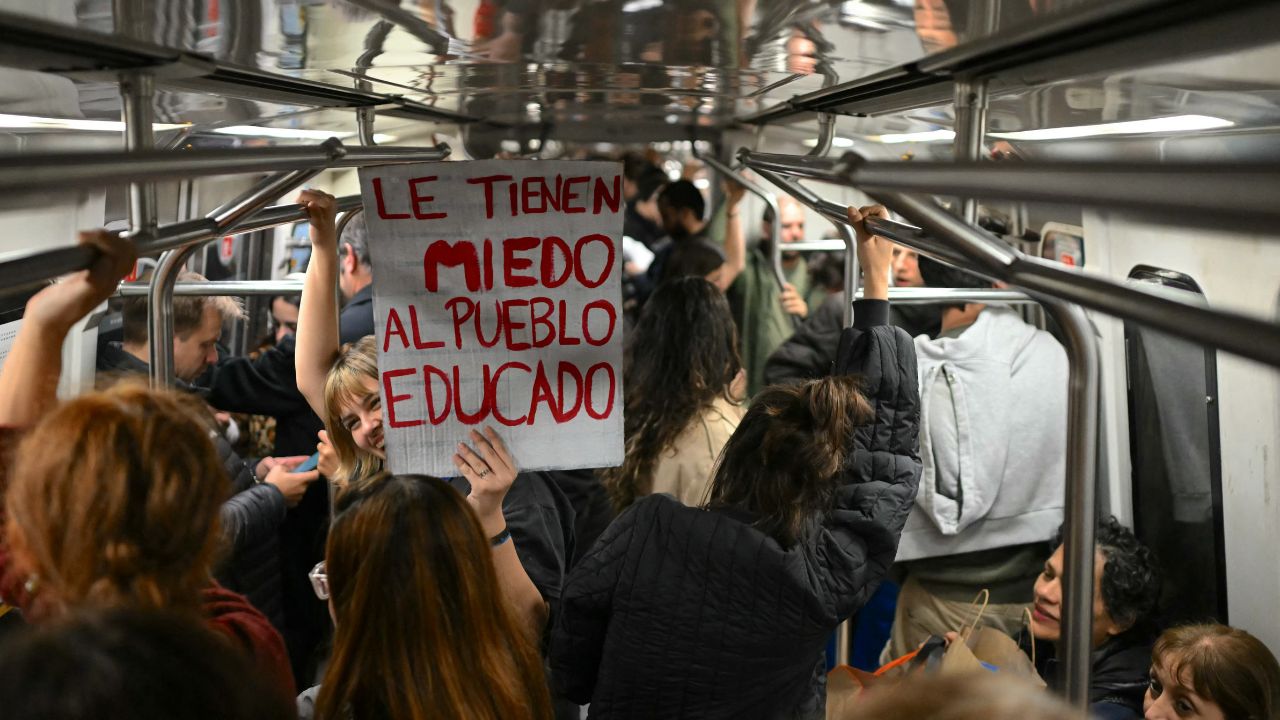
The streets of Buenos Aires were filled with white lab coats, student banners and handwritten cardboard signs this week. Tens of thousands of Argentines marched against President Javier Milei and his government’s cuts to public universities.
What began as a budget dispute has evolved into something larger: a national argument over what kind of country Argentina wants to become.
For decades, Argentina’s public universities have been treated almost as a national inheritance. Tuition-free higher education, introduced in 1949, allowed generations of middle- and working-class students to become doctors, scientists, teachers and lawyers. Five Nobel Prize winners emerged from the system.
In a country repeatedly battered by inflation and economic collapse, public education became one of the few institutions many Argentines still viewed with pride. Now, that system is under pressure.

Since taking office, Milei has pursued aggressive austerity measures aimed at reducing public spending and stabilising Argentina’s deeply troubled economy. His administration argues that universities have become inefficient, politicised and financially unsustainable.
Supporters see the cuts as part of a painful but necessary restructuring of a country long trapped in debt and inflation.




But critics say the government is dismantling one of Argentina’s few remaining social equalisers. University professors report salaries collapsing under inflation.

Researchers are leaving public institutions. Some campuses have reduced services, delayed projects or struggled to maintain basic operations. Protesters accuse the government of treating education as an ideological enemy rather than a public necessity.
The demonstrations stretched beyond Buenos Aires into cities across the country, drawing students, teachers, labour unions and opposition supporters.
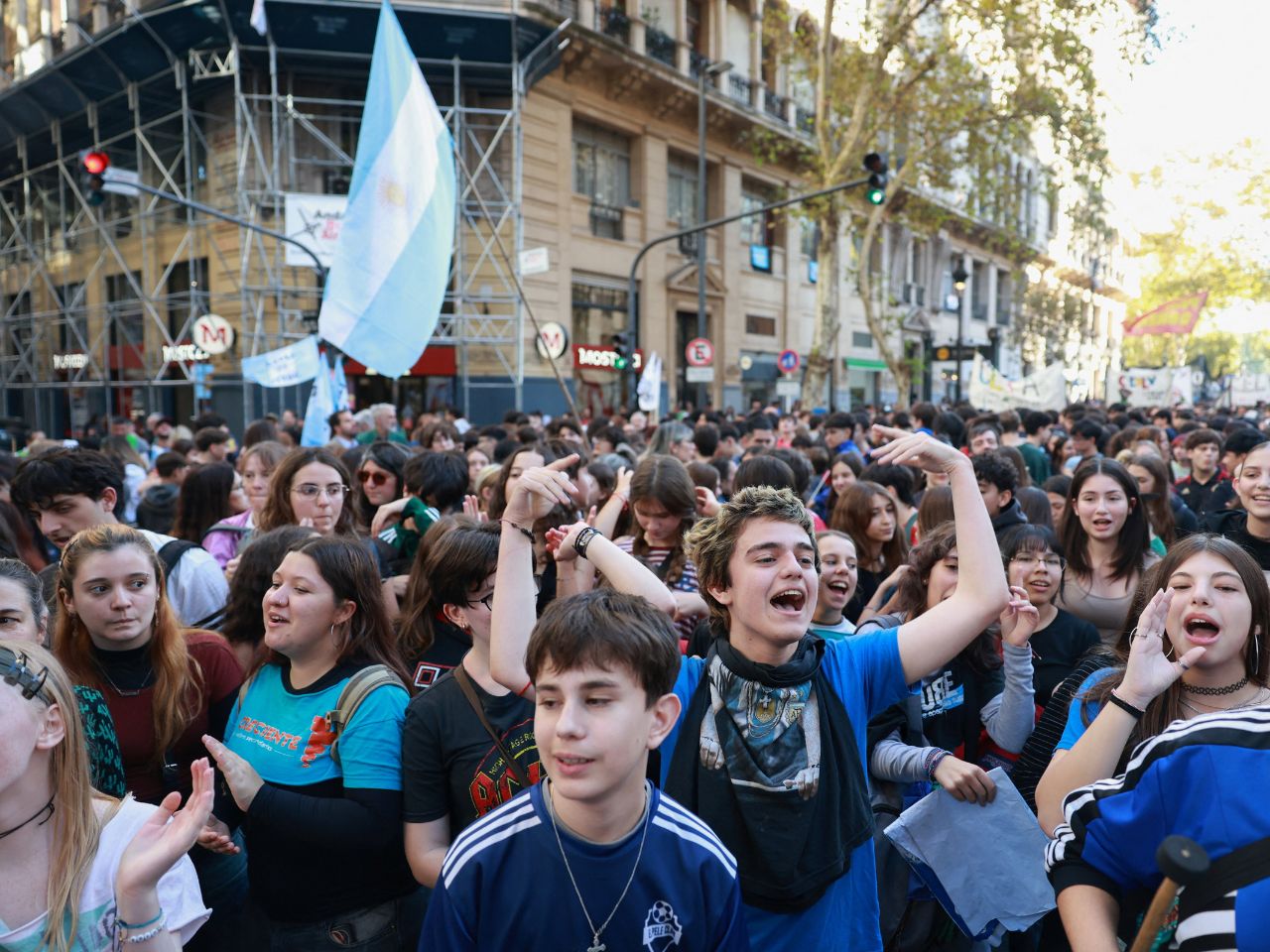
In Plaza de Mayo, protesters waved Argentine flags beside university banners, framing the issue not simply as an academic crisis but as a fight over national identity itself. Organisers claimed hundreds of thousands joined the marches nationwide.
Argentina’s economic crisis is real. Inflation, debt and political instability have exhausted the public. Yet the protests revealed another truth: many Argentines are willing to tolerate hardship, but not the erosion of institutions they believe define the country.
In Argentina today, the debate is no longer only about balancing budgets. It is about deciding whether public education remains a right or becomes another casualty of economic reform.