Following the BNP’s victory in the first election since the popular uprising, the party leadership pledged to establish a police force free from partisan influence.
That promise, however, faced a test on Monday when a senior officer, standing alongside the prime minister, proudly declared he had never wavered from his “nationalist ideals”, even during years of what he termed an “opposing environment.”
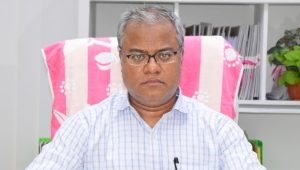
The remarks by Rezaul Karim Mallick, deputy inspector general (DIG) of the Dhaka Range, have sparked internal friction within the force.
Speaking in the presence of Prime Minister Tarique Rahman and Home Minister Salahuddin Ahmed, Mallick’s three-minute speech quickly went viral on social media, drawing sharp criticism from his peers.
A high-ranking official told TIMES of Bangladesh that the Inspector General of Police (IGP) was displeased with Mallick’s conduct. “The prime minister did not take well to him presenting himself as a BNP party worker,” the source added.
Former IGP Muhammad Nurul Huda echoed these concerns, telling TIMES: “This is not desirable. No professional officer should say this. It makes building a professional force incredibly difficult.”

Similarly, Professor Omar Faruk from the Department of Police and Criminology at Maulana Bhashani University of Science and Technology suggested the statement was politically motivated, noting: “He has brought the entire force into disrepute and raised public doubt regarding the neutrality of the police.”
Mallick, a 17th BCS cadre officer who joined the force in 1998, has had a turbulent year. While serving as superintending of police (SP) of the Criminal Investigation Department (CID) in Sirajganj during the 2024 uprising, he was intercepted and severely beaten by anti-discrimination protesters in Gazipur on 5 August.
After recovering, he was promoted under the interim government led by Muhammad Yunus. With his retirement scheduled for 30 June, colleagues suggest his controversial remarks may be a bid to secure a service extension or a high-profile post-retirement posting.
What did Mallick say?
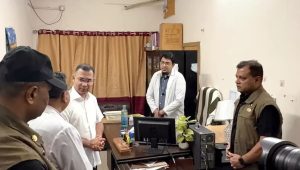
During the second day of Police Week on Monday, senior police officials gathered at the Prime Minister’s Office for an exchange of views.




Before the prime minister’s address, Rezaul Karim Mallick spoke candidly about his career, alleging that he had been subjected to continuous demotions, humiliation, discrimination, and mental torture during the 18-year tenure of the Awami League government.
Despite these adversities, Mallick asserted that he never wavered from his nationalist ideals. He fondly recalled childhood memories of President Ziaur Rahman, specifically a “lucky moment” in Shibchar, Madaripur, where he welcomed the president with a garland of rice sheaves.
Mallick noted that he had four subsequent opportunities to meet Ziaur Rahman between 1977 and 1981, including a memorable handshake as a tenth-grade student during the closing ceremony of the junior cadets’ campaign at the Azimpur Girls’ School and College grounds in Dhaka on 25 January 1981. He also took the time to reminisce about former prime minister Khaleda Zia.
When questioned by TIMES regarding the appropriateness of a government employee making such political statements, Mallick remained neutral, stating that he was simply expressing his personal pain and that interpretation was up to the individual.
In response to the growing criticism surrounding his remarks, he simply remarked that “there is no shortage of enemies.”
However, his comments have sparked a legal debate, as Rule 25 (1) of the Government Servants (Conduct) Rules, 1979, strictly prohibits government employees from participating in or cooperating with any political activities or parties.
Supreme Court lawyer Barrister Shihab Uddin Khan criticised the officer’s transparency, noting that such statements violate the fundamental terms and conditions of government service.
He suggested that the government must enforce these laws to maintain institutional reputation and strengthen the foundation of the civil service.
PM speaks of party-neutral police
Prime Minister Tarique Rahman reaffirmed his long-standing commitment to a party-neutral police administration during the inauguration of Police Week at Rajarbagh Police Lines last Sunday.
Emphasising a departure from political bias, the prime minister stated that the police force must remain loyal to the prevailing laws of the land rather than to any specific political party.
He underscored that the ultimate measure of the force’s success lies in its ability to become a symbol of trust and security for the citizens, noting that the success of the police is inextricably linked to the success of the government itself.
Addressing the internal culture of the force, the head of government cautioned officials against compromising their professionalism for the sake of preferred postings or promotions.
While such concessions might offer temporary satisfaction, he warned that they undermine the integrity of the institution.
He maintained that an efficient, dynamic, and professional administration can only be ensured if those entrusted with responsibility execute their duties with absolute seriousness.
This vision for unity was further highlighted the following day when, in response to Mallick’s self-identification as a “soldier of nationalist ideals,” the Prime Minister remarked that while political differences are naturally reflected at the ballot box, all citizens and officials must remain united in the broader interest of the country.