Preparation of the national budget for the 2026-27 fiscal year has slowed, as the government faces pressure to meet conditions set by the International Monetary Fund (IMF) while maintaining overall economic stability, finance ministry officials say.
The budget is scheduled to be placed in parliament on 11 June, but officials involved in the process say progress has been hindered by a combination of policy and economic challenges.
They point to four key factors behind the slowdown: reforms required under the IMF programme, growing reliance on external borrowing, rising production costs alongside weak investment, and a lack of clear policy direction from the government’s top leadership.
The government is also under increasing strain to meet revenue collection targets, reduce defaulted loans, and push through long-pending banking sector reforms, according to officials familiar with the discussions.
Delays in meeting IMF conditions have already affected the pace of loan disbursements, raising uncertainty over the availability of fresh external financing at a time when the country’s fiscal pressures remain elevated.
Alongside the existing $4.7 billion loan programme, the government is seeking an additional $2 billion from the IMF and $1 billion from the World Bank, officials said.

The funds are being pursued under emergency support windows to help cushion global financial pressures stemming from ongoing conflicts in the Middle East, they added.
Bangladesh entered the ongoing IMF loan programme in January 2023, following a set of reform conditions agreed in 2022.
The government is keen to avoid any disruption to the ongoing IMF programme, as such a move could dent Bangladesh’s international financial credibility and negatively affect access to foreign loans and credit lines.




Former lead economist of the World Bank Dhaka office Zahid Hussain said revenue policy must be growth-supportive, predictable and investment-friendly.
“Without stability in tax policy, new investment will not materialise,” he said, stressing that trade facilitation should take priority over imposing new taxes.
Uncertainty also persists over whether tax exemptions will be withdrawn or new incentives introduced, in line with IMF conditions. The lender has also set a target to raise the country’s tax-to-GDP ratio from the current 6.67 per cent to 9.2 per cent in the next fiscal year.
As a result, the government has yet to finalise several critical fiscal decisions, contributing to delays in the budget process.
However, multiple finance ministry officials said initial uncertainties have eased and preparations have regained momentum.
The budget is now being crafted with a focus on public welfare while considering current economic conditions, they added.
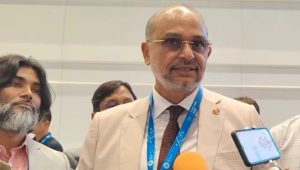
The National Board of Revenue (NBR) Chairman Md Abdur Rahman Khan told TIMES of Bangladesh that the government is not prioritising recommendations from development partners in drafting the budget.
“National interest will take precedence,” he said, adding that effective policies would be adopted to boost industrialisation and to create jobs.
The NBR is likely to be assigned a revenue target of Tk6.4 lakh crore for the next fiscal year, which would require a steep growth of around 42 per cent in tax collection.
As part of the pre-budget process, the NBR has completed consultations with stakeholders but has yet to reach final decisions.
Officials said proposals are being reviewed ahead of meetings with the finance minister on 10-11 May, followed by a discussion with the prime minister on 14 May, after which formal budget work is expected to accelerate.
Meanwhile, under IMF pressure, the government has revived efforts to restructure the NBR. A nine-member committee, led by Ismail Jabiullah, has been formed to advance plans to bifurcate the agency.
A recent notification called for reviewing existing ordinances related to revenue policy and management and transforming them into a more effective and realistic legal framework.
Earlier, as part of revenue reforms, the interim government had moved to split the NBR into two wings – revenue policy and revenue management. However, the initiative stalled due to administrative complications, and later lost validity when the ordinance was not enacted into law.