Tax relief sought by businesses is unlikely in the upcoming FY27 budget, as the government prioritises removing regulatory and cost barriers to support economic recovery.
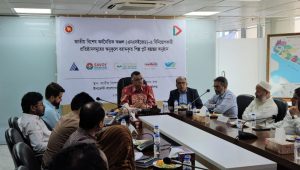
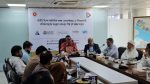
The indication came on Wednesday, when Finance Minister Amir Khosru Mahmud Chowdhury spoke at the 46th consultative committee meeting of the National Board of Revenue (NBR), held at a hotel in the capital.
The meeting, organised by the Federation of Bangladesh Chambers of Commerce and Industry (FBCCI), brought together representatives of major trade bodies.
He said the government would focus on easing legal, institutional and bureaucratic constraints that raise the cost of doing business, even as fiscal space limits tax relief measures.
“Let us know where you face obstacles in doing business. We will address them directly within the next three months,” he said.
The FBCCI proposed raising the tax-free income threshold to Tk5 lakh, and Tk5.5 lakh for women, alongside broader measures to maintain macroeconomic stability.

Presenting the proposals, FBCCI Administrator Md Abdur Rahim Khan pointed to global and domestic pressures, including geopolitical tensions and Bangladesh’s impending graduation from least developed country (LDC) status.
The trade body also proposed cutting the corporate tax rate for non-listed companies to 25 per cent from 27.5 per cent, with a long-term target of 20–22 per cent.
It recommended reducing the minimum tax to 0.5 per cent from 1 per cent, with a plan for gradual withdrawal, lowering advance tax on imported raw materials to 1 per cent from 2 per cent, and introducing electronic invoicing to improve compliance.
The FBCCI also called for ensuring the independence of Bangladesh Bank to strengthen regulatory oversight.



Responding to the proposals, the finance minister said economic constraints would limit immediate tax benefits, but signalled quicker action on regulatory bottlenecks.
He acknowledged concerns over a 40 per cent increase in port handling charges, questioning the basis for the hike and noting the absence of clear justification.
Corruption at Chattogram Port, and other ports, is also raising business costs, he said, urging stakeholders to report such issues for swift resolution.
The minister said the economy would need at least two years to stabilise from current pressures, including the impact of the Middle East conflict.
“We have informed multilateral partners, including the IMF and the World Bank, that Bangladesh will need time to stabilise,” he said, referring to a requested two-year cushion period.
He said tax incentives would continue for export-oriented sectors, adding that facilities similar to those for the ready-made garment industry could be extended to other potential export sectors.
On the budget, he said a larger outlay is being planned, with a focus on quality infrastructure investment, instead of unnecessary mega projects.
An expansionary budget is needed to support recovery, reduce poverty and stimulate investment, he added.
Finance ministry officials said the FY27 budget could exceed Tk9 lakh crore, up from Tk7.90 lakh crore in the current fiscal year.
Business leaders at the meeting said small industries are struggling under the burden of value-added tax (VAT), and called for targeted support.
Commerce Minister Khandakar Abdul Muktadir said the government would incorporate private sector proposals to revive struggling industries and accelerate recovery.
High bank interest rates, and the ongoing energy crisis, remain major barriers to investment, he said, stressing the need to cut logistics costs and improve public debt management.
NBR Chairman Abdur Rahman Khan said economic growth is closely linked to private sector performance, and reaffirmed the government’s commitment to a more business-friendly environment.
He added that budget measures would focus on rationalising tariffs and taxes to improve competitiveness, while removing regulatory barriers.
Businesses from various trade bodies and chambers also presented proposals for the upcoming budget at the meeting.