The United States Navy has commenced a comprehensive blockade of Iranian ports following the breakdown of peace negotiations between Washington and Tehran, a move that has already driven global oil prices above $100 a barrel.
The operation, ordered by President Donald Trump, began around 10am ET on 13 April.
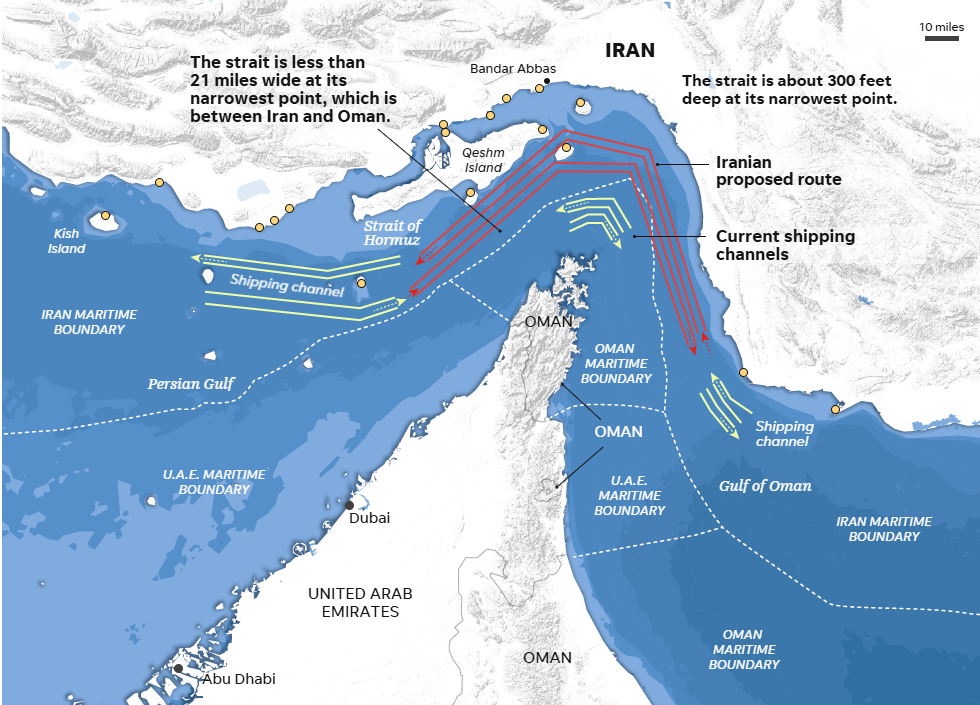
According to US Central Command, the blockade affects “vessels of all nations entering or departing Iranian ports and coastal areas,” covering all facilities on the Arabian Gulf and the Gulf of Oman, reports USA Today.

US forces are currently monitoring an area of approximately 21,000 square miles along the Iranian coastline, a territory roughly 87 percent the size of West Virginia.

While the US military has not officially released the number of assets involved, an unidentified official cited by The Wall Street Journal stated that at least 15 US warships are participating. NATO allies have reportedly refused to join the operation.



Diplomatic failure and regional reaction
The military action follows the collapse of peace talks held in Pakistan on 12 April, where both nations blamed one another for the impasse. The breakdown has raised concerns regarding the status of a two-week ceasefire in Iran.
Iranian military spokesperson Ebrahim Zolfaghari condemned the blockade as “piracy” and warned that if Iran’s ports are threatened, “no ports in the Persian Gulf or Gulf of Oman would remain secure”.
Conversely, Israeli Prime Minister Benjamin Netanyahu expressed his support for the blockade, while vowing to continue military operations in Lebanon ahead of separate talks in Washington.
Logistical impact and enforcement
Shipping companies have been notified that the blockade applies to all vessel traffic regardless of the flag they fly. Hundreds of tanker ships were reported stalling in clusters near the Strait of Hormuz in early April awaiting entry.
US forces are employing radar, aircraft patrols, and Automatic Identification System (AIS) transponder data to track vessels. Under the protocols defined by the Commander’s Handbook on the Law of Naval Operations, intercepted ships will be warned and boarded by armed crews to check cargo and papers.
Ships found in violation of the blockade may be diverted, detained, or captured; those resisting capture face the risk of attack.